Dream About Frogs or toads – Meaning
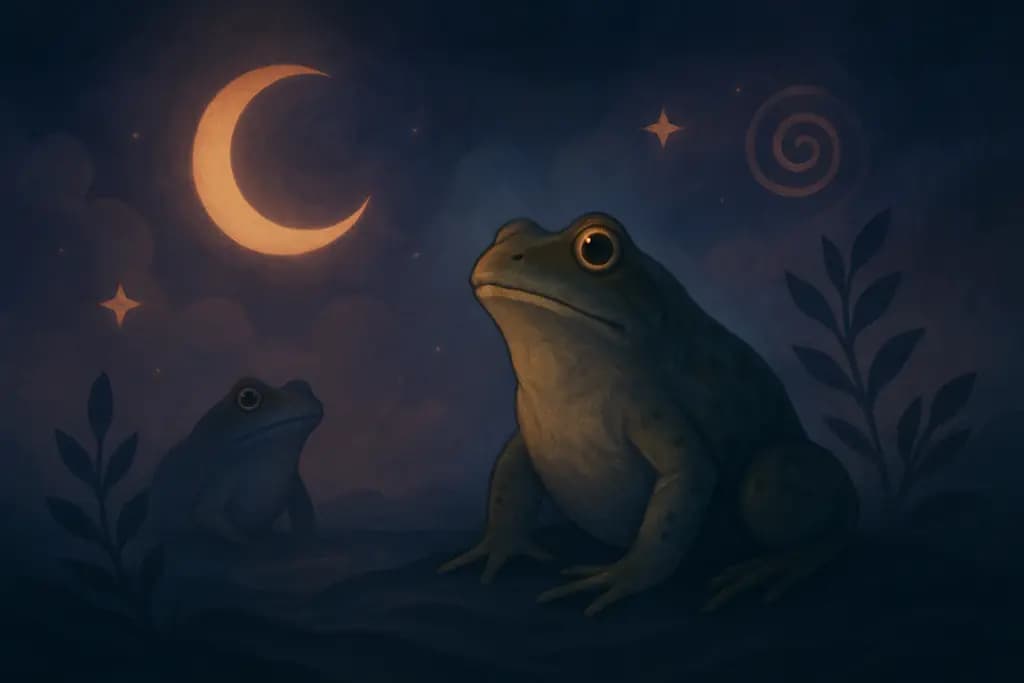
Category: Animals
Dreaming about frogs or toads often signals change, hidden feelings, or an inner process of cleansing and renewal. The exact meaning depends a lot on how you felt in the dream and the situation the amphibian appeared in. Context, number of frogs, and whether the animal was calm or threatening shape the interpretation.
General meaning of dreaming about Frogs or toads
Frogs and toads commonly symbolize transformation, transition, and emotional tides. Because they spend time both in water and on land, they naturally represent the bridge between the conscious mind and deeper, instinctive emotions. In dreams these animals can act as messengers about personal growth, fertility of ideas, or the need to let old patterns go.
Often the meaning shifts with the dream tone: a peaceful frog suggests slow, natural change, while an aggressive or numerous swarm may point to overwhelm or unresolved feelings. Key meanings people report include:
- Transformation and rebirth: shedding old ways and entering a new phase.
- Emotional release: confronting repressed feelings or intuition.
- Adaptability: a call to be flexible and move between different aspects of life.
- Creativity and fertility: new projects, relationships, or opportunities taking shape.
- Warning or discomfort: sometimes a sign of something unpleasant you need to address.
Spiritual meaning of Frogs or toads in dreams
Spiritually, frogs and toads are often linked to purification and renewal. Many cultures view them as creatures that herald rain and abundance, connecting them to cleansing and the watering of inner life. Their metamorphosis from tadpole to adult is a powerful spiritual metaphor for soul growth and awakening.
Different traditions frame the symbol slightly differently: in some indigenous stories frogs signal forthcoming change or the need to honor cycles; in folk tales a toad can represent hidden knowledge or a guardian of little-known truths. Overall, the spiritual message tends to center on transformation, emotional realignment, and cultivating inner awareness.
Psychological interpretation
Fear, stress or anxiety
If your dream of a frog or toad felt threatening, it may reflect current stressors or anxiety. The amphibian may mirror feelings that seem small but persistent, or a situation you find repulsive or unsettling. Recurring fearful encounters with frogs can point to avoidance patterns—things you would rather not face but that keep reappearing in your inner life.
Relationships and emotional bonds
Frogs in dreams can represent emotions in relationships: attraction that feels awkward, a partner undergoing change, or hidden aspects of someone close. A gentle frog might indicate a relationship that is quietly evolving; many frogs or noisy croaking could suggest unresolved tension or the need for clearer communication.
Control, power or vulnerability
Because frogs are small and vulnerable yet resilient, they often reflect feelings about power and control. Seeing a trapped frog may show feelings of helplessness; catching or taming a frog could indicate taking control of an emotion or situation. The dream asks you to notice where you feel vulnerable and whether that vulnerability is a source of growth or fear.
Positive meaning
- New beginnings: a sign you are ready to start a fresh chapter.
- Emotional healing: release of old hurts and growing resilience.
- Creativity and abundance: ideas or projects beginning to take shape.
- Adaptability: increased ability to navigate change and uncertainty.
- Reconnection with intuition: a nudge to trust inner guidance and feelings.
Negative meaning and warnings
- May suggest unresolved emotions: recurring frogs can indicate feelings you are avoiding.
- Can indicate discomfort with change: resistance that is causing stress.
- May point to small problems growing larger if ignored: minor annoyances becoming persistent.
- Can indicate deceit or unpleasant surprises in relationships: someone acting differently than they seem.
Common variations of dreams about Frogs or toads
- Frog in the house: Often points to an emotional issue entering your private life; may suggest a personal matter that needs attention. It can feel intrusive or an invitation to clean up a situation.
- Many frogs or a swarm: May reflect being overwhelmed by emotions, responsibilities, or gossip; could indicate collective issues at work or in family life.
- Catching or holding a frog: Suggests gaining control over an emotion, taming a fear, or harnessing a creative impulse. It can also warn against clinging to something that needs to change.
- Kissing a frog or frog turning into a prince: Symbolizes hope for transformation or the desire for a difficult situation to reveal its value; may reflect romantic optimism or a wish for hidden potential to emerge.
- Frog in water versus on land: A frog in water emphasizes emotional or unconscious material; on land it highlights practicality, behavior, or waking life adjustments.
- Dead frog: Can indicate the end of a phase, loss of creative momentum, or the need to let go of an idea or relationship that no longer serves you.
- Frog croaking loudly: Often points to a message you need to hear—an intuitive warning or an emotional call for attention.
What to do after such a dream
- Reflect on your emotions: journal the dream details and your feelings on waking. Note where the frog appeared, how it behaved, and your reactions.
- Look at current life situations: consider relationships, work, health routines, and any transitions underway. Ask which area most connects to the dream imagery.
- Consider patterns and decisions: is there something you are avoiding or an opportunity you are resisting? Small, intentional choices can ease transitional periods.
- Talk it through: share the dream with a trusted friend or therapist if it feels emotionally charged or keeps repeating. A different perspective can reveal overlooked meanings.
- Take gentle action: if the dream points to change, start with manageable steps—clarify priorities, set boundaries, or explore creative outlets to process feelings.