Dream About Forest at night – Meaning
Category: Places
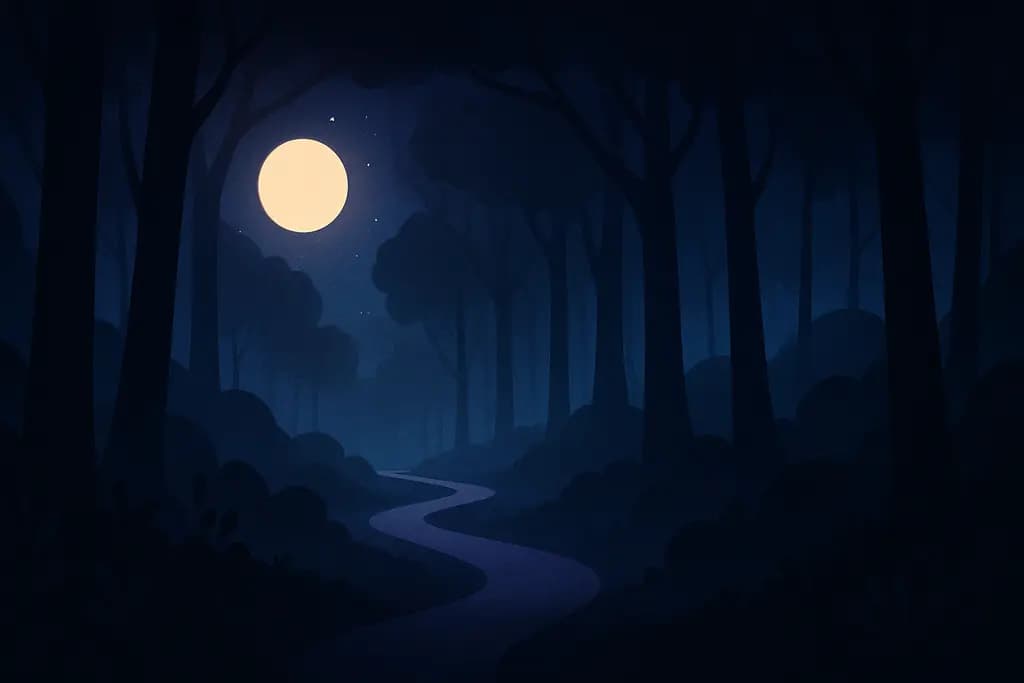
Dreaming of a forest at night often points to a part of your life that feels hidden, uncertain, or mysterious. The image brings together the natural, the shadowed, and the unknown — and its meaning changes depending on how you feel in the dream and what is happening in your waking life. Pay attention to emotions, companions, and actions inside the forest to refine the interpretation.
General meaning of dreaming about Forest at night
A forest at night is a powerful place-symbol in dreams: it combines the depth and growth associated with forests and the obscurity and introspection of nighttime. Typically this dream represents journeys into the unconscious, unknown choices, or a period of transition where clarity is limited. The night element amplifies themes of mystery, hidden fears, intuition, and the need to trust inner guidance rather than external light.
Common interpretations focus on uncertainty and inner exploration. For some people the dream highlights creative potential and fertile ground for new ideas that are not yet visible; for others it highlights anxieties or decisions that feel risky. Context—such as whether you are lost, calm, accompanied, or threatened—shifts the meaning dramatically.
- Inner exploration and unconscious material
- Feeling lost, uncertain, or at a crossroads
- Hidden opportunities, intuition, or guidance
- Fear, vulnerability, or unresolved stress
- Transformation, initiation, or spiritual testing
Spiritual meaning of Forest at night in dreams
Spiritually, a nighttime forest is often read as an invitation to retreat inward and confront deeper truths. Many traditions see darkness not only as danger but as a womb-like space where seeds mature; the forest setting adds the element of natural cycles and rootedness. Mystical traditions — from shamanic pathwork to contemplative mysticism — may interpret such a dream as a call to journey inward, undergo initiation, or seek guidance from inner wisdom or spirit allies.
At an energetic level, this symbol can signal a need to clear psychic clutter, to listen to intuition, or to undergo a slow, organic process of change. If you encounter signs (animals, a path, light) the dream may be giving you spiritual breadcrumbs to follow rather than leaving you in aimless darkness.
Psychological interpretation
Fear, stress or anxiety
A forest at night frequently mirrors anxiety: dark, tangled trees and limited visibility mimic how stress narrows perception. If you feel panicked or disoriented in the dream, it can indicate overwhelm or a sense that current problems are hard to navigate. Night amplifies threat perception, so even mild worries in waking life can become more intense in this dream setting.
Relationships and emotional bonds
When relationships are the focus, the forest at night can represent unclear boundaries, hidden emotions, or a sense that intimacy is risky. Walking with someone through the dark forest may point to shared uncertainty or mutual exploration; feeling alone there can signal isolation or unmet emotional needs. Pay attention to who accompanies you and how interactions unfold.
Control, power or vulnerability
This dream often raises issues of control and vulnerability. Night reduces control because sight and certainty are limited; the forest adds unpredictability. Dreams where you search for a path or shelter may reflect a desire to regain agency, while surrendering to the darkness can indicate acceptance of vulnerability as part of growth.
Positive meaning
- Sign of deep inner growth and personal transformation: the darkness can signal a necessary stage of maturation.
- Awakening intuition and creative potential that work best away from the glare of conscious planning.
- Opportunity to discover hidden resources, talents, or supportive relationships you hadn’t noticed.
- Invitation to slow down, reflect, and process emotions, leading to greater clarity later.
- Spiritual initiation or renewal: emerging from the forest can mark a new phase of life.
Negative meaning and warnings
- May suggest unresolved fears or anxiety that are limiting your choices and well-being.
- Can indicate confusion, poor direction, or decision fatigue when you can’t find a clear path forward.
- May point to avoidance: staying in the dark forest in a dream can mean you’re postponing difficult conversations or necessary change.
- Can indicate vulnerability to external pressures or manipulative people if you feel followed or powerless.
Common variations of dreams about Forest at night
- Walking alone through a forest at night — Often reflects a solitary inner journey, personal introspection, or facing fears without support; may feel empowering or frightening depending on your mood.
- Getting lost in a forest at night — Frequently points to feelings of confusion, being overwhelmed by choices, or a sense that you lack direction in an important area of life.
- Finding a path or clearing in a forest at night — Suggests sudden clarity, a new solution, or an insight that appears after a period of uncertainty.
- Seeing lights, fireflies, or lanterns in a forest at night — Symbolizes inner guidance, fleeting inspiration, or small signs that help you orient during dark times.
- Being followed or feeling watched in a forest at night — Can indicate anxiety about exposure, guilt, or avoidance of something you’d rather not face.
- Entering a moonlit or serene forest at night — Often speaks to peaceful acceptance, spiritual calm, or connection to nature’s rhythms even amid darkness.
- Trees falling or a storm in a forest at night — May reflect sudden disruption, an unexpected loss, or emotional upheaval that makes the future feel uncertain.
- Meeting a guide, animal, or companion in a forest at night — Points to support, inner wisdom, or external help appearing when you most need it.
What to do after such a dream
- Reflect on how you felt during the dream: fear, curiosity, calm, or relief gives the strongest clues to meaning.
- Journal details—places, sounds, companions, and actions—to connect dream images with waking situations.
- Compare the dream to current life stressors: decisions, relationships, work changes, or creative projects that feel uncertain.
- Talk with a trusted friend or confidant about patterns the dream might be highlighting; sometimes an outside perspective helps.
- Use practical steps to reduce nighttime anxiety: create clear small goals, map decisions into bite-sized actions, and establish supportive routines.
- Explore creative or contemplative practices (walking in nature, meditation, art) to integrate insights from the dream and allow gradual clarity to emerge.
- If the dream recurs and causes persistent distress, consider seeking emotional support from a counselor or a mental health professional.