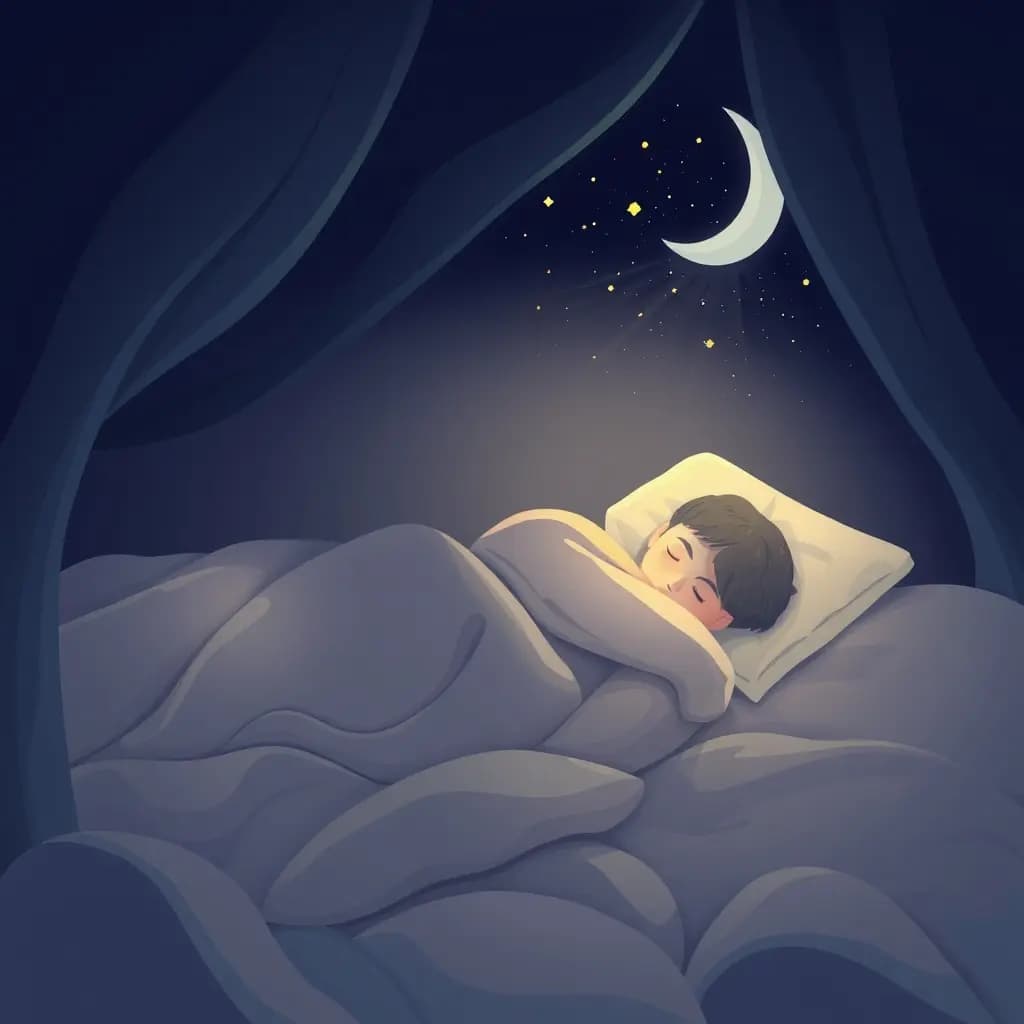
Dream About Falling asleep inside dream – Meaning
Category: Sleep & Dream States
What this dream often looks like
You are sitting on a late-night train, chin tucked into your scarf, platform announcements echoing. Your eyelids grow heavy; the hum of wheels becomes a soft lullaby and you suddenly realize you’ve slipped into another layer of sleep while still within the dream. There’s a small, surreal panic — embarrassment about dozing off in public and a strange relief, as if permission has been given to stop trying. This scene often arrives after weeks of long hours, caregiving, or a day of small, accumulating demands.
Key interpretations
- 1. Physical and cognitive fatigue. Falling asleep inside a dream commonly reflects real-world tiredness. After long shifts, disrupted sleep, or caregiving stretches, your brain can fold in on itself: micro-sleeps and daydreams feel layered. The dream dramatizes the body’s need to rest by putting sleep front and center; the embarrassment you feel in the scene often mirrors daytime anxiety about slowing down when responsibilities demand alertness.
- 2. Boundary collapse and disengagement. This image can also signal blurred boundaries — between work and home, obligation and self-care, or presence and dissociation. Dozing in a public dream setting suggests moments where you’ve mentally checked out to cope. It may be a protective maneuver: withdrawing inward when external demands feel overwhelming, or a warning that you’re tolerating more than you should while trying to keep functioning.
- 3. A symbolic reset or letting go. Sometimes the dream points toward a needed reset rather than weakness. Falling asleep inside a dream can symbolize permission to surrender control, to stop striving, or to let a repetitive worry go for a while. If you’ve been ruminating or pushing through grief or change, the dream may be inviting a deliberate pause: rest as an active, restorative choice rather than accidental failure.
What this dream is rarely about
This dream is rarely a literal prediction of future events or a mystical warning. It does not usually mean something will actually happen exactly as seen. Instead, treat it as a metaphorical snapshot of how you respond to pressure — an emotional nuance: relief and irritation can coexist in the same moment.
Unusual details people report
People often report odd sensory specifics: a flickering fluorescent carriage light, a neighbor’s loud coat brushing their shoulder, a digital clock stuck on 2:13, or rain tapping a window in slow, steady beats. Some feel their legs go numb or hear a distant, static announcement as they nod off.
Spiritual and symbolic perspective
In symbolic or spiritual terms, slipping into sleep within a dream can be seen as crossing a threshold: a brief initiation into a quieter inner realm where habitual stories lose force. Many traditions interpret such moments as invitations to surrender control, to trust a slower process, or to attend to inner guidance. This framing is non-dogmatic—useful if it resonates—but not prescriptive. If the image feels transformative, consider rituals or simple pauses that honor the need for inner recalibration.
Psychological perspective
From a modern psychological angle, this dream often maps onto cognitive load and coping style. Repeated stressors—tight deadlines, parenting demands, or constant social vigilance—can lead to mental fatigue that shows up in sleep architecture and dream content. The dream is a kind of feedback: it may reveal avoidance strategies (checking out) or the brain’s way of consolidating overwhelming experiences. It’s not a diagnosis; instead, notice patterns in daily energy, attention lapses, and how you recover after rest.
Questions to reflect on
- When did I last feel truly rested, and what would it take to get closer to that now?
- Which responsibilities or relationships make me feel like I must stay 'on' even when exhausted?
- What small, specific action could I try this week to create permission for rest?
Frequently asked questions
Why do I feel fear in this dream?
Fear often appears because falling asleep in public violates social norms and reveals vulnerability. In the dream this mixes with a fear of failing roles or losing control, not a literal threat.
Is it related to stress?
Yes, it is commonly related to stress. Long-term stress, sleep deprivation, or emotional overload make this dream more likely because the mind is struggling to process demands.
Is this about money?
Not usually. While financial worries can fuel stress that leads to the dream, the image itself is rarely specifically about money; it more often points to exhaustion or boundary issues.
Related dreams to explore
People who dream about falling asleep inside dream often end up exploring Night terror with no threat, Waking without dream memory, and Dream stops mid-sentence next, because the same pressure can show up through different symbols. Comparing them usually makes the emotional pattern clearer. You may also want to compare it with Multiple false awakenings sequence if the same mood or conflict keeps showing up.