Dream About Fables – Meaning
Category: Objects
Quick interpretation
Waking with a slow, tightening sense that you should 'know better' is common after a fable dream; that emotional pressure often points to a lesson you’re resisting. In short: fables in dreams commonly act as symbolic summaries of an ethical choice, a habit pattern, or a voice of caution. They may single out an area—work, parenting, honesty—where small, intentional changes would shift the story in your waking life. Pay attention to who speaks, the ending, and whether you felt shame, relief, or amusement: those emotions are the lesson’s contour.
What this dream often looks like
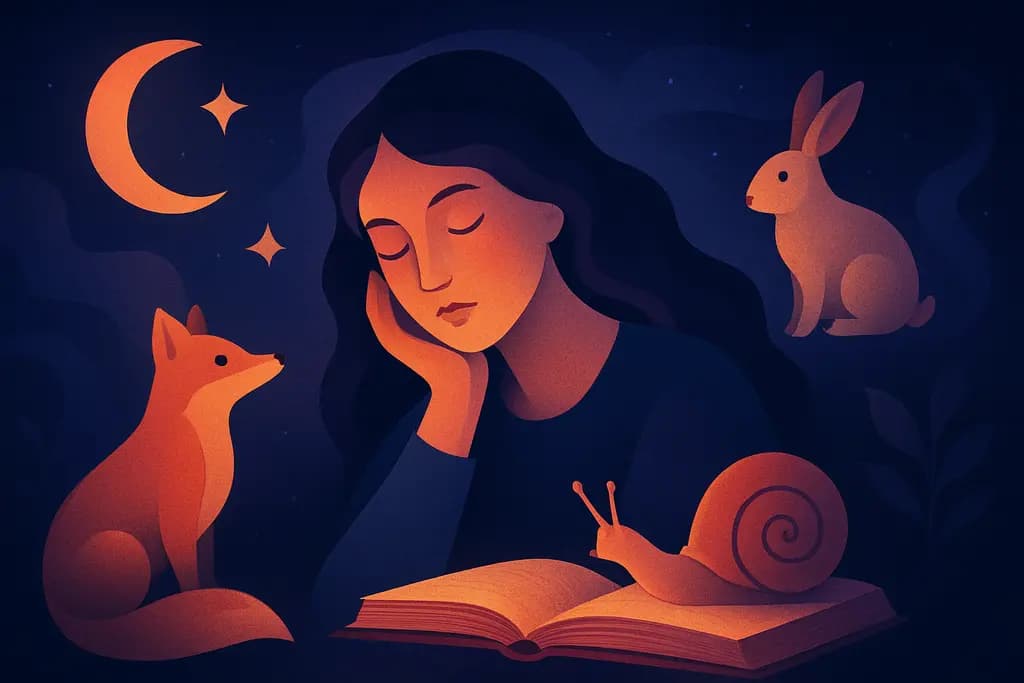
You find yourself in a dim schoolroom stacked with illustrated storybooks; a fox in a teacher’s glasses reads aloud while classmates—peers from work, family members—sit on tiny chairs. The room smells faintly of rain and old paper. You feel both amused and oddly accused, as if someone has quietly summarized a bad choice you made last week. Outside, the sky is a low gray, and every time the fox pauses, your heart hitches because you recognize the scene from a dinner conversation or a petty argument you’ve had recently.
What this dream may be expressing
- Moral mirror — a lesson about values. This dream often highlights a conflict between what you say you value and how you behave. A fable-style scene compresses the issue into a short plot (deception, pride, generosity) so the feeling of dissonance becomes clearer. The animal or narrator represents the trait you’re negotiating; the ending—punishment, reward, or ironic twist—suggests the consequence you fear or hope for. Use the dream as a prompt to identify a single, concrete value to practice this week.
- Hidden advice — practical guidance disguised as story. Fables frequently deliver small, actionable counsel: slow down, speak plainly, help someone who seems insignificant, or stop pretending. Dreams like this may distill complicated options into one tangible next step. If the tale highlights a clever but unethical shortcut, the dream may be nudging you away from that route; if it praises humility, it may be encouraging a quieter strategy. Notice who benefits in the story—that points to the behavior to try or avoid.
- Role and power dynamics — who you are in the plot. Which character felt like you? Whether you’re the boastful hare, the overlooked mouse, or the stern narrator, the dream is mapping roles you inhabit socially. This angle often surfaces when you’re negotiating status, responsibility, or influence. The interactions between animals reveal power balances and recurring social scripts—boss/employee, parent/child, friend/frenemy—and suggest where you might reclaim agency or soften a stance to change the outcome.
What this dream usually does not mean
This dream is rarely a literal prediction of future events. A common mistake is to read the fable as an exact blueprint—’I will be betrayed tomorrow’—when it more often dramatizes a pattern or moral tension you already live. The image may feel prophetic because it crystallizes emotion, but it does not usually forecast concrete events. Emotionally, the dream can sting like a rebuke; treat that sting as information, not a prophecy.
Specific details people often mention
People often report odd, tactile specifics: a tiny classroom bell that rings without hands, a fox wearing a wristwatch, rain tapping a tin roof, the smell of ink and toast, or an audience that applauds when a character fails. Some wake with a physical pulse or a momentary taste of ash or honey on their tongue.
How different traditions interpret it
Meanings vary across cultures: Western readers often decode fable dreams as moral allegory reflecting individual conscience; some Eastern traditions might interpret them as karmic lessons or signals to correct unskillful conduct; Indigenous perspectives may read animal characters as relatives or spirit messengers carrying communal wisdom. Psychological frameworks treat them as symbolic problem-solving. No single tradition has exclusive claim on interpretation—compare perspectives and choose explanations that resonate with your background and lived situation.
What to ask yourself
- Which character in the fable felt most like you, and what quality did that character embody?
- What specific action in the dream led to the consequence that bothered you, and how could you alter that action this week?
- Who in your waking life plays the role of narrator, judge, or audience for your choices, and how does their presence influence your behavior?
Common questions
What should I do after this dream?
Write the dream down immediately; note the lesson, who spoke, and the ending. Pick one small action to try that would produce a different result in the same story and test it over the next few days.
Is this about relationships?
Sometimes. If people you know appear as characters or if the lesson touches on kindness, pride, or betrayal, the dream may reflect relational dynamics. Check which interactions in the fable mirror recent conversations or conflicts.
Why does this dream repeat?
Repetition usually flags an unresolved lesson or an entrenched habit your mind keeps rehearsing. Track variations between episodes and try a small, concrete change in waking life to break the loop.
Related dreams to explore
If this dream keeps returning, pages about Balloons, Bicycles, and Bikes can reveal the related patterns underneath it. They often overlap around insecurity, transition, or stress in everyday life. You may also want to compare it with black lost objects if the same mood or conflict keeps showing up.