Dream About Escaping Prison – Meaning
Category: Law & Authority
A typical dream scenario
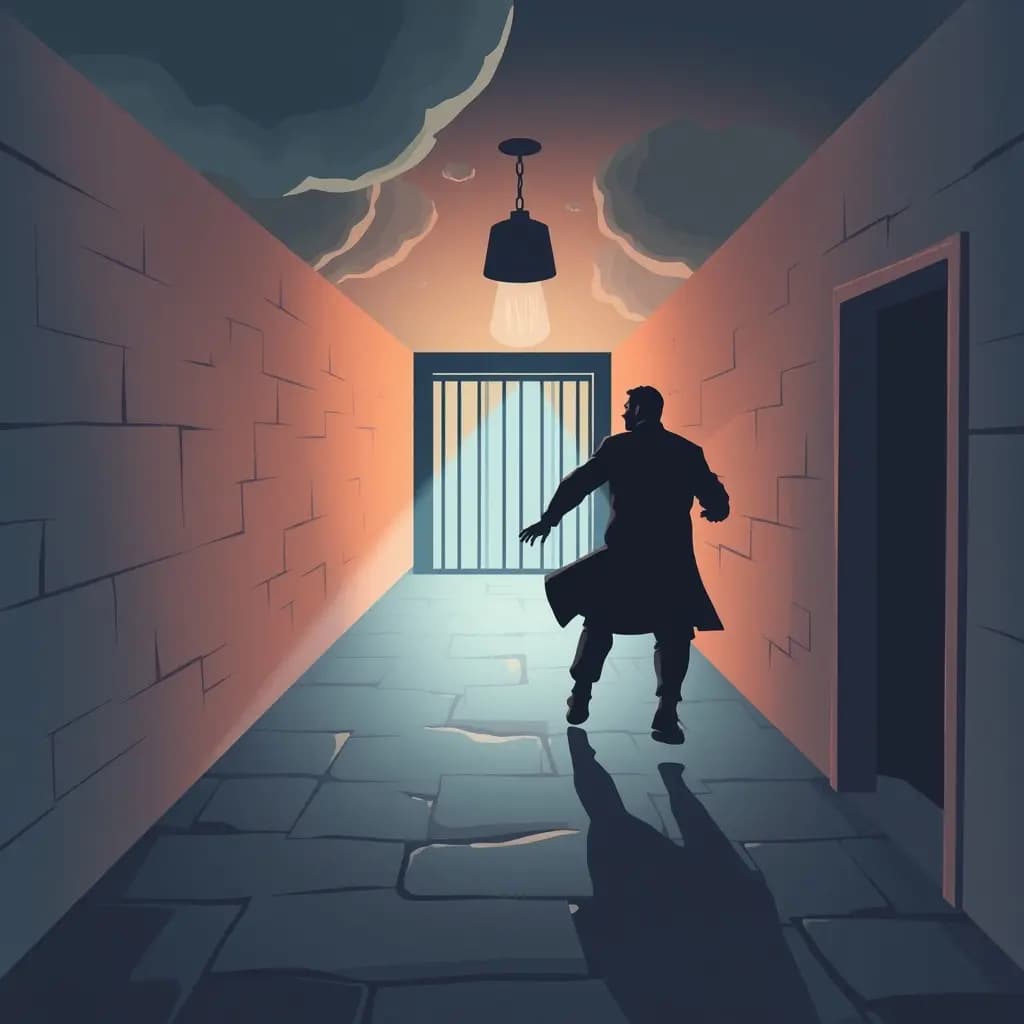
You bolt upright, heart hammering from a memory of cold concrete under your palms and the scrape of metal as you lever open a cell door. Bright floodlights strobe a narrow corridor, a guard’s heavy boot thuds nearby, and rain hisses against a small barred window. You feel a mix of adrenaline and guilt—an urgent need to move, a sense that something at work, at home, or in your own choices has trapped you.
Concrete details that tend to stand out
People often notice specific details: an orange jumpsuit that smells of bleach, a brass key that won’t turn, a train whistle in the distance, or a soaked baseball cap left on a windowsill. Physical reactions—sweaty palms, knees buckling or a sudden silence when you freeze—stick with the memory.
What this dream usually means
This dream commonly points to a desire to break free from constraints—an oppressive job, a controlling relationship, or internal rules you no longer accept. It can reflect fear about the cost of leaving (legal, social, or moral), a rehearsal of escape plans, or the mental tug-of-war between safety and autonomy. Often the dream compresses practical concerns and emotional risk into one urgent scene; relief can sit next to deep anxiety.
Key interpretations
- 1. Desire for autonomy. The escape sequence can signal a strong wish to reclaim independence. If you’ve recently felt micromanaged at work, trapped by a relationship or suffocated by caregiving duties, the dream stages an exit. The locked cell stands for boundaries you want removed and the guards are the people or rules that enforce them.
- 2. Anxiety about consequences. Running from prison may highlight worry over what happens after you leave—shame, judgment, financial cost, or legal trouble. The dream rehearses scenarios where freedom carries risk. That brass key that won’t turn or the distant siren can represent fear that escape might lead to exposure or loss.
- 3. Personal transformation or boundary testing. Sometimes the dream describes an internal rite of passage: shedding an old identity, testing limits, or confronting a ‘shadow’ aspect of yourself. Breaking out is less about physical flight and more about attempting a new role—moving cities, ending a habit, or leaving a profession—and assessing whether you can live with the consequences.
What your mind may be processing
In real life, your sleeping mind often runs scenarios to weigh options and rehearse responses. Escaping prison can be a cognitive simulation of leaving a structured environment—how you might act, what you might lose, and how it feels emotionally. It commonly surfaces when stress, control conflicts, or big decisions are present; rather than a diagnosis, it’s a way your brain processes risk, moral tension, and the logistics of change.
What this dream is not literally saying
This dream is rarely a literal prediction that you will be arrested or imprisoned. It does not usually forecast specific legal events. Instead, it metaphorically dramatizes feelings of entrapment or the consequences you imagine for making a big change. Emotionally, it can feel as alarming as a real threat even when it’s symbolic.
Why recurring versions matter
Recurring versions matter when the dream repeats with similar details or waking distress—especially if you notice the same exit route, the same guard, or persistent panic on waking. It’s a signal to examine ongoing pressure points: an unresolved breakup, a looming legal or financial decision, immigration stress, or a job that feels morally incompatible. Increased frequency suggests the issue hasn’t been addressed and may benefit from practical planning or conversation.
FAQ
Is this about money?
Is this about money? Not usually directly. While financial strain can create a sense of being trapped, the dream more commonly symbolizes control, obligations, or the risk of consequences than a specific monetary forecast.
Why do I feel fear in this dream?
Why do I feel fear in this dream? Fear reflects the perceived stakes: loss of status, punishment, or shame. Your mind is weighing escape against possible fallout, so the dream turns that evaluation into urgent, physical danger.
Why does this dream repeat?
Why does this dream repeat? Repetition often means you haven’t resolved the issue the dream dramatizes—ongoing stress, an unfinished decision, or repeated feelings of being confined by people or rules.
Can this dream be positive?
Can this dream be positive? Yes. It can signal readiness to change, testing inner courage, or the start of transformation. Relief or triumph at the end of the dream usually points toward empowerment rather than doom.
Related dreams to explore
Dreams about escaping prison are often connected to Trial, Interrogation, and Traffic Ticket. Looking at those nearby themes can help you compare control, fear, pressure, or change across similar dream scenes. You may also want to compare it with Signing a Contract if the same mood or conflict keeps showing up.