Dream About Endless mirrors – Meaning
Category: Spiritual & Symbolic
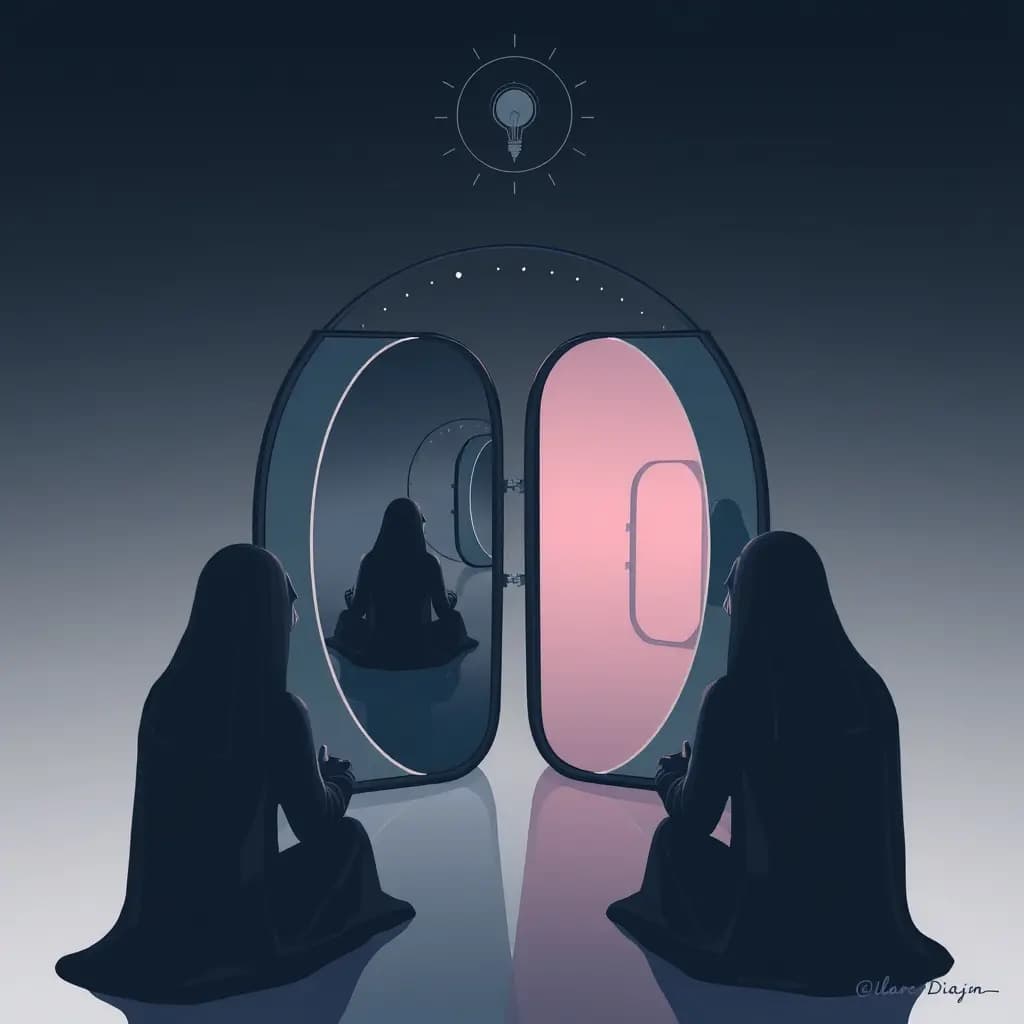
Dreaming of endless mirrors often feels like stepping into a labyrinth of reflections — infinite faces, repeated rooms, and subtle shifts in what you recognize. Such dreams point to themes of identity, repetition, and perception, but the exact meaning depends heavily on how you felt in the dream and the life context you bring to it.
General meaning of dreaming about Endless mirrors
Endless mirrors commonly symbolize self-examination taken to an extreme: you are confronted by many versions of yourself, memories, or choices. These dreams can highlight a sense of being lost in introspection or, conversely, an opportunity to see patterns you normally miss. The repeated reflections emphasize themes of repetition, recursion, and the continuum between past and present identity.
Often the dream asks you to notice subtle differences between reflections — each one may represent alternative attitudes, suppressed traits, or habitual reactions. Depending on the setting and your emotions, the mirrors can feel either clarifying or disorienting.
Key meanings often include:
- Self-reflection and inner multiplicity: multiple possible selves, roles, or masks you wear.
- Repetition and unresolved cycles: patterns that keep recurring until noticed and changed.
- Perception vs. reality: questions about which reflection is 'true' or authentic.
- Loss of boundary: feeling fragmented, overwhelmed, or unsure which part of you is in control.
Spiritual meaning of Endless mirrors in dreams
Spiritually, endless mirrors can point to an invitation to examine the soul's layers. Many traditions use mirrors as metaphors for the soul's clarity or opacity; in this case, countless reflections suggest a journey through many lessons or incarnations, or a dense field of karmic impressions that requires purification.
Seen through an energetic lens, the dream may signal a need to align inner and outer realities. Some mystical paths describe mirrors as thresholds where psychic impressions are reflected back for healing — an endless mirror scene can indicate a prolonged period of spiritual integration or discernment.
Psychological interpretation
Fear, stress or anxiety
If the dream provokes panic, confusion, or dread, it may mirror anxiety about identity or decision-making. Endless reflections can amplify small worries into an overwhelming sense that every choice spawns endless consequences. This often appears during periods of high stress, change, or when you feel unable to find a clear path forward.
Relationships and emotional bonds
Mirrors that show multiple faces can represent the different roles you play in relationships — partner, friend, caretaker, or boundary-setter. The dream may highlight inconsistencies between how you present yourself and how you feel inside, or reveal relational patterns that repeat across partners and friendships.
Control, power or vulnerability
Mirrors can expose vulnerability: when you see yourself multiplied, it may feel like your boundaries are porous or your power is diffused. Alternatively, if the dream lets you inspect each reflection calmly, it may indicate growing mastery over inner parts and a more integrated sense of self.
Positive meaning
- Deepened self-awareness: recognizing previously hidden aspects of your personality.
- Integration of conflicting parts: bringing fragmented traits into a cohesive whole.
- Spiritual growth: a sign you are processing lessons slowly, moving toward clarity.
- Creative insight: discovering new perspectives or solutions by seeing multiple angles.
- Opportunity to break patterns: awareness that allows intentional change rather than unconscious repetition.
Negative meaning and warnings
- May suggest overwhelm: an inability to make decisions because you see too many possibilities.
- Can indicate rumination: getting stuck in self-analysis without taking action.
- May suggest identity confusion: feeling fragmented or unsure which role to adopt.
- Can indicate avoidance: using analysis and reflection to delay uncomfortable choices.
Common variations of dreams about Endless mirrors
- Walking through an endless mirror maze: Often points to feeling trapped in cycles of thought or habit; the maze quality emphasizes difficulty finding a clear exit or solution.
- Seeing many versions of yourself at different ages: Suggests integration of past selves and memories, or unresolved issues from different life stages seeking attention.
- Broken endless mirrors: Can indicate fractured self-image or painful moments where identity feels shattered; it may call for healing and reassembly of your sense of self.
- Endless mirrors reflecting strangers or faces you don’t know: May point to empathy overload, taking on others’ identities, or fear of losing yourself in relationships or social roles.
- Mirrors with doors or passageways between reflections: Suggests potential for transformation—each door is an opportunity to step into a new version of yourself rather than remain trapped in repetition.
- Endless mirrors showing future versions of you: Often reflects concern or curiosity about life direction and the multiplicity of possible futures; it can motivate planning or intentional change.
- Mirrors that repeat a phrase or image: Indicates a persistent inner message or memory that needs conscious attention; repetition is meant to draw awareness to a specific issue.
- Being unable to find your own reflection in the mirrors: Can signal disconnection from identity, low self-recognition, or the need to rediscover core values.
What to do after such a dream
- Reflect on emotions: Recall how the dream made you feel — calm, anxious, curious, or overwhelmed — and map those feelings to your waking life.
- Journal specifics: Write down notable images, repeated details, and any differences between reflections; patterns often emerge from repeated symbols.
- Review current life areas: Examine relationships, career choices, and routine patterns to see where repetition or identity questions appear.
- Practice grounding and discernment: Meditation, breathwork, or simple grounding exercises can help you move from rumination into clearer choice.
- Take small, intentional steps: Use insights from the dream to experiment with one small change (boundary, habit, or perspective) rather than trying to fix everything at once.
- Use creative integration: Art, role-play, or guided imagery can help you dialogue with different reflections and choose which parts to nurture.
If the dream recurs or leaves you unsettled, consider working with a trusted therapist, spiritual counselor, or dream-worker to explore deeper layers, especially when emotions tied to the dream feel intense or persist beyond reflection.