Dream About Empty wallet at a checkout – Meaning
Category: Work & Money
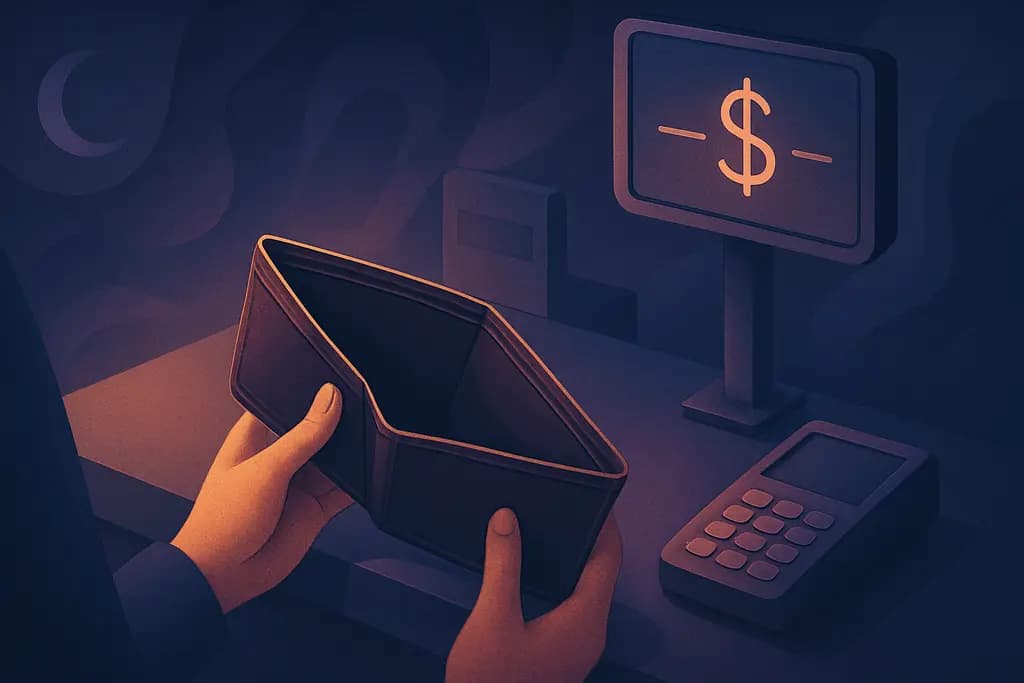
Dreaming that your wallet is empty while standing at a checkout often points directly to worries about resources, value and being judged in public—especially in work and money situations. The scene combines practical anxiety (paying bills, meeting expectations) with social exposure (others watching you fail to pay). The precise meaning depends on how you felt in the dream and the real-life context surrounding finances or career.
General meaning of dreaming about Empty wallet at a checkout
At its core, an empty wallet at a checkout symbolizes perceived lack: of money, options, support, or personal worth. Checkouts are transitional moments where a transaction is settled and consequences are immediate; finding your wallet empty there heightens the urgency and embarrassment of perceived shortfall. In a work and money context this dream commonly surfaces before decisions, deadlines, or when you feel your contributions are undervalued.
Typical interpretations focus on vulnerability in public, sudden realization of limits, or a wake-up call to practical planning. The emotional tone — panic, calm resignation, shame or relief — shifts the meaning toward crisis or opportunity.
- Financial anxiety and budgeting pressure
- Fear of public failure or judgment at work
- Feeling underpaid, undervalued or overlooked
- A prompt to reassess priorities and resources
Spiritual meaning of Empty wallet at a checkout in dreams
Spiritually, an empty wallet at a checkout can be read as a lesson about attachment, worth beyond material wealth, or a nudge toward simpler, more aligned living. Many spiritual traditions interpret lack-based imagery as an invitation to examine where you place your value: on possessions, titles, or inner qualities.
In broadly universal terms: the dream may encourage letting go of scarcity mindset, practicing gratitude for non-material assets (skills, relationships, integrity), or recognizing a karmic test about generosity and stewardship. In Buddhist-influenced views it may point to detachment; in Christian-inspired frameworks it could symbolize a test of faith or reliance on community; in modern spiritual practice it often signals energetic clearing around abundance blocks.
Psychological interpretation
Fear, stress or anxiety
This dream frequently mirrors acute stress about meeting obligations—bills, loan repayments, or workplace targets. The checkout scene externalizes internal fear that you won't have what it takes when accountability is required. If you wake anxious or embarrassed, the worry likely maps to real deadlines or financial uncertainty.
Relationships and emotional bonds
An empty wallet at a public checkout can also reflect relational dynamics: feeling dependent, indebted, or ashamed in front of others. It can indicate fear of disappointing a partner, employer or family member, or worry that asking for help will damage how others see you.
Control, power or vulnerability
Standing exposed at a checkout highlights loss of control and vulnerability. Psychologically, the dream can point to power imbalances at work (being under-resourced, overworked), or internal conflicts about asserting boundaries. It may surface when you feel forced into decisions without sufficient support.
Positive meaning
- A wake-up call to get organized financially and make a practical plan
- Chance to reprioritize values away from materialism toward meaningful work
- Opportunity to ask for support, negotiate better terms, or set clearer boundaries
- Catalyst for learning budgeting, negotiation or career skills that increase future security
- Invitation to practice vulnerability authentically, which can strengthen relationships
Negative meaning and warnings
- May suggest looming financial strain or tighter budgeting needs
- Can indicate stress that, if ignored, may affect performance or relationships
- May suggest feelings of inadequacy that lead to avoidance or withdrawal
- Can indicate a risk of being taken advantage of at work or in transactions
- Might point to poor planning or overcommitment that needs correction
Common variations of dreams about Empty wallet at a checkout
- Empty wallet at a supermarket checkout: Often highlights everyday financial pressure—groceries and household costs—and embarrassment about practical shortages.
- Empty wallet at a self-checkout machine: Emphasizes isolation and the need to solve problems alone; you may feel there’s no help available when you need it.
- Wallet empty when paying for work supplies or uniforms: Suggests job-related costs are weighing on you or that your workplace expects unpaid contributions.
- Someone else’s wallet is empty at the checkout while you can’t cover it: Reflects responsibility for others or anxiety about supporting someone financially or emotionally.
- Counting coins and coming up short at the till: Points to precise, measurable shortages—bills, invoices or budgeting gaps that need immediate attention.
- Wallet full of receipts but no cash: May symbolize mismatched value—lots of activity or transactions but no real gain; a prompt to evaluate where effort isn’t paying off.
- Realizing the wallet is gone at checkout: While bordering on theft imagery, this variation can mean sudden loss of confidence or resources, or fear of unexpected setbacks.
What to do after such a dream
- Reflect on how you felt in the dream: shame, panic, relief or calm will guide your focus.
- Journal specifics: location, people present, and what you were trying to buy—these details point to real-life sectors to examine.
- Review your current financial and work situation: budgets, upcoming bills, job satisfaction and workload.
- Take small, practical steps: update a budget, set one short-term goal, or make a list of resources and supports you can use.
- Talk with someone you trust about the dream and any real worries it brings up; articulating concerns reduces shame.
- Set intentions: if the dream prompted a values shift (less material focus, more security-seeking), choose one concrete habit to change.
- If needed, consider consulting a financial coach or career counselor for concrete planning and next steps.