Dream About Elephant appearing – Meaning
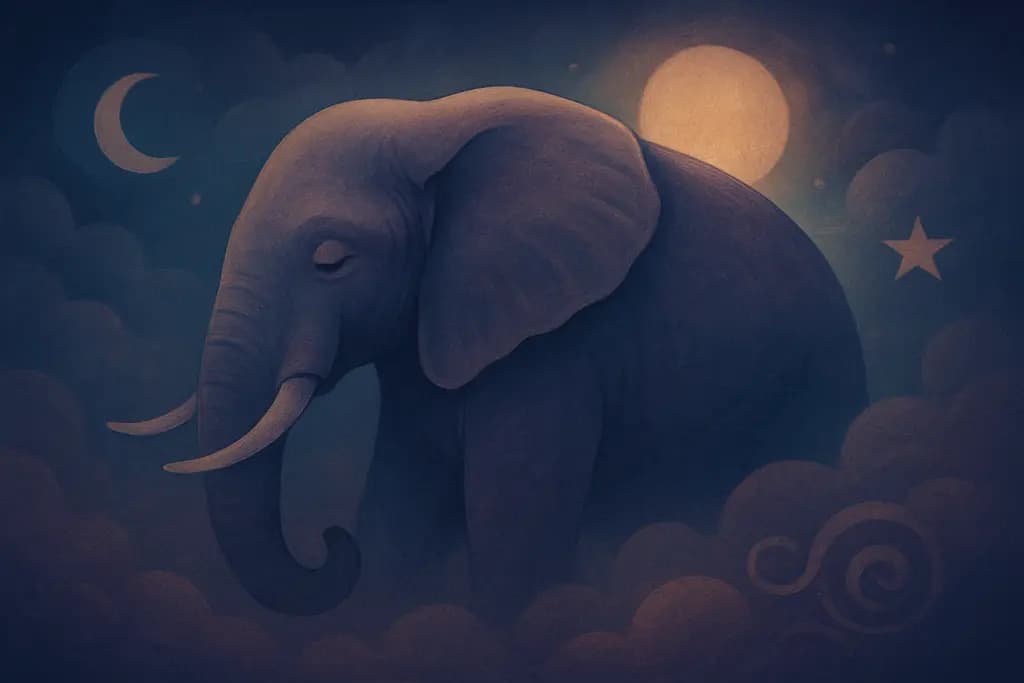
Category: Animals
Dreaming of an elephant appearing often signals something large and significant entering your awareness. These dreams can point to strength, memory, or an unresolved issue that feels too big to ignore. The precise meaning depends heavily on your emotions during the dream and the context in which the elephant appears.
General meaning of dreaming about Elephant appearing
Elephants are powerful, social, and long-lived animals, so when one appears in a dream it usually represents weighty matters: stability, wisdom, family ties, heavy responsibilities, or an obstacle you can’t dismiss. Because elephants carry cultural associations with memory and authority, their presence in dreams often calls attention to what you remember, what you must carry, or what you need to protect.
Context is key. A calm, gentle elephant tends to signify steady support or inner strength; a frightened or charging elephant can indicate a looming conflict or emotional overload. Pay attention to where the elephant appears, how it behaves, and how you react.
- Strength and resilience: resources you can draw on.
- Memory and the past: unresolved issues or long-standing lessons.
- Family and social bonds: protection, loyalty, or inherited roles.
- A large problem or responsibility: something that requires time and patience.
Spiritual meaning of Elephant appearing in dreams
Spiritually, elephants are often symbols of grounded power and sacred patience. In several traditions they represent a bridge between earthly concerns and higher wisdom, suggesting that steady presence and humility can open spiritual insight. For some cultures elephants embody divine attributes—calm authority, auspiciousness, or a guardian energy.
If the dream feels charged with reverence or awe, it may indicate a call to develop inner steadiness or to honor a deeper truth. Conversely, a fearful emotional tone can point to a need for emotional clearing before spiritual growth proceeds.
Psychological interpretation
Fear, stress or anxiety
An elephant appearing can symbolize an anxious awareness of something large and unavoidable — a deadline, a difficult conversation, or a health worry. The mind may be dramatizing how big the issue feels. If you felt panic, the dream is likely amplifying stress; if you observed from a distance, it may reflect underlying worry you haven’t fully processed.
Relationships and emotional bonds
Because elephants are highly social, this dream can reflect family dynamics, friendships, or responsibilities to loved ones. A calm elephant may indicate dependable support or a nurturing figure, while an aggressive or solitary elephant could point to estrangement, unmet expectations, or the influence of a dominant person in your life.
Control, power or vulnerability
Elephants evoke power that can protect or overwhelm. Dreaming of one appearing may mirror internal struggles with control: feeling powerful and grounded, or conversely feeling vulnerable beside something larger than you. Consider whether you’re resisting a role you’re expected to play, or whether you’re learning to use your own influence responsibly.
Positive meaning
- Growing strength: developing resilience and the ability to handle large challenges.
- Reliable support: a sign of dependable relationships or allies nearby.
- Wisdom and memory: reconnecting with useful lessons from your past.
- Stability and patience: encouragement to move forward steadily rather than rush.
- Protection and guardianship: feeling watched over or guided through a transition.
Negative meaning and warnings
- May suggest avoidance: the dream can point to a large issue you are ignoring.
- Can indicate overwhelm: feeling weighed down by responsibilities or obligations.
- May signal power imbalances: problems with someone dominating your choices.
- Could warn of stubbornness: holding onto a view or behavior that blocks progress.
Common variations of dreams about Elephant appearing
- Baby elephant appearing: A young elephant suggests new responsibilities, growing potential, or vulnerability in a relationship. It can also reflect a new, slow-developing project that needs care.
- Herd of elephants appearing: Multiple elephants point to family dynamics, community pressure, or collective influence. This may highlight group values or a sense of being swept along by others.
- Elephant appearing in your home: An elephant inside a familiar space often symbolizes private matters becoming public, or a big issue affecting family life and daily routines.
- Injured or sick elephant appearing: This variation may reflect neglected aspects of yourself or a relationship in need of healing, compassion, or practical help.
- Elephant appearing and bowing or gentle behavior: A peaceful, respectful elephant suggests humility, blessings, or an earned reconciliation.
- Charging or aggressive elephant appearing: May indicate a confrontation, a surge of repressed anger, or a rapidly approaching problem that demands action.
- Talking or communicating elephant: If the elephant speaks or seems to send a message, it often represents inner wisdom trying to be heard—pay attention to the content and tone.
- Elephant appearing near water: Water often symbolizes emotion; an elephant close to water can highlight feelings about a large matter, suggesting emotional processing is needed.
What to do after such a dream
- Reflect on emotions: note how you felt during and after the dream and what that feeling might map onto in waking life.
- Review current responsibilities: consider whether something important has been postponed or underestimated.
- Check relationships and boundaries: ask whether family roles or others’ expectations are influencing your choices.
- Make a small plan: if the dream points to a large task, break it into manageable steps to reduce overwhelm.
- Practice grounding: activities like walking, journaling, or focused breathing can help you process big feelings that the elephant symbolizes.
Take the dream as a prompt for reflection rather than a strict verdict; its meaning will be clearest when tied to your personal context and feelings.