Dream About eating unknown food and getting sick in a dream – Meaning
Category: Food & Drink
A typical dream scenario
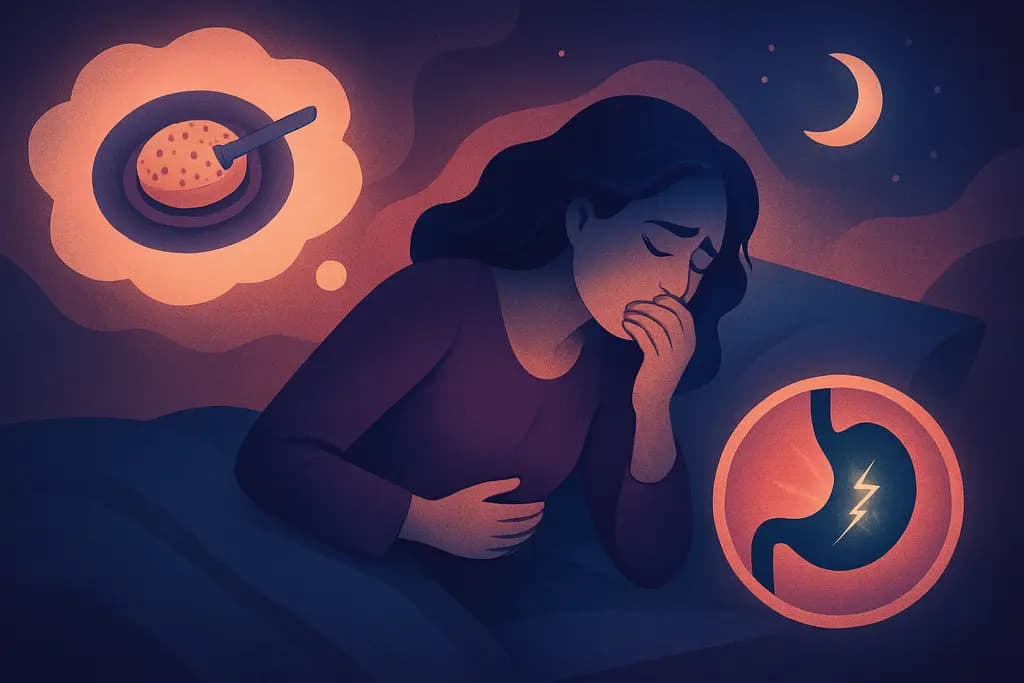
You wake feeling uneasy after a crowded dinner where someone pressed a plate into your hands. You remember the room: warm lights, the hum of conversation, your coat half-on, and a glossy casserole you didn’t recognize. You take a bite to be polite, then a queasy knot spreads through your stomach and you rush to a bathroom or step outside for air. The fear you feel in the dream—embarrassment, panic, or betrayal—lingers when you wake.
Unusual details people report
Dreamers report specific details: the kitchen door slamming, a stranger’s hands offering a fork, a rain-soaked street visible through the window, the scraping of chairs, bright floral wallpaper, sudden chills, or an involuntary gag and clammy hands when the taste hits.
Main interpretation
This dream most commonly signals discomfort with something new or imposed—an idea, responsibility, decision, or relationship element you didn’t choose. In many cases, the body’s rejection (nausea, vomiting) represents an emotional refusal rather than a literal digestive problem. The unknown food stands for unfamiliar demands or compromises, and getting sick is the psyche’s visceral way of saying ‘this doesn’t sit right’—a call to examine boundaries and consent.
Three common meanings
- Boundary breach or pressured acceptance. Eating unknown food and falling ill may point to feeling coerced into a decision or role—saying yes to others when you want to say no. The sickness mirrors bodily revolt against overcommitment or invasion of personal limits. Check where you’ve been accommodating to avoid conflict and whether you need clearer personal boundaries.
- Fear of taking a risk or trying a new identity. The strange dish can symbolize a new career move, relationship, or habit that feels ‘foreign.’ Getting sick is anxiety about the consequences of change—loss of control, shame, or regret. This dream can encourage slow tasting: gather information, set trial steps, and protect your wellbeing while experimenting.
- Emotional contamination or unresolved guilt. Sometimes the dream reflects emotional “contamination”: taking on someone else’s problems, toxic ideas, or guilt until it makes you ill. The visceral response suggests you’re internalizing something harmful. Consider what feelings or obligations you’ve absorbed that might need release, apology, or honest conversation.
Psychological perspective
From a modern psychological angle, the dream is a metaphor built from bodily sensation and everyday experience. The brain uses taste and nausea—strong, easy-to-recognize cues—to signal internal conflict: cognitive dissonance, stress overload, or moral unease. It’s not a clinical diagnosis; rather, it points to unresolved processing. Journaling the scene, noting who was present and your real-life choices around that time, can reveal which stressors are being symbolically digested.
What this dream usually does not mean
This dream is rarely a literal prediction about food poisoning or immediate physical harm. It does not usually forecast an upcoming meal gone wrong. Rather than a concrete warning about safety, it most often reflects emotional or social digestion—how you process new information or feel pressured to accept something you’d prefer to reject.
When this dream deserves attention
Pay attention when this dream is recurring, appears during intense stress, or follows a major life transition—job change, move, new relationship, or caregiving duties. Repetition suggests a persistent issue your mind hasn’t resolved. If it coincides with physical symptoms, address both: track stressors, set firmer limits, and talk to a trusted friend or counselor. The dream becomes urgent when it repeatedly wakes you at night or changes your daytime behavior.
Common questions
Why does this dream repeat?
Why does this dream repeat? Repetition usually signals an unresolved emotional conflict or boundary issue you haven’t addressed. Your mind keeps presenting the scene until you take concrete steps—set limits, make a decision, or process the underlying anxiety.
Can this dream be positive?
Can this dream be positive? Yes. It can prompt protection and clarity: recognizing what doesn’t belong in your life and motivating a healthier choice. The sickness can catalyze change rather than simply signal distress.
Is this about relationships?
Is this about relationships? Often it is. Shared meals stand for intimacy and trust, so the dream can reflect feeling pressured, betrayed, or uncomfortable within friendships, family dynamics, or romantic relationships.
Is this dream a warning?
Is this dream a warning? It can be a caution, but rarely a literal omen. It tends to warn about emotional risks—boundaries being crossed or bad compromises—rather than predicting physical danger.
Related dream meanings
People who dream about eating unknown food and getting sick in a dream often end up exploring being hungry in a dream chasing food, being hungry in a dream and can't eat, and dream about choking on food next, because the same pressure can show up through different symbols. Comparing them usually makes the emotional pattern clearer. You may also want to compare it with choking on food in dream meaning if the same mood or conflict keeps showing up.