Dream About Drinking from empty bottle – Meaning
Category: Food & Drink
A common version of this dream
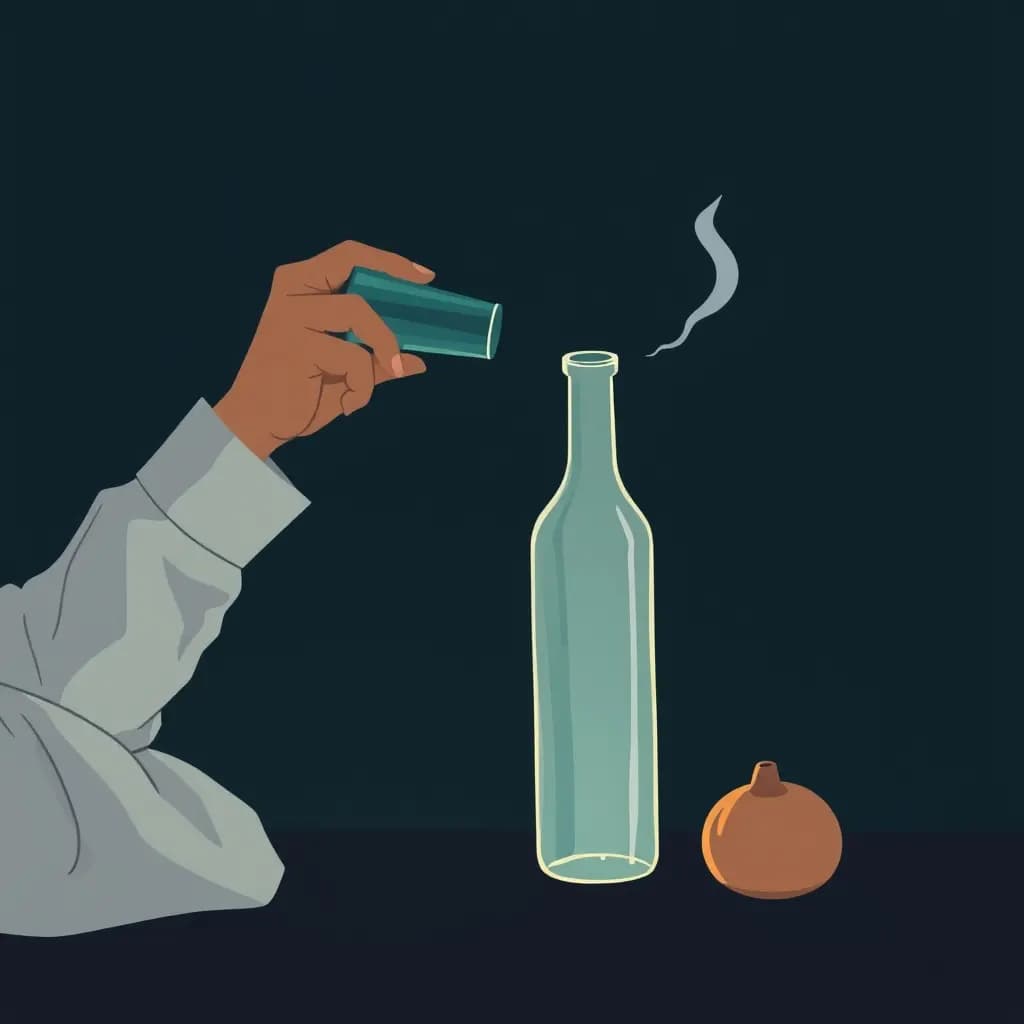
You find yourself in a dim kitchen at midnight, toes cold on tile, holding a familiar glass bottle you once loved. Thirst pricks your throat; you tip the bottle to your lips with hope, but nothing pours out. A roommate knocks softly at the door; your hands tremble a little with embarrassment. The scene carries the tightness of need—either for comfort, recognition, or simple sustenance—making the lack feel personal and immediate.
Concrete details that tend to stand out
People frequently notice a cloudy residue inside the bottle, a faint clinking sound when they lift it, or rain tapping the window behind them. Some report the label showing a smiling face, a child in the doorway, or the bottle feeling warm as if it had been used recently.
Main interpretation
Drinking from an empty bottle commonly signals a felt shortage—emotional, physical, or practical. It often reflects seeking fulfillment and finding nothing where you expected nourishment: a relationship that doesn’t respond, an effort that yielded no result, or energy you no longer have. In real life, this dream may prompt you to check immediate needs (sleep, food, support) and consider where you rely on others or habits that aren’t sustaining you anymore.
How this dream can be interpreted
- Emotional thirst. The empty bottle stands for unmet emotional needs—comfort, validation, affection. If you’re seeking reassurance from a partner, friend, or family member and repeatedly feel rebuffed, the dream compresses that ache into a simple action: trying to drink and getting nothing. It can point to loneliness or longing and suggest you examine which relationships are draining versus nourishing.
- Burnout and resource depletion. When life has demanded too much—long hours, caregiving, or constant problem-solving—the bottle represents personal reserves. Drinking and finding the bottle empty captures physical or creative exhaustion: you’ve given away more than you can replenish. The dream may push you toward concrete rest, boundary-setting, or delegating tasks.
- Broken promises or false assurances. If the bottle looked full or was sold as satisfying, the dream can echo experiences of being misled: a job that promised growth but didn’t, a friend who said they would help but didn’t, or a plan that failed. The empty bottle highlights disappointment and a need to reassess who and what you trust to provide.
- Scarcity anxiety and control issues. Anxiety about scarcity—time, money, status—can surface as an empty bottle. The dream may appear during transitions or uncertain seasons when control feels thin. It points less to actual shortage and more to fear of losing access or stability, urging you to identify practical steps to regain some control and reduce rumination.
Psychological perspective
From a modern psychological view, this dream often reflects how the mind simulates unmet needs and rehearses solutions. Thirst is a potent bodily metaphor easily mapped onto emotional hunger, attachment wounds, or resource strain. The visual of an empty container is a concise mental model your brain uses to organize feelings about availability and trust. While not a diagnosis, it can be a useful signal to notice patterns—sleep, diet, social support—and to try small behavioral experiments to rebalance your day-to-day life.
What this dream is rarely about
This dream is rarely a literal prediction that you will physically run out of something or that a specific event will happen. It does not usually mean imminent doom or a precise future outcome. Rather than forecasting external catastrophe, it more often mirrors an internal sense of shortage or disappointment—urgent-feeling but usually symbolic.
When to take this dream seriously
Take this dream seriously when it recurs, appears during a major life change, or arrives amid chronic stress. Repetition suggests an unresolved issue your waking mind isn’t addressing—ongoing grief, a job mismatch, or caregiving fatigue. If it coincides with sleepless nights, constant worry, or a pattern of disappointment, consider tracking triggers and taking practical steps: schedule rest, set limits, or ask for concrete help. The dream becomes a useful early warning signal for slow-building problems.
Common questions
What should I do after this dream?
What should I do after this dream? Write down details you remember, check basic needs (hydration, sleep, food), and pick one small action—call someone, set a boundary, or rest—that addresses the lack you felt in the dream.
Is it related to stress?
Is it related to stress? Yes. This dream commonly appears during stress, exhaustion, or transition. It often signals depleted energy or emotional need rather than a single external event.
Is this dream a warning?
Is this dream a warning? Not usually as a literal warning. It can serve as a symbolic alert to unmet needs or risk of burnout, prompting reflection and practical adjustments rather than alarm.
Is this about money?
Is this about money? Sometimes it relates to financial worries, but it more often points to emotional or practical shortages. Check recent money-related anxieties, but also consider relationships, time, and energy.
Related dreams to explore
If this dream keeps returning, pages about Food evaporates midbite, Food transforms into insects, and Drinking from a cracked cup can reveal the related patterns underneath it. They often overlap around insecurity, transition, or stress in everyday life. You may also want to compare it with Bread turns to stone if the same mood or conflict keeps showing up.