Dream About dream about visiting a black temple or mosque – Meaning
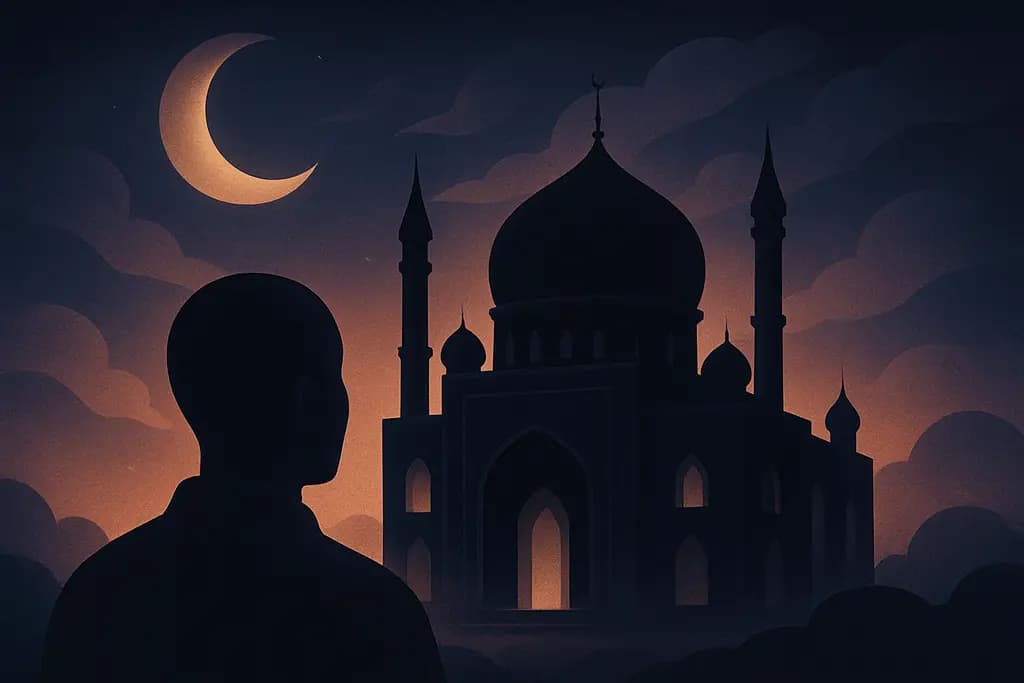
Category: Religion & Sacred Symbols
What this dream often looks like
You push open a heavy, lacquered door into a dark courtyard where black stone rises into arches. The air smells of smoke and wet marble; a single lamp flickers. You remove your shoes, feel the chill of carved steps, and hear a distant chant that makes your heart tighten. Maybe you’ve just ended a relationship, left a job, or are deciding about faith—this scene is charged with awe, cold silence, and a tight, hovering anxiety.
Concrete details that tend to stand out
People report specific imagery: a locked inner door, rows of low cushions, a single open window, a crowd in dark robes, cold stone underfoot, echoing footsteps, the scent of frankincense, a distant bell or call, goosebumps and a quickened pulse when stepping inside.
Main interpretation
This dream most directly points to facing a powerful, unknown part of yourself—authority, tradition, or a repressed belief—that feels both sacred and threatening. It often reflects a life transition (ending, decision, or moral choice) where you’re confronting limits, rules, or a shadow side you’ve avoided. The black building stands for mystery and seriousness; entering it implies negotiation with inner values, fear of judgment, or readiness for an initiation into something new.
Key interpretations
- Confronting inner authority or conscience. The black temple or mosque may represent the internalized voice of rules—religious, familial, or moral—that you’ve carried since childhood. Entering or standing before it suggests you’re negotiating obedience and autonomy: questioning rules, feeling guilty about choices, or deciding whether to follow inherited values. The dream highlights the tension between duty and personal freedom.
- Encounter with the shadow or repressed material. Dark sacred architecture often symbolizes what you’ve hidden: shame, anger, or urges marked taboo. Walking its halls and facing altar-like spaces implies an encounter with those parts of yourself needing acknowledgment. This interpretation points to psychological integration—recognizing and sitting with uncomfortable feelings rather than pushing them away.
- Invitation to initiation or meaningful change. A black house of worship can feel like a threshold. The dream may mark a rite of passage: a career pivot, a breakup, or a spiritual shift that asks for deeper commitment. The darkness signals the unknown phase ahead; crossing the threshold suggests readiness to learn, to grieve what ends, and to accept a new role or belief structure.
Psychological perspective
From a neutral psychological view, this dream is a vivid metaphor your mind uses to process stressors and decisions. In many cases, nighttime architecture in dreams organizes memory traces—parental rules, recent conflicts, or social anxiety—into a single, emotionally charged image. The fear or reverence you feel is information: it maps where you sense constraint or invitation. This perspective treats the black temple/mosque as a mental stage for negotiating identity, not as evidence of an external supernatural event.
What this dream usually does not mean
This dream rarely functions as a literal prophecy about a place or a person. It does not usually predict a physical event like finding a real black temple or a forthcoming religious conversion. Instead, it is symbolic—an interior encounter with authority, secrecy, or taboo—so avoid interpreting it as an exact warning about external affairs.
When this dream deserves attention
Pay attention when this dream repeats, clusters around stressful life changes, or leaves a persistent emotional residue. Recurrence often signals unresolved moral conflict, lingering grief, or a decision you keep postponing. The dream deserves action when it disrupts sleep or spills into daytime anxiety; it’s a prompt to journal, talk with a trusted friend, or reflect on recent choices. It can feel terrifying and, paradoxically, like an invitation—an uncomfortable but necessary push toward growth.
Frequently asked questions
What should I do after this dream?
Reflect and ground first: write the details, note emotions, and check for recent life events that match the dream’s tone. If it repeats, schedule quiet reflection, a conversation with a trusted adviser, or focused journaling about the decisions or beliefs the dream raised.
Why do I feel fear in this dream?
Fear often appears because the dreamstage activates deeply rooted rules or unknown parts of yourself. The architecture symbolizes authority; the fear is a natural response to confronting change, shame, or potential judgment—your nervous system reacting to perceived threat.
Is this dream a warning?
Not usually. The dream is rarely a literal warning about an external event. It’s more commonly signaling an internal conflict or a need for moral or spiritual realignment than predicting specific future occurrences.
Why does this dream repeat?
Recurring dreams often return when an issue remains unresolved—ongoing stress, unfinished grief, or a postponed decision. Repetition is the mind’s way of pressing for attention until you acknowledge or act on the underlying concern.
Related dreams to explore
If this dream keeps returning, pages about dream of a person praying and crying, dream about praying with family, and white robe praying in dream can reveal the related patterns underneath it. They often overlap around insecurity, transition, or stress in everyday life. You may also want to compare it with black praying figure in dream if the same mood or conflict keeps showing up.