Dream About dream about joining a video call late (Zoom call) – Meaning
Category: Technology & Communication
Main interpretation
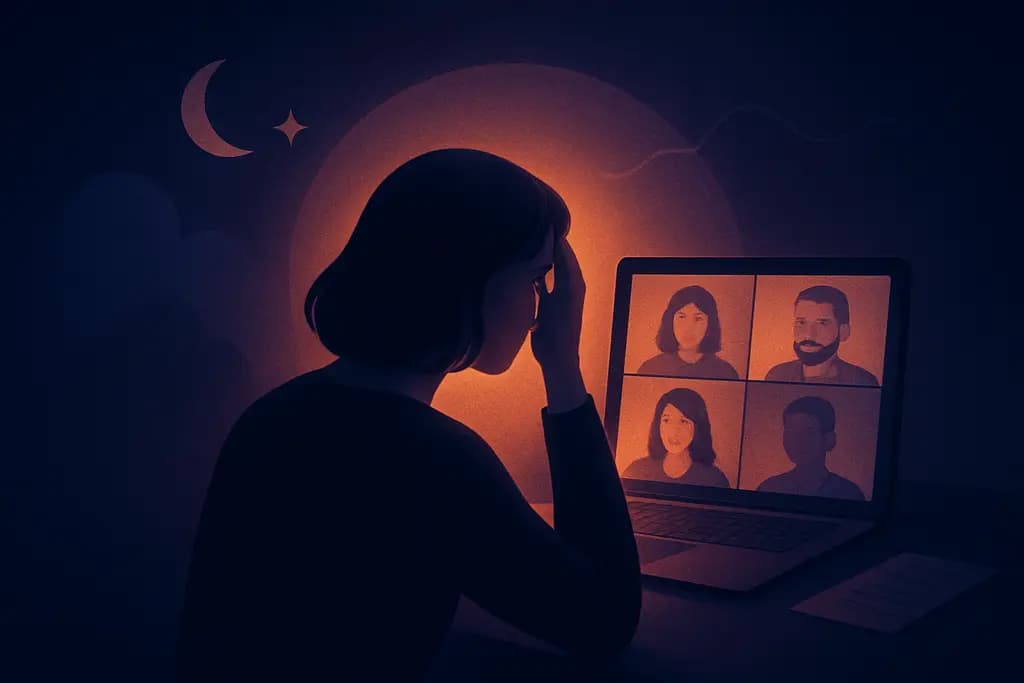
This dream usually signals social-performance stress: worry that you’ll be evaluated for being late, unprepared, or invisible during a moment that matters — a job interview, a presentation, or an emotional conversation. The video-call setting compresses workplace and personal scenes where timing and presentation matter: the meeting is the event, the late arrival is the fear, and the camera/microphone are symbols of how visible you feel. It often points less to a literal future event and more to current pressure about responsibility, role change, or how others see your competence.
What it can reflect emotionally
From a modern psychological viewpoint, the dream commonly reflects anticipatory anxiety and social-evaluation concerns rather than a single fixed meaning. The video-call format ties together performance cues (camera, mute button) and timing cues (clock, late notice) so the mind rehearses scenarios where social standing or competence is tested. Concrete triggers include deadlines, recent criticism, or blurred home/work boundaries; the emotional core tends to be shame or urgent self-monitoring, sometimes mixed with a desire to be accepted.
How this dream can be interpreted
Work performance anxiety. If you’re in a job with frequent video meetings, the dream often reflects fear of underperforming in front of colleagues or managers. The late arrival stands for missed preparation or a worry that you’re falling behind on deliverables. Notice whether deadlines, recent feedback, or a high-stakes presentation preceded the dream.
Social judgment and belonging. When the dream focuses on faces in the gallery and whispered laughter, it points to insecurity about fitting in socially. Joining late can represent fear of being evaluated or excluded in friendships or community groups. Pay attention to who reacts in the dream — familiar judges (a boss, parent) often mirror real relationship pressures.
Control and time-management stress. A recurring image of a spinning loading wheel or a missed calendar alert suggests daily life feels chaotic: calendar overload, boundary blur between home and work, or poor handoffs. The dream can be a nudge to adjust schedules, turn off notifications, or set stronger start-time rituals so you feel less rushed.
Transition and role-change anxiety. If you’re entering a new role — a promotion, new parenthood, or a move — the late-arrival dream may symbolize unease about new responsibilities and visibility. The camera becomes a metaphor for being seen in a new role; the fear isn’t punctuality alone but whether you belong in that new position.
What this dream is rarely about
This dream is rarely a literal prediction that you will actually miss a meeting or that the software will fail at that moment. It does not usually forecast an external catastrophe. Instead, it works as a symbol of internal timing, self-evaluation, and the pressure to perform; emotionally, it can mix embarrassment and urgency rather than foretelling real-world technical problems.
Unusual details people report
People often report oddly specific images: a frozen gallery of faces, bright office fluorescent lights seen through a rain-streaked window, the elevator doors closing as you sprint, or the humiliating realization you’re in pajamas while everyone else is in suits. Some feel their cheeks burning or hear a loud echo when they apologize.
Why recurring versions matter
A one-off dream can be passing anxiety; recurring versions become important when they mirror ongoing stressors: constant deadlines, a toxic meeting culture, unresolved fear of public failure, or a major life transition. Recurrence suggests the issue hasn’t been addressed in waking life — perhaps you need clearer boundaries, a conversation about expectations, or coaching to build skills. If the dream intensifies alongside daytime avoidance or sleep disruption, it’s a sign to make practical changes rather than simply dismissing it.
Symbolic meaning across traditions
Meanings vary across cultures. In Western professional contexts the dream often ties to career image and punctuality; in collectivist cultures lateness in public settings can carry stronger shame and concern about family or group reputation. Some traditions treat dreams as omens, others as internal messages — so while one person might read a late call as a bad sign, another will see it as a prompt for practical change. Avoid assuming a single cultural meaning; interpret the dream alongside your cultural values and recent life events.
FAQ
Can this dream be positive?
Yes. It can be positive when it motivates practical changes — improving time management, setting boundaries, or preparing more thoroughly. The jolt of embarrassment in the dream can push you to show up more confidently.
Is it related to stress?
Often. Many people have this dream during periods of acute stress — heavy workloads, looming deadlines, or blurred home/work boundaries tend to trigger it.
Is this about money?
Usually not. The dream rarely indicates financial issues directly; it more commonly reflects performance, timing, or social-evaluation worries rather than money.
Related dreams to explore
Dreams about dream about joining a video call late (zoom call) are often connected to red notification about joining a video call dream meaning, white background when joining a live stream dream meaning, and black screen while joining a video call dream. Looking at those nearby themes can help you compare control, fear, pressure, or change across similar dream scenes. You may also want to compare it with black hacker in my dream if the same mood or conflict keeps showing up.