Dream About Desert – Meaning
Category: Places
What this dream often looks like
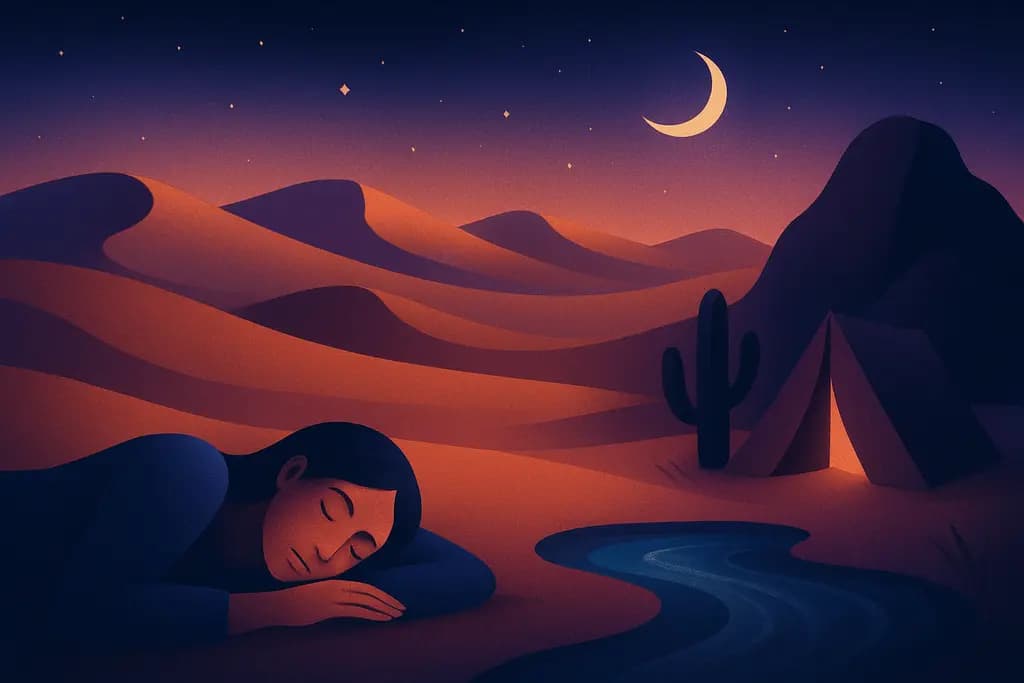
You are walking across wide, sun-baked sand with a small pack and one empty water bottle. Heat presses at your skin, your footprints quickly erased by wind, and a low ridge of dunes hides the horizon. Sometimes there is a solitary road cutting through the sand, sometimes nothing but a shimmering mirage; you feel tired, alert, and very aware of each step. The scene may end with you spotting an oasis, climbing a dune, or sitting down to rest, hands in the hot sand.
Three common meanings
Scarcity and resource testing. When the dream emphasizes dry ground, an empty bottle, or the search for shade, it commonly reflects feeling stretched thin in waking life. This can map to a tight budget, caregiving burnout, or a creative drought: practical reserves feel low and you’re being asked to ration energy. Notice where you are conserving or overgiving; the dream invites small, concrete adjustments (rest breaks, asking for help, reallocating time).
Transition and endurance. Crossing dunes or coming out of a sandstorm often signals a life passage: leaving a job, ending a relationship, or a planned move. The journey matters more than instant arrival. If you find a compass, road, or caravan in the dream, it speaks to choices and support networks; if you lose a map, it points to improvisation. The scene tends to emphasize pacing yourself rather than forcing a quick fix.
Detachment and inner clearing. A calm, empty desert can indicate a desire for silence, boundaries, or a reset — sometimes welcomed, sometimes frightening. This version of the dream may appear during grieving, retreat, or when you’re turning away from social noise to hear your own needs. The oasis or mirage becomes telling: an oasis suggests renewal is available; a mirage warns that a tempting shortcut may not satisfy.
What this dream is not literally saying
A desert dream is rarely a literal prediction about travel, doom, or imminent physical danger. It does not usually announce a specific external event; instead, it commonly uses the image of barrenness to signal internal limits, decisions, or a need to conserve energy. Read it as metaphor and prompt, not as a news bulletin — the meaning is more about your resources and choices than literal deserts.
Unusual details people report
Dreamers often note odd specifics: a red door half-buried in sand, an office room sitting intact on a dune, a stalled bus crowded with passengers, or a leather jacket fused to your skin. Other reports include tasting salt, sand between teeth, the sudden sound of a distant radio, or a chill breeze at the nape of the neck that makes you shiver.
Symbolic and spiritual meaning
Symbolically, deserts have been used across traditions as places of purification, testing, and revelation; in dreams they may suggest a stripping away of distraction so essentials can be seen. This is a non-dogmatic way to read the image: the landscape may call you toward a period of inner work, simpler routines, or a deliberate retreat. If the dream includes an oasis, a guide, or a light on the horizon, those elements are personal symbols of hope or direction rather than universal prescriptions.
Psychological perspective
From a modern psychological angle, a desert dream often represents how the brain is organizing unmet needs, perceived limits, and decision stress. It can be a rehearsal space where you test coping strategies — for example, imagining finding water when worried about support. Recurring sand imagery may mark chronic depletion or anticipatory anxiety. Useful next steps include tracking when the dream appears, noting real-life resource gaps, and experimenting with small behavioral changes like setting clearer boundaries or scheduling recovery time.
Questions to reflect on
- When in the last month did I feel particularly drained, and what practical resource (sleep, time, money, help) was lowest then?
- In the dream, did I move toward something (an oasis, road, companion) or away from something, and what waking-life choice mirrors that movement?
- What one small step could I take this week to restore a resource the dream highlighted (call one person, book one rest evening, set a boundary)?
FAQ
Why does this dream repeat?
Repeating desert dreams usually point to an unresolved, ongoing issue or a persistent pattern of depletion. Your brain replays it until you notice and try a different waking-life response; keeping a log and testing small changes often reduces repetition.
Is this about relationships?
It can be about relationships if the dream specifically features companions, a caravan, or communication; in other cases the dream more often reflects personal limits, independence, or the need to set boundaries rather than partnership dynamics alone.
Why do I feel fear in this dream?
Fear in a desert dream most often comes from perceived scarcity, uncertainty, or a threat to your sense of control. That alarm can highlight where you feel unsupported or exposed; grounding techniques and naming what’s scarce can reduce the intensity.
Dream meanings connected to this one
People who dream about desert often end up exploring Bad Weather, Ballrooms, and black waterfalls next, because the same pressure can show up through different symbols. Comparing them usually makes the emotional pattern clearer. You may also want to compare it with Cave if the same mood or conflict keeps showing up.