Dream About Deceased relative visits – Meaning
Category: People
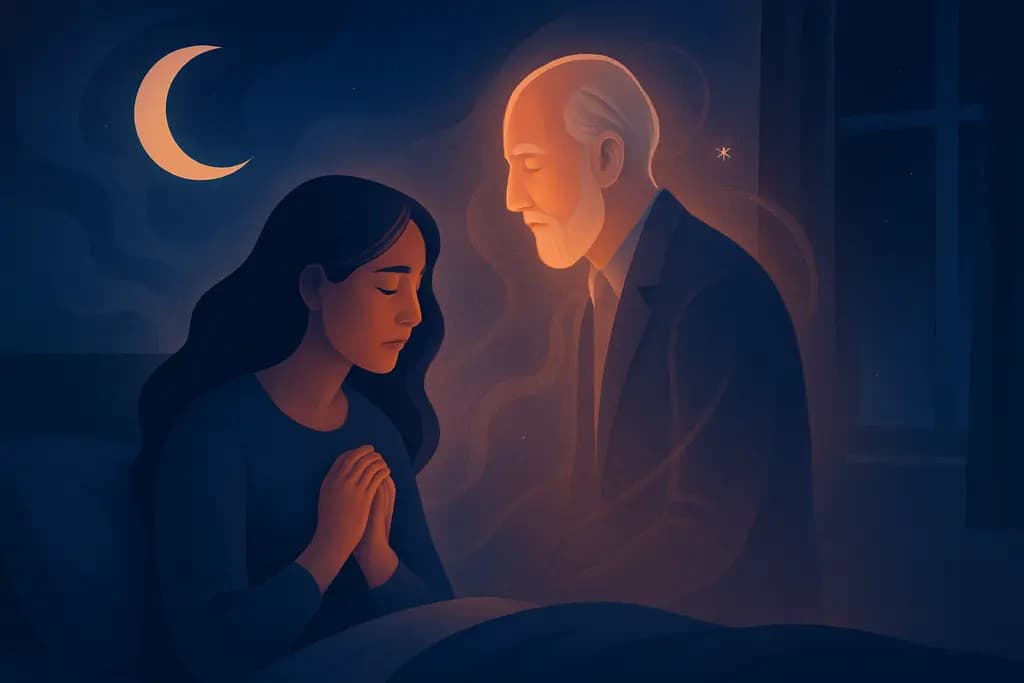
Dreaming that a deceased relative visits you can feel vivid, comforting or unsettling. Such dreams often connect to memory, unresolved emotions, or a need for guidance, and their meaning hinges on how you felt and the dream's context. Pay attention to the tone, the relationship with the relative, and any message or action in the dream.
General meaning of dreaming about Deceased relative visits
At its core, a deceased relative visiting in a dream symbolizes a bridge between past attachments and present life. These dreams commonly surface when grief, guilt, longing, or change is active in your waking life — they can bring closure, reminders, or unresolved issues to the foreground.
Typical interpretations center on emotional processing, memory activation, and relational continuity. The dream may be literal (you miss the person) or symbolic (they represent a part of yourself or family dynamics). Key meanings include:
- Comfort, reassurance, or a sense of presence from someone you miss.
- A call to resolve unfinished emotional business or to forgive.
- A mirror of your current feelings about family responsibilities, identity, or roles.
- A symbolic messenger pointing to decisions, warnings, or life transitions.
Spiritual meaning of Deceased relative visits in dreams
Spiritually, many people interpret a deceased relative's visit as energetic communication — a sign that the deceased's influence or love continues. In a variety of traditions this can be seen as an ancestor's blessing, a protective visitation, or a soul offering guidance during a major life event.
Different traditions emphasize different nuances: some view it as ancestral wisdom, others as the psyche using familiar faces to express inner truths. Regardless of belief, the spiritual reading usually centers on connection, guidance, and continuity beyond death.
Psychological interpretation
Fear, stress or anxiety
A visit from a deceased relative can mirror unresolved anxiety about mortality, loss, or the stability of your support network. If the encounter felt frightening or judgmental, it may point to internalized fears, pending decisions, or stress about repeating family patterns.
Relationships and emotional bonds
Dreams of visits highlight the ongoing emotional bond you have with that person. They can reveal what you still need to say, forgive, or accept, and may surface after anniversaries, family conflicts, or major life changes that reactivate memories.
Control, power or vulnerability
If the relative exerted control, criticized, or rescued you in the dream, this can reflect current feelings of vulnerability, a struggle over autonomy, or reliance on family expectations. The dream may dramatize who holds power in your life or how secure you feel managing responsibilities.
Positive meaning
- Comfort and emotional healing: the dream may bring peace or a sense of being watched over.
- Closure and forgiveness: an opportunity to release guilt or reconcile unresolved feelings.
- Guidance and insight: symbolic advice about a decision, path, or relationship.
- Strength from lineage: renewed confidence inspired by family heritage or values.
- Motivation for growth: the visit can catalyze positive change, prompting you to act on lessons learned.
Negative meaning and warnings
- May suggest unresolved grief or suppressed emotions that need attention.
- Can indicate avoidance of current relationship issues or difficult decisions.
- May point to lingering guilt, regret, or a repeat of harmful family patterns.
- Can signal anxiety about loss, responsibility, or major life changes.
Use cautious language with these possibilities: the dream can indicate tension, but it does not prescribe a single interpretation.
Common variations of dreams about Deceased relative visits
- Seeing a deceased parent visit: Often tied to core identity, security needs, or major life transitions like parenting, career shifts, or grief work.
- Deceased relative speaks a clear message: If they speak directly, people often read it as important advice or an inner realization framed in a familiar voice.
- Deceased relative appears happy and healthy: May suggest acceptance, relief, or that your memory of them comforts you; it can be a sign of emotional healing.
- Deceased relative seems upset or accusatory: Can reflect guilt, unresolved conflict, or fear of judgment that you still carry.
- Multiple deceased relatives visiting together: May point to family-wide themes, intergenerational patterns, or a strong pull toward family history and identity.
- The relative touches or embraces you: Often interpreted as emotional reassurance, permission to move forward, or physical comfort you long for.
- A deceased child or younger relative visits: This can highlight lost potential, protective instincts, or unresolved caretaking roles within the family.
What to do after such a dream
- Reflect on your emotions: Note whether you felt comforted, frightened, relieved, or confused — feelings are key to interpretation.
- Journal details: Write who appeared, what was said, and the setting; patterns emerge over time.
- Review current life context: Look for recent events (anniversaries, family conflicts, decisions) that might have triggered the dream.
- Consider relationships and unresolved issues: If the dream highlights unfinished conversations, think about safe ways to process those feelings with trusted people or rituals that help you find closure.
- Use symbolic action: Small rituals — lighting a candle, visiting a meaningful place, or creating a memory ritual — can provide emotional relief and clarity.
Remember: dreams of deceased relatives are personal and layered. Use them as invitations to explore feelings, not as literal instructions. If the dream leaves you deeply distressed, consider talking with a supportive friend or a professional counselor for ongoing emotional support.