Dream About Deceased loved one – Meaning
Category: People
What this dream usually means
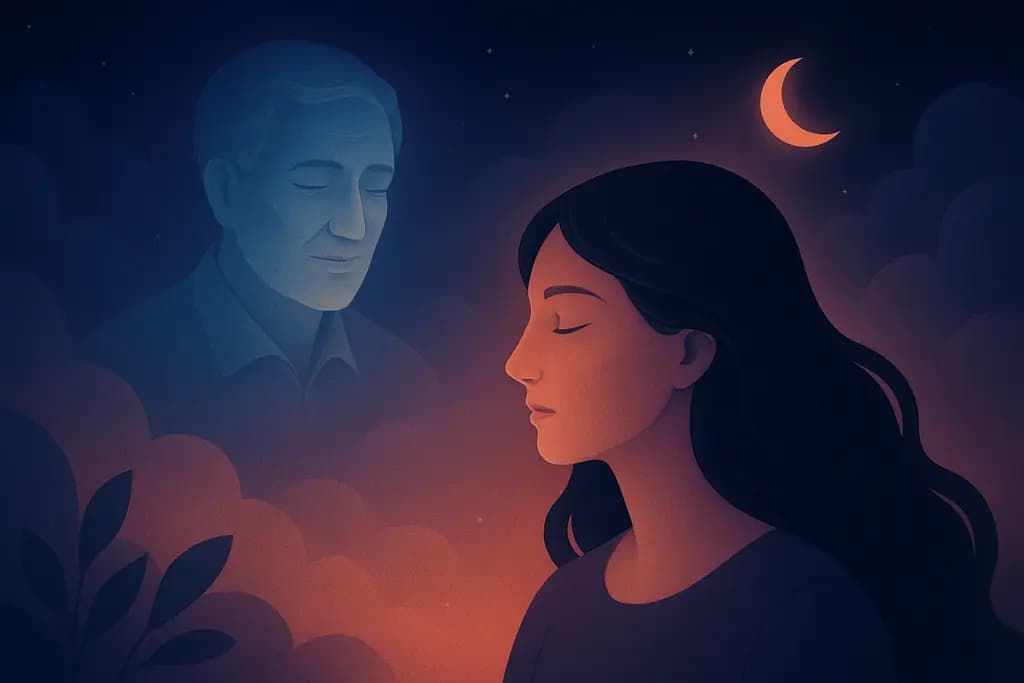
Most often, dreaming about a deceased loved one points to an active emotional connection: an unresolved conversation, a need for comfort, or memory work that your mind is doing while you sleep. If you dreamed of them offering advice during a decision, the dream may be your internalized sense of their values helping you decide. If the dream left you crying or relieved, it commonly reflects grief that is still integrating into daily life rather than a literal reunion. The specific setting — a house, a car, a funeral — helps narrow whether it’s about memory, responsibility, or solace.
What it can reflect emotionally
In many cases, these dreams reflect normal memory consolidation and emotion regulation processes rather than supernatural events. Triggers include anniversaries, looking through photos, moving house, or making a major life decision. The brain links current stressors with stored memories, replaying key scenes — a hospital corridor, a birthday cake — to rehearse feelings and reach emotional resolution. Dreams like this can surface guilt, relief, nostalgia, or practical worries; paying attention to which feeling dominates helps identify the waking issue to address.
What this dream is rarely about
This dream is rarely a literal prediction or proof of a supernatural visit. It does not usually work as a literal prediction of future events or an immediate sign about someone’s fate. More often it reconstructs memories, emotions, and current pressures into symbolic scenes; treating it as a direct forecast risks missing the emotional work the dream is pointing toward.
Key interpretations
Grief and integration. If the dream centers on shared places — their kitchen, a childhood home, or a funeral room — it commonly reflects active grief processing. Seeing them in familiar surroundings while you sort possessions or read a letter suggests you are integrating the loss into your daily life. The emotional tone (relief, numbness, weeping) indicates how far this process has progressed and whether practical tasks like sorting affairs are tied to the feelings.
Unfinished conversations or guilt. When the dream revolves around a last conversation, a missed call, or a door you didn’t open, it often signals unresolved issues: apologies unsaid, promises unkept, or decisions left hanging. Specific actions in the dream — trying to speak but being interrupted, returning to an old message — point to a part of you that wants closure. These dreams can prompt concrete steps: writing a letter, completing a practical task, or having a symbolic ritual.
Comfort, memory, or guidance. Dreams where the deceased offers simple comfort, hands you an object, or gives quiet advice often function as memory-based reassurance. If they appear calm, smiling, or pointing out a path, the dream may be your mind offering the values they represented while you face a choice or a stressful transition. This interpretation is about internalized guidance rather than an external message and can feel emotionally stabilizing.
Specific details people often mention
People frequently report precise imagery: the person standing in a doorway wearing a bright coat, rain on the windowsill while a clock chimes, a single song playing faintly, or the startling sensation of their hand on your shoulder. Others recall a specific object — a wedding ring, a dented teacup, a red bicycle — that anchors the scene and the emotion.
When to take this dream seriously
Take this dream seriously when it repeats, leaves you emotionally stuck the next day, or coincides with a life transition like moving, divorce, or a new job. Recurrence, escalating fear, or avoidance of daily tasks after the dream suggests unresolved material worth addressing. If the dream points to an action — returning a letter, settling an estate, apologizing to someone still alive — that practical thread can be a concrete place to start. If dreams interfere with sleep or functioning, consider talking with a grief counselor or trusted community elder.
Symbolic meaning across traditions
Meanings vary across cultures. In Mexican traditions connected to Día de los Muertos, dreams of the deceased are often welcomed as visits; in many East Asian contexts, ancestor dreams can be treated as reminders to perform rites. Indigenous communities may see such dreams as relational messages with specific protocols. Western clinical-influenced cultures more often frame the dream as psychological processing. Recognize cultural practices and respect varying interpretations rather than assuming one universal meaning.
Frequently asked questions
Can this dream be positive?
Yes. Dreams that feel warm, clear, or peaceful often represent acceptance, fond memory, or psychological comfort and can be experienced as positive and consoling.
Why do I feel fear in this dream?
Fear often comes from unresolved guilt, surprise at the encounter, or the brain’s threat system reacting to reminders of loss; suddenness or old trauma tied to that person can also trigger fear.
Why does this dream repeat?
Repetition usually signals unfinished emotional processing, anniversaries, or ongoing stress; the dream repeats until the underlying feeling or task receives attention.
Is this about money?
Rarely. While practical worries about inheritance or bills might appear as details, these dreams are more commonly about emotional ties than literal financial predictions.
Related dreams to explore
Dreams about deceased loved one are often connected to Seeing a Deceased Loved One, Seeing a deceased relative alive, and Visited by a deceased relative. Looking at those nearby themes can help you compare control, fear, pressure, or change across similar dream scenes. You may also want to compare it with A historical figure if the same mood or conflict keeps showing up.