Dream About Dead bird – Meaning
Category: Animals
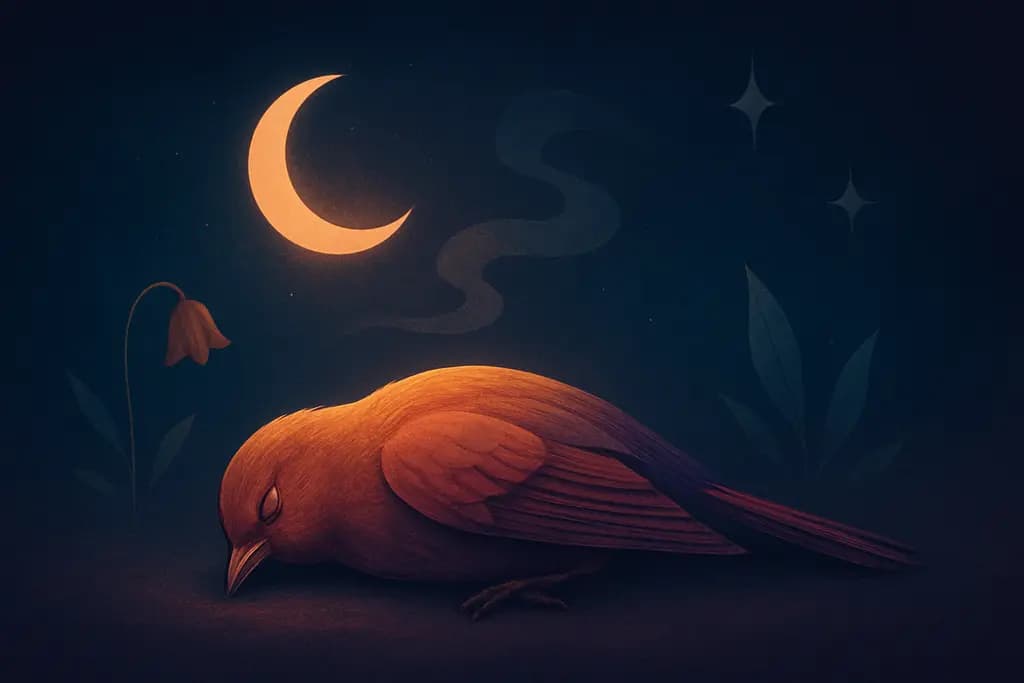
Dreaming of a dead bird often stops you in your tracks — it can feel shocking, sad, or puzzling. Such dreams point to endings, lost potential, or a pause in freedom, but the exact meaning depends heavily on how you felt and the dream context. Pay attention to your emotions, the setting, and any other symbols that appeared.
General meaning of dreaming about Dead bird
A dead bird in a dream commonly symbolizes the end of something that once allowed movement, hope, or a sense of lightness. Birds frequently represent freedom, messages, or creative inspiration; when a bird is dead, those qualities may feel blocked, diminished, or transformed in waking life. The core idea is liminality — a transition between what was possible and what must now be reconsidered.
How you reacted in the dream matters: sorrow suggests mourning a real loss, indifference can point to numbness or acceptance, and anger may indicate frustration at thwarted plans. Cultural background, recent events, and personal associations with birds will shape the nuance.
Key meanings may include:
- Endings or loss of opportunity
- Suppressed creativity or stalled projects
- A sense of vulnerability or exposed emotions
- A call to reevaluate beliefs, goals, or relationships
Spiritual meaning of Dead bird in dreams
Spiritually, a dead bird can mark a period of inner purification or the ending of a soul-level chapter. In many traditions birds are messengers between worlds; a dead messenger may mean that a message has been completed, delayed, or that you need to seek new sources of guidance. Some spiritual paths see it as an invitation to release attachments and prepare for inner renewal.
Different traditions interpret animal death in dreams with care: indigenous and animist views may treat the scene as a warning or an omen requiring ritual attention, while contemplative practices might read it as an opportunity for letting go. Universally, the image points toward transformation rather than a purely final state.
Psychological interpretation
Fear, stress or anxiety
A dead bird can reflect acute fear or chronic stress about losing freedom, mobility, or autonomy. If you have been under pressure at work or feel emotionally cornered, the dream may embody those anxieties. It can also be a projection of worry about failure or about plans that feel "grounded".
Relationships and emotional bonds
In interpersonal terms, the dream may highlight a relationship that has cooled, lost its vitality, or feels one-sided. Mourning the bird in the dream can mirror grief for a friendship, partnership, or the loss of trust. Conversely, a dead bird might symbolize boundaries finally being set when a relationship was draining your energy.
Control, power or vulnerability
A dead bird can point to feelings of powerlessness or vulnerability—especially if you saw the bird hurt or caught. You might be struggling with control issues, either feeling overcontrolled by others or unable to assert your needs. The dream invites examination of where you feel exposed and how you might reclaim agency.
Positive meaning
- A chance to grieve and release what no longer serves you
- Space for creative reinvention after a stalled project
- Clearing of illusions so more honest choices can emerge
- Opportunity to set healthier boundaries and protect energy
- A turning point that leads to wiser, more grounded decisions
Negative meaning and warnings
- May suggest a real loss is occurring or approaching
- Can indicate suppressed emotions that could cause distress if ignored
- May warn of missed opportunities because of inaction or fear
- Can indicate burnout, fatigue, or emotional depletion
- Might signal a need to address risky behavior or unhealthy attachments
Common variations of dreams about Dead bird
- Dead baby bird found in a nest: Often relates to fragile hopes, newborn plans, or fledgling relationships that need nurturing or may be failing. It can trigger strong protective instincts or grief for something undeveloped.
- Finding a dead bird in your home: Suggests that issues you thought were outside are now inside your personal life or space. It can point to domestic tensions or an inner loss you cant ignore.
- Dead flock of birds: May indicate a broader sense of collective loss, social disillusionment, or shared endings among friends, family, or a community group. It can also reflect feeling overwhelmed by multiple setbacks.
- You hold a dead bird: Holding the bird often means you are directly carrying grief, responsibility, or the consequences of a choice. It asks you to acknowledge and process that burden.
- Roadkill bird or dead bird by the roadside: This variation can point to abrupt setbacks, an encounter with reality, or seeing the practical outcomes of risky paths. It may prompt safer choices.
- Dead bird with visible injuries or blood: Emphasizes trauma, unresolved pain, or a sense that something ended violently rather than peacefully. It can urge attention to healing and support.
- Dead bird that comes back to life: Suggests recovery, a second chance, or the possibility that a stalled project or relationship could be revived with effort and care.
- Dead bird in the sky or falling: Implies a collapse of ideals, public reputation, or long-held ambitions. It can be a call to reassess ambitions and their foundations.
What to do after such a dream
- Reflect on the emotions you felt in the dream and how they mirror current waking feelings.
- Journal details: setting, your actions, other characters, and any recurring themes in recent dreams.
- Review recent life areas where something ended or stalled: projects, relationships, health, or creative work.
- Have honest conversations with people involved if the dream points to relational loss or boundaries.
- Consider small, practical steps to renew energy: rest, creative outlets, counseling, or changes in routine.
- Use rituals or symbolic acts of release if that helps you process grief—planting, writing a letter, or a simple letting-go ceremony.
Pay attention to recurring dreams and shifts in tone; they can guide what needs care. If the dream stirs deep distress that interferes with daily life, seek support from trusted friends or a mental health professional.