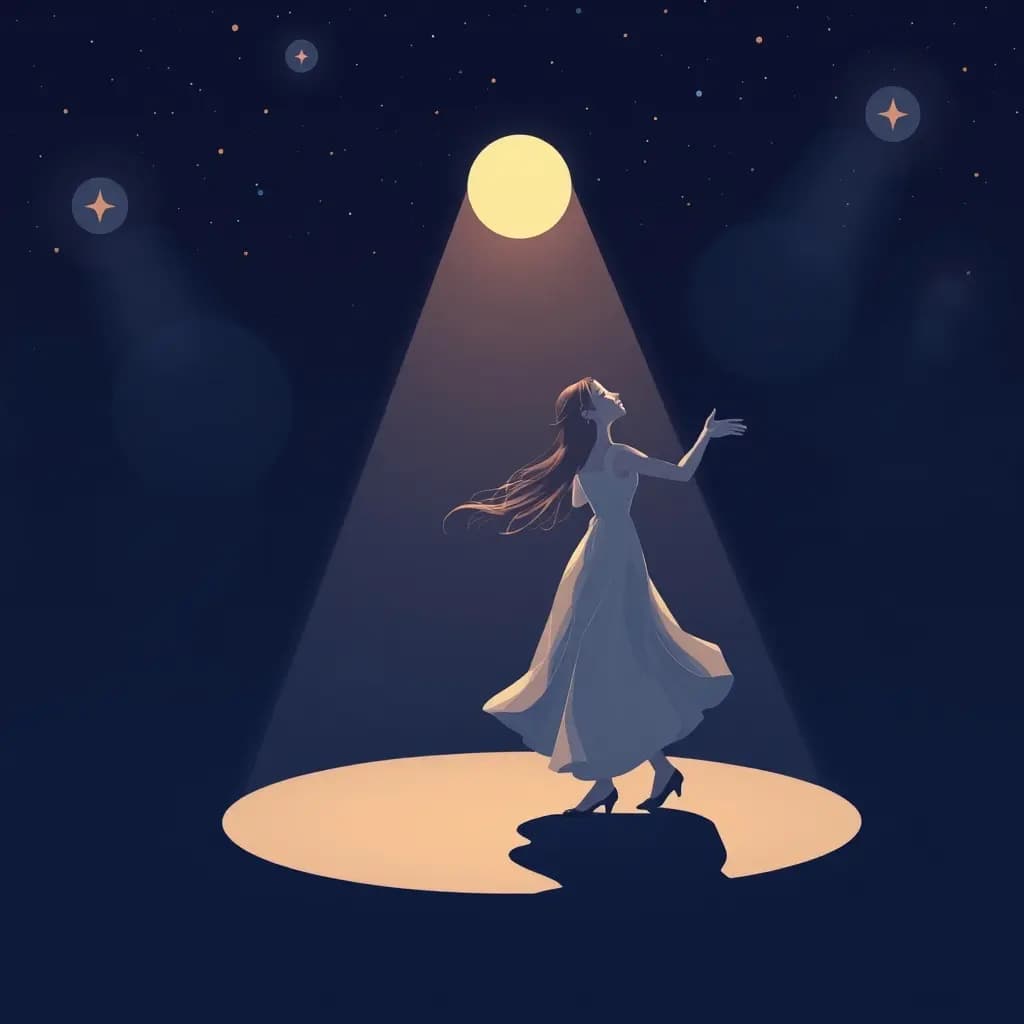
Dream About Dance partner disappears mid-song – Meaning
Category: Celebrations & Rituals
What this dream usually means
This dream most commonly signals a fear of being left to complete a role alone: lost support, an unexpected responsibility, or the need to improvise when plans break. The empty floor and continuing music highlight pressure to perform despite missing help. It can also point to a transition—stepping into leadership or being forced to make choices without your usual collaborator. It can feel terrifying and humiliating, yet sometimes that rupture is also the moment you realize you can manage on your own.
What it can reflect emotionally
In many cases, this dream reflects attachment and self-efficacy concerns: trust that someone will follow through, anxiety about social performance, or the internal question of whether you can manage alone. Concrete life triggers include recent teamwork failures, solo presentations, or abrupt changes in caregiving. The mid-song disappearance compresses these feelings into a short, vivid scenario that’s easy to replay. Emotionally, it mixes embarrassment with a practical test of competence—fear layered with a chance to rehearse handling uncertainty.
What this dream is not literally saying
This dream is rarely a literal prediction that someone will disappear from your life the next day. It does not usually mean physical abandonment in a supernatural sense. Instead of forecasting events, it typically translates emotional experiences—pressure, surprise, or a shift in roles—into dramatic stage imagery. Take the scene as symbolic, not a direct warning that someone will vanish tomorrow.
Three common meanings
Abandonment or loss of support. The partner leaving mid-song often reflects a recent experience where help or encouragement pulled away—an absent colleague during a deadline, a friend who canceled, or a parent emotionally unavailable. The dream mirrors the raw feeling of footing a responsibility alone, with the music keeping time while you scramble to keep the steps. Notice who the partner represents in your waking life and what support you expected but did not receive.
Sudden role shift and forced independence. Sometimes the dream marks a turning point: you’re called to take over a task or lead without training. The vanished partner forces improvisation—you step into the spotlight, change choreography, or keep the dance going. This can point to promotion, caregiving responsibilities, or being thrust into decision-making. The disruption can be stressful but also indicates capacity to adapt when plans fall apart.
Performance anxiety and social exposure. If the dream is saturated with embarrassment—faces in the crowd, bright lights, or laughter—it often ties to performance anxiety. The partner’s exit amplifies fear of being judged while unprepared. Concrete triggers include public speaking, interviews, or social rituals where you worry about mistakes. The dream spots where social pressure meets self-doubt and shows how exposed you feel when a safety net disappears.
Relationship dynamics and boundary shifts. The disappearing partner can also reflect changing boundaries: someone pulling back, testing limits, or signaling they no longer want to perform the same role in a partnership. In romantic or close relationships this can mean a partner is emotionally distant or asserting independence. The dream highlights mismatch between expectations—your choreography—and the other person’s choices, inviting a conversation about needs and limits.
Concrete details that tend to stand out
People often recall a polished wooden ballroom, a torn ribbon on a sleeve, an open backstage door, or the echo of a single shoe on the floor. Other recurring specifics include sudden rain outside, a hush from a crowd, the sting of bright lights, or a racing heartbeat that drowns the music.
Why recurring versions matter
Recurring versions of this dream are important when they coincide with ongoing stress, unresolved fear, or a life transition—job change, breakup, new parenting role. If the scene repeats, the underlying issue likely hasn’t been addressed: patterns of unreliable support, chronic performance pressure, or unspoken boundary problems. Pay attention if the dream increases in frequency or intensity; that escalation is often a signal to adjust expectations, seek backup, or rehearse the skills you’d need if you actually had to go solo.
Symbolic meaning across traditions
Meanings vary across traditions. In some Western frameworks the vanished partner symbolizes abandonment and independence; certain folk or ritual traditions might read a missing dance partner as a sign of imbalance or a need for renewed vows. In other cultural contexts a solo dancer can be admired as a rite of passage. No single tradition can claim certainty; check your cultural background and personal rituals to see whether a missing partner would be interpreted as dishonor, growth, or a spiritual test.
FAQ
Is this dream a warning?
Usually not. This dream is most often symbolic—pointing to vulnerable spots (trust, role, preparedness)—rather than predicting a literal, immediate disappearance. Use it as a cue to check fragile areas in your life.
Can this dream be positive?
Yes. It can signal newfound independence or the push to discover capabilities you didn’t know you had. A forced solo sometimes reveals competence and resilience you can build on.
Why do I feel fear in this dream?
Fear comes from exposure and uncertainty: the mind rehearses scenarios where support collapses, triggering adrenaline, embarrassment, and the sense of having to improvise. Those bodily reactions make the dream feel urgent.
Is this about money?
Not typically. Unless your waking life includes a dependent financial relationship that feels unstable, this dream more often concerns emotional or logistical support than money itself.
Related dream meanings
People who dream about dance partner disappears mid-song often end up exploring Graduation robe torn, Breaking a ceremonial chain, and Gift wrapped with empty box next, because the same pressure can show up through different symbols. Comparing them usually makes the emotional pattern clearer. You may also want to compare it with Ceremony missing its leader if the same mood or conflict keeps showing up.