Dream About Crowd booing in silence – Meaning
Category: Sports & Competition
Main interpretation
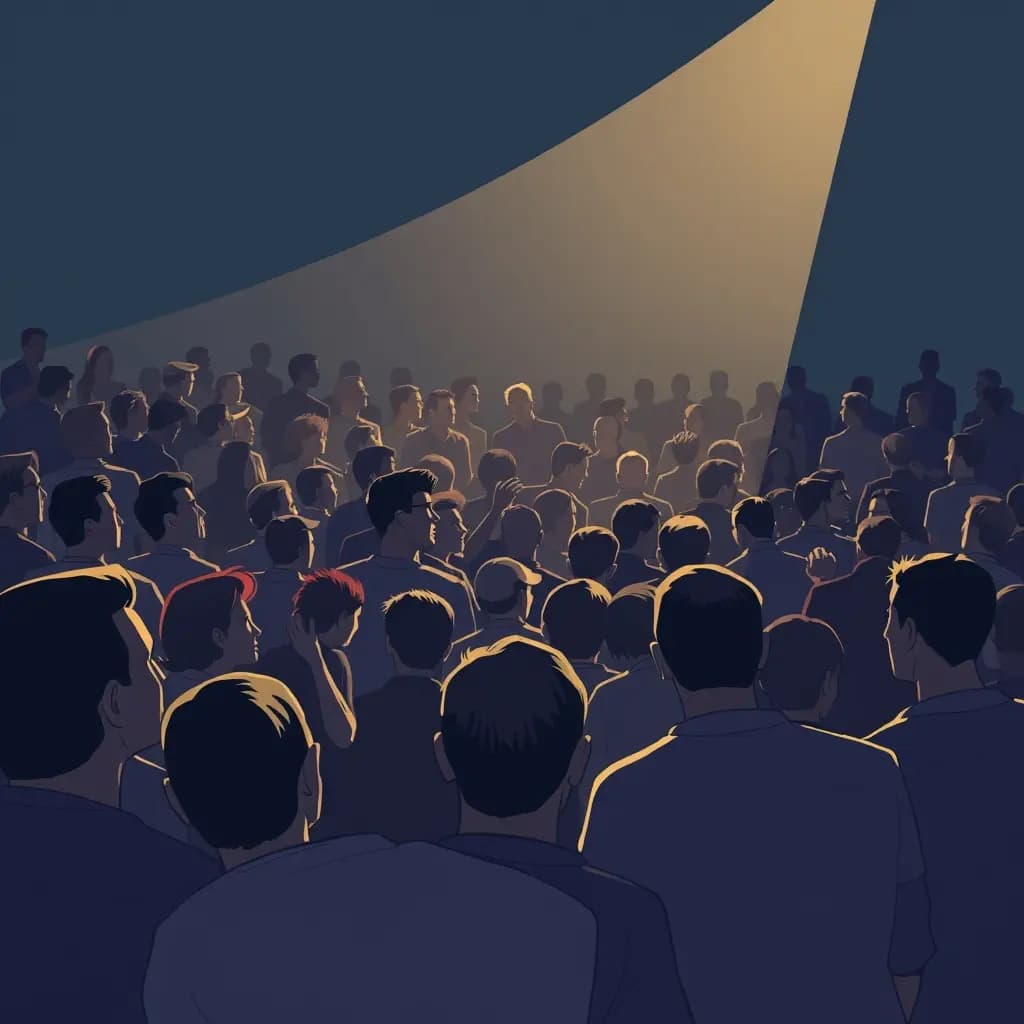
A crowd booing in silence most often points to feelings of social judgment, shame, or performance anxiety rather than a literal prediction of public humiliation. The silence of the boos intensifies the sense that criticism is imagined, internalized, or withheld—you feel criticized even when there’s no audible evidence. This dream can reflect pressure at work, a recent public role, or an internalized harsh voice that judges your choices and identity.
A common version of this dream
You stand on a rain-slick sports field beneath stadium lights, your uniform damp, a scoreboard blinking an unfamiliar number. Hundreds of faces tilt toward you; mouths move and lips curl but you hear nothing—no roar, only the tight pressure in your chest and the taste of copper on your tongue. You try to speak into a mute microphone; your voice feels small and swallowed. The scene leaves a raw, exposed ache, like failing when everyone is watching.
Concrete details that tend to stand out
Dreamers report specific details that linger: an empty megaphone on a stand, yellow rain jackets in the crowd, a single open door behind the stands, a silver whistle that makes no sound, and a trembling throat or cold sweat as the silence presses in.
Emotional and symbolic meanings
- Social judgment and public scrutiny. This angle interprets the silent booing as fear of being evaluated in public roles: giving a presentation, playing a sport, or making a visible life choice. If you’ve recently been in meetings, auditions, or noticed critical comments, the dream can amplify the sense that you’re under a spotlight and that any mistake will be magnified.
- Inner critic and suppressed shame. Here the crowd represents your internal voice. The lack of sound suggests the criticism is self-generated—old parental voices, perfectionism, or guilt that you carry silently. The dream calls attention to unresolved shame or harsh self-talk that crowds out your ability to feel supported or confident.
- Powerlessness within group dynamics. This interpretation points to anxiety about conformity and mob behavior: worry that others will withhold approval, ostracize you, or pressure you to follow choices that conflict with your values. It can reflect workplace politics, family expectations, or fear of being singled out for dissent.
What this dream is not literally saying
This dream is rarely a literal prediction that strangers will boo you publicly. It does not usually forecast exact future events like job loss or social exile. Instead of reading it as a forecast, treat it as a signal about how you feel evaluated. Emotionally, it points more to perceived rejection than to an imminent external catastrophe.
Cultural and symbolic views
Meanings vary across cultures. Western psychological frames emphasize individual anxiety and performance fear, while some folk traditions might treat public shame dreams as prompts to reconcile with elders or change behavior. In cultures where silence is a sign of respect, a muted crowd could signal communal disapproval rather than open hostility. Avoid assuming a single cultural meaning; local norms about honor, public face, and group harmony shape how this image is experienced.
Personal reflection prompts
- When in the last month did I feel watched or judged, and what happened right before that feeling?
- Who in my life acts like the silent crowd—withholding praise or making indirect criticisms—and how do I respond?
- What would I say to myself if I treated my inner critic like a worried but mistaken spectator?
Common questions
Is this about money?
Is this about money? Usually not directly. Silent booing points to status, competence fears, or public exposure—money worries can show up only if financial failure has been a recent source of shame or job-related stress.
Is this about relationships?
Is this about relationships? It can be. The dream often reflects fear of rejection or withheld approval from partners, family, or social circles rather than specific romantic issues—pay attention to who you imagine in the crowd.
Why do I feel fear in this dream?
Why do I feel fear in this dream? Fear arises because the brain interprets social rejection as a threat; anticipated humiliation activates fight/flight responses (racing heart, sweating, tight throat) even when no sound appears.
Why does this dream repeat?
Why does this dream repeat? Repetition signals unresolved emotions or ongoing situations that trigger the same pattern—unresolved criticism, recurring high-stakes roles, or persistent self-judgment. Addressing the trigger or practicing new coping responses usually reduces repeats.
Related dreams to explore
People who dream about crowd booing in silence often end up exploring Lost baton in relay, Bench with no names, and Scoreboard erases scores next, because the same pressure can show up through different symbols. Comparing them usually makes the emotional pattern clearer. You may also want to compare it with Cheating team triumphs if the same mood or conflict keeps showing up.