Dream About Crossroads with signposts pointing to emotions – Meaning
Category: Spiritual & Symbolic
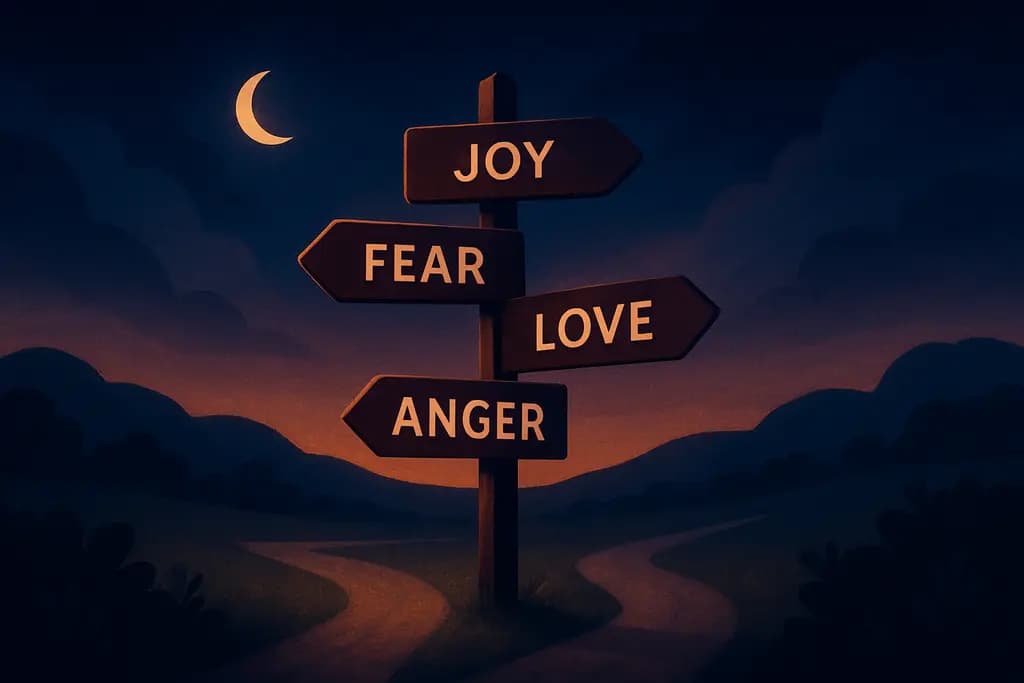
Dreaming of a crossroads with signposts pointing to emotions often places you at an inner map where feelings act as directions. These dreams invite you to choose which emotional response will guide your next steps. As always, the dream's tone, your reactions in it, and the waking-life context shape the interpretation.
General meaning of dreaming about Crossroads with signposts pointing to emotions
A crossroads is a classic symbol of choice, transition, and turning points. When signposts in the dream are labeled with emotions or seem to point toward feelings, the dream reframes a decision as primarily emotional rather than purely logical. It suggests you are navigating paths that are defined by how you feel about people, situations, or yourself.
Typical interpretations emphasize an internal navigation system where emotions serve as signposts toward different outcomes. The dream can reveal which emotions dominate your decision-making, which emotions are being ignored, and where conflicting feelings create paralysis.
- Decision points driven by feelings rather than facts
- Conflicting emotional pulls or priorities
- A need to acknowledge and name your emotions before choosing
- Transition, growth, or the end of an emotional chapter
Spiritual meaning of Crossroads with signposts pointing to emotions in dreams
Spiritually, crossroads are liminal spaces where the inner and outer worlds meet. Signposts that point to emotions can be read as messages from your higher self, guides, or the unconscious, inviting you to consider the energetic quality of each path. In many traditions, crossroads are where one receives guidance or offerings; here, the guidance is emotional intelligence — learning to listen to feeling as sacred information.
Different cultural lenses—folk crossroads lore, shamanic journeying, or contemplative practices—may frame the dream as an invitation to integrate shadow feelings, honor intuitive knowing, or align choices with soul purpose. Universally, the dream asks you to treat emotions as meaningful clues on your spiritual path.
Psychological interpretation
Fear, stress or anxiety
If the signposts point toward fear, anxiety, or words like 'danger' or 'avoid,' the dream can reflect internal alarm bells. It may mean you're anxious about a choice, anticipating loss, or imagining worst-case outcomes. Pay attention to whether you feel compelled to flee, freeze, or fight in the dream — that mirrors waking coping patterns.
Relationships and emotional bonds
Signposts labeled with love, loyalty, resentment, or longing often highlight relationship dynamics. The crossroads may indicate a choice between staying in a relationship, changing its shape, or leaving. It can also show where empathy or boundaries need to be strengthened.
Control, power or vulnerability
When the signposts emphasize control, independence, submission, or vulnerability, the dream is likely probing your sense of agency. It can reveal fears about losing control, the lure of control over intimacy, or the healing possibility in embracing vulnerability as a path forward.
Across these psychological angles, the dream acts as a mirror: it externalizes inner conflicts so you can examine how emotions influence decisions.
Positive meaning
- A wake-up call to emotional clarity that can lead to healthier choices
- Opportunity for emotional growth and integration of previously suppressed feelings
- Increased self-awareness about what you truly value and why
- Healing: the ability to choose compassion, forgiveness, or boundary-setting
- Empowerment through conscious emotional guidance rather than reactive behavior
Negative meaning and warnings
- May suggest emotional confusion that could lead to poor decisions if not examined
- Can indicate avoidance — choosing a familiar but unhealthy path out of fear
- Might suggest unresolved trauma steering choices in the background
- May indicate manipulation, where external forces pressure you toward certain emotional reactions
These are possibilities to consider rather than certainties; context and how you felt during the dream matter for accuracy.
Common variations of dreams about Crossroads with signposts pointing to emotions
- Crossroads with signposts labeled 'Love', 'Fear', 'Anger' — Suggests you're weighing different emotional motivations; examine which label feels most compelling or intimidating.
- Nighttime crossroads with glowing emotional signposts — Often heightens the sense of mystery or urgency; may point to subconscious feelings emerging from shadow material.
- Signposts that change direction or text — Reflects shifting feelings or uncertainty about what you truly feel; it can signal ambivalence or evolving emotions.
- Signposts you cannot read or that are blurred — Indicates confusion or difficulty identifying your feelings; journaling can help clarify what the signs mean.
- Standing at a crossroads while people pull at different signposts — Suggests external pressures from family, friends, or partners influencing your emotional choices.
- Crossroads with a signpost pointing toward 'Grief' — May denote a need to mourn, process loss, or honor a transition before moving on.
- Ignoring the signposts entirely and walking off the path — Can indicate denial or a refusal to engage with your emotions, which often prolongs inner conflict.
- Multiple small signposts each naming subtle feelings (relief, guilt, curiosity) — Points to nuanced emotional work and the value of attending to small, honest feelings rather than only big ones.
What to do after such a dream
- Reflect on the emotions named or shown in the dream: write them down and notice which ones felt strongest.
- Map decisions in your waking life that feel like the crossroads in the dream — relationships, career, or personal boundaries are common triggers.
- Ask clarifying questions: Which feeling truly aligns with my values? Which reaction is habitual rather than helpful?
- Practice naming emotions daily to build emotional literacy; this makes signposts in future dreams clearer.
- Use gentle practices — meditation, breathwork, or a short ritual — to sit with each emotional signpost before deciding.
- Talk with a trusted friend, mentor, or counselor if the emotions feel overwhelming; sharing can surface patterns you miss alone.
Approach the dream with curiosity rather than fear. It is a tool for becoming more conscious about how emotions shape your path.