Dream About Colorless Dream – Meaning
Category: Sleep & Dream States
What this dream often looks like
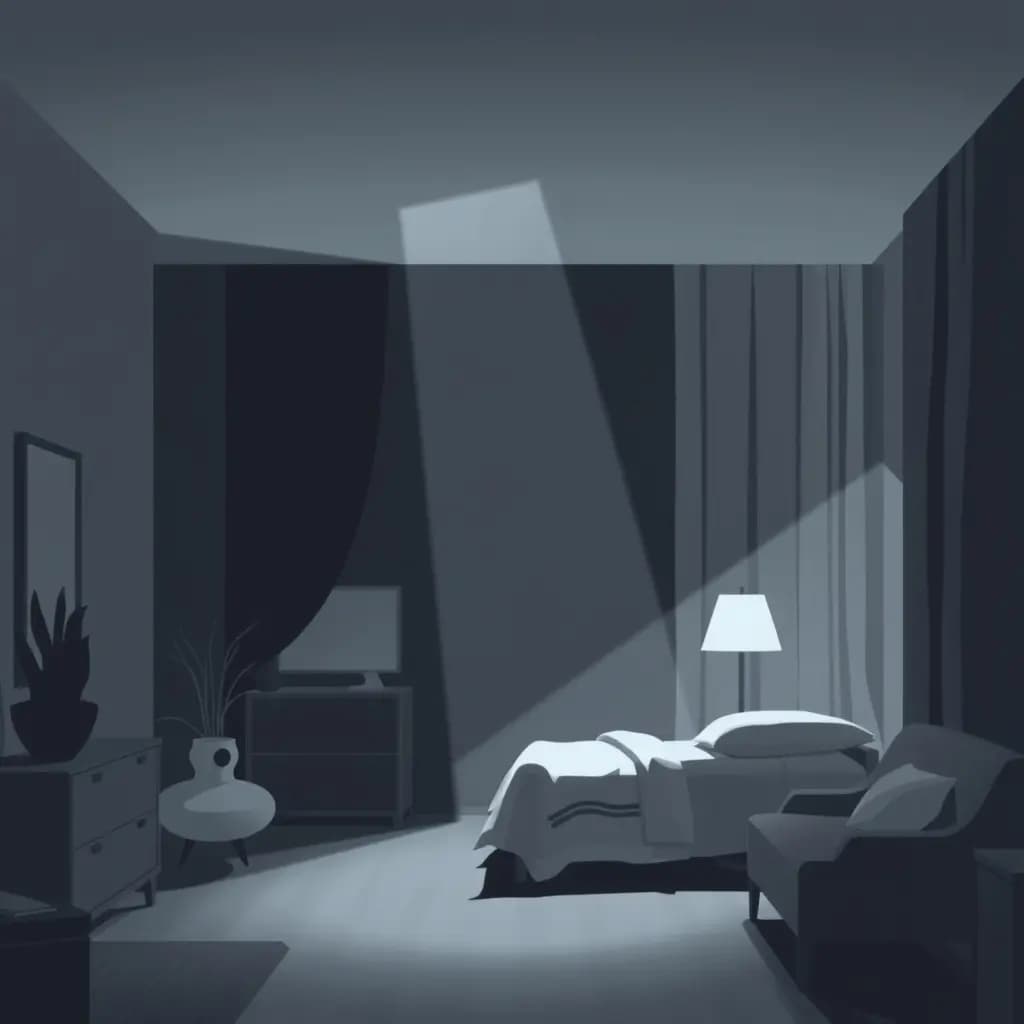
You stand in your apartment at dusk and everything is washed out: the coffee cup on the counter is pale gray, the photograph on the mantel shows faces without color, and the window reveals a city street under a flat silver sky. You feel oddly calm and hollow at once, moving through familiar rooms as if you’ve lost a filter that once made life vivid. This often follows a real-life event like a breakup, a job change, or weeks of exhaustion, where the day-to-day has started to feel muted.
Unusual details people report
People often report specific oddities: fluorescent lights that hum but cast no color, an elevator whose buttons are gray, crowds in monochrome coats, the taste of metallic air, or a loud echoing heartbeat when no one else is making noise.
Key interpretations
Emotional Numbness or Grief. Seeing everything drained of color can reflect recent loss, disappointment, or overwhelm. The dream compresses the emotional landscape into grayscale when your feelings feel muted or too heavy to process. You may be going through stages of withdrawal—skipping social plans, avoiding reminders, or feeling that everyday joys are less bright. The dream draws attention to the need for small, concrete reconnections: a phone call, a walk in sunlight, or naming one emotion aloud.
Creative Block or Routine Fatigue. Colorlessness often appears when creative energy or novelty has dwindled. If you work in design, writing, or any task that once felt vibrant, the dream mirrors a sense of artistic dulling: materials feel the same, choices blend together, and decision-making loses flavor. Practical changes—switching a routine, working on a tiny playful project, or rearranging a workspace—can reintroduce contrast and signal the mind that color is possible again.
Transition and Liminal Space. A grayscale world can mean you are between chapters: a job is ending, a relationship is shifting, or an identity role is dissolving. The dream stages the in-between as colorless because the future hasn’t been painted yet. That emptiness can feel scary and also strangely open; it’s a neutral canvas rather than a void. Look for small signs of what you are making room for, and consider rituals that acknowledge endings and invite new beginnings.
Spiritual and symbolic perspective
Viewed symbolically, lack of color can represent a spiritual pause or purifying quiet: a stage of stripping away excess so the next phase can be painted with intentional meaning. Many spiritual traditions see monochrome imagery as a liminal sign—neither punishment nor blessing, but a threshold. You might use gentle practices (lighting a candle, offering quiet gratitude, or creating a small visual altar) to attend to this quietness. Keep interpretations tentative and honor your own inner sense rather than adopting a single spiritual explanation.
What it can reflect emotionally
In many cases, this dream reflects changes in attention and affect rather than a fixed diagnosis. Feeling detached, exhausted, or persistently bored in waking life will reduce sensory vividness during dreams—your mind simplifies the palette. It can also reveal avoidance: if you’re pushing difficult emotions aside, the dream’s grayness signals that something important is being muted. Practical responses include tracking sleep quality, noting when you feel most drained during the day, and choosing one small sensory activity—listening to a favorite song, cooking a colorful meal—to test whether color returns.
What this dream is not literally saying
This dream is rarely a literal prediction about the future. It does not usually mean you are cursed, permanently losing the ability to feel, or that external events will turn gray. Instead, the dream is best read as an internal marker pointing to emotional, creative, or situational dulling rather than an exact external prophecy.
Questions to reflect on
- When did you first notice life feeling muted—after a specific event, or gradually over weeks?
- What activity used to bring color (art, music, cooking) that you haven’t tried lately?
- Where in your routine could you introduce one vivid sensory experience this week?
Frequently asked questions
Why do I feel fear in this dream?
Fear in this dream often comes from the loss of familiar emotional landmarks: color represents emotional cues. When those cues vanish, uncertainty rises and produces anxiety. The fear is usually about not knowing how to feel or what comes next, not an immediate danger.
Is it related to stress?
Yes, stress commonly links to this dream. High stress flattens emotional responses and strips sensory richness; the mind reflects that by muting colors. Reducing acute stressors or improving rest can change the dream content.
Is this about relationships?
Sometimes. If a relationship has recently changed or ended, colorlessness may reflect grief or detachment toward that person. But it also appears with work, health, or identity shifts—so relationships are one common, not exclusive, area.
Can this dream be positive?
Yes. It can be positive: a gray stage can signal clearing space for new possibilities and creative rebirth. Think of it as a neutral canvas—useful for planning small steps that bring back color.
Dream meanings connected to this one
If this dream keeps returning, pages about Dream where colors are swapped, Dream of Floating Above Your Bed, and Dream where you can't read any text can reveal the related patterns underneath it. They often overlap around insecurity, transition, or stress in everyday life. You may also want to compare it with Blackness Between Scenes if the same mood or conflict keeps showing up.