Dream About Clowns – Meaning
Category: Fears & Nightmares
What this dream often looks like
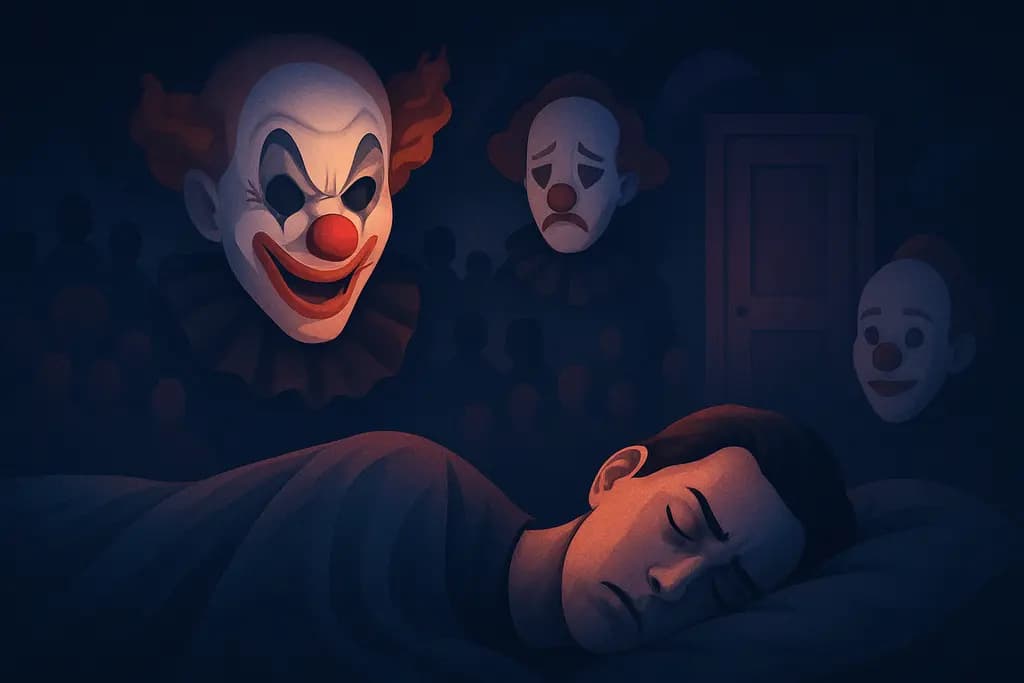
Short answer: a clown in a dream commonly signals performance anxiety, a hidden feeling, or a boundary that feels both silly and dangerous. Picture walking into a shuttered school gym where a lone clown sits on folding chairs, fluorescent lights humming, makeup smeared, and you have to laugh while your hands tremble. The setting is ordinary — a street, a backyard, a hospital waiting room — yet the presence of painted smiles flips the mood into discomfort or forced cheer.
Specific details people often mention
Common specific images: a clown waiting behind a red door, a caravan or carnival truck parked on a winter street, muffled circus music, oversized shoes left in a classroom, bright confetti in a hospital room, or a lumping heartbeat and nausea when a mask is removed.
Three common meanings
- Masked Emotion. Clowns often represent feelings you habitually hide. The makeup is a metaphor for the public face you present — cheerful, unflappable — while shame, grief, or irritation are disguised underneath. If the clown’s smile cracks in the dream, it may signal a moment when your private mood is close to spilling into view.
- Performance Pressure. A clown can stand for roles you feel forced to play: parent, colleague, friend. The dream may arise when you’re juggling expectations and fear making a mistake. Laughter that feels strained in the dream points to the exhaustion of constantly performing for others’ approval.
- Ambiguity and Distrust. Because clowns blur playful and unsettling cues, they can symbolize people or situations where intent is unclear. Charm that feels rehearsed, vague promises, or someone who masks their motives might be represented by a clown who appears helpful but leaves you uneasy.
- Memory or Play Resurfacing. For some, clown dreams reconnect to childhood—circus visits, parties, or a traumatic prank. These images can bring unresolved memories into the present, combining nostalgia with awkwardness. Alternatively, the dream may be inviting you to reclaim a lost sense of play that’s been suppressed by adult responsibilities.
Symbolic and spiritual meaning
Symbolically, clowns can represent liminal figures — boundary-crossers between light and shadow, innocence and cunning. Some spiritual traditions see trickster-like characters as invitations to examine false identities and rediscover authenticity. Read this as a prompt to ask which masks you maintain and which parts of yourself deserve clearer expression, without assuming a fixed metaphysical verdict.
Psychological perspective
From a modern, neutral viewpoint, clown dreams are a symbolic shorthand for conflict between inner states and social presentation. In real life, people learn to mask discomfort; the dream stages that mask and asks you to notice the difference. These dreams often surface during periods of social scrutiny, role change, or after an embarrassing episode, and they encourage attention rather than immediate alarm.
What this dream usually does not mean
This dream is rarely a literal prediction about a person becoming dangerous or an imminent event. It does not usually mean you will encounter clowns in waking life or that the dreamer is cursed. Instead, it typically uses clown imagery as a metaphor for social pressure, hidden emotions, or a past episode replaying emotionally rather than forecasting external facts.
Personal reflection prompts
- When did I last feel pressured to ‘perform’ for others, and how did I react?
- Which people or situations currently prompt me to hide my true feelings behind a smile?
- What childhood memory or image does this clown remind me of, and what emotion is attached?
Frequently asked questions
Is this about relationships?
Is this about relationships? Often yes: clown dreams commonly point to dynamics where you feel judged, performative, or misread; they call attention to trust and authenticity in connections.
Why do I feel fear in this dream?
Why do I feel fear in this dream? Fear usually arises because the clown mixes friendly cues with unpredictability; your brain flags mixed signals as a potential threat based on past discomfort or uncertainty.
What should I do after this dream?
What should I do after this dream? Note the people, places, and feelings from the dream, and consider small actions: set a boundary, talk with a trusted person, or journal the memory that surfaced.
Is this about money?
Is this about money? Not usually. While financial stress can underlie performance anxiety, clown imagery more commonly reflects social roles, hidden emotions, or trust issues rather than direct monetary concerns.
Related dream meanings
People who dream about clowns often end up exploring Abandonment, Aging, and Being Chased next, because the same pressure can show up through different symbols. Comparing them usually makes the emotional pattern clearer. You may also want to compare it with Being Followed if the same mood or conflict keeps showing up.