Dream About Climbing a Mountain You Can't Summit – Meaning
Category: Actions
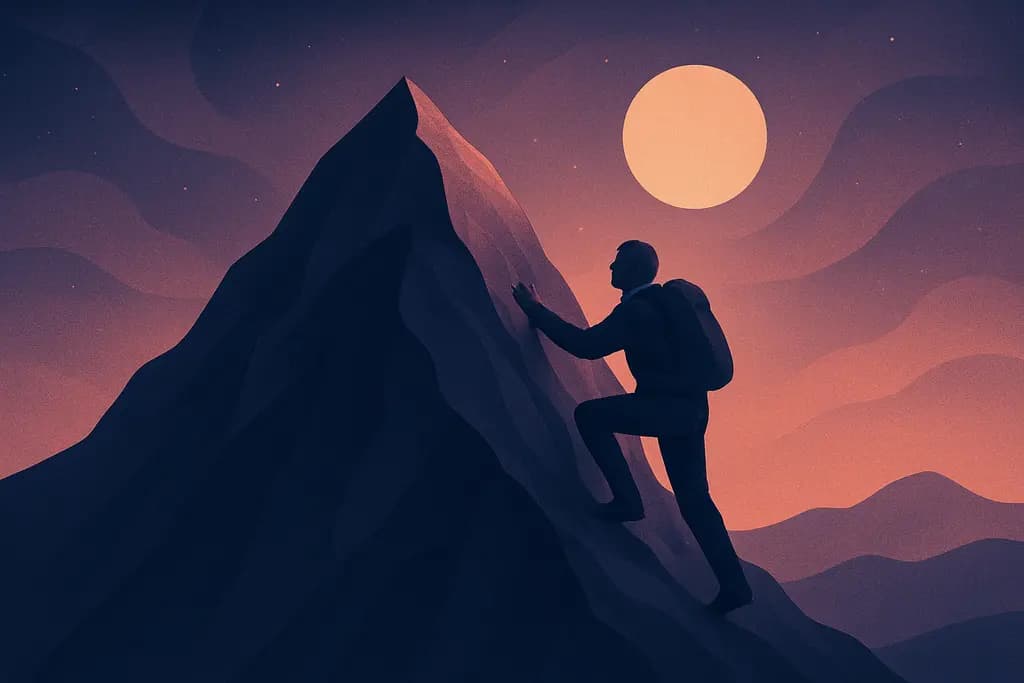
Climbing a mountain you can't summit in a dream often feels frustrating, exhausting, or hopeless. It points to efforts that seem blocked or goals that feel just out of reach, but the precise meaning depends on your emotions during the dream and the real-life context around it.
General meaning of dreaming about Climbing a Mountain You Can't Summit
On a basic level, a mountain in dreams symbolizes challenge, ambition, and long-term goals. When you climb but cannot reach the summit, the dream highlights perceived limits — either external obstacles or inner resistance — that prevent completion or success. The act of climbing itself emphasizes effort, persistence, and a journey rather than an immediate outcome.
Typical interpretations focus on stalled progress, tests of endurance, and the tension between hope and frustration. These dreams can be a mirror showing where you are investing energy without seeing the results you expected, or where fear and self-doubt slow you down.
- Persistent struggle: attempts that feel endless despite effort.
- Unmet goals: ambitions or projects that don’t reach fruition yet.
- Inner blocks: anxiety, perfectionism, or limiting beliefs holding you back.
- External barriers: circumstances, people, or timing that impede progress.
Spiritual meaning of Climbing a Mountain You Can't Summit in dreams
Spiritually, mountains are often sacred symbols of ascent, transformation, and communion with higher awareness. Being unable to summit can represent an unfinished spiritual task or a lesson about patience and surrender. It may signal that spiritual growth requires different tools — humility, acceptance, or a change in approach — rather than just more willpower.
In many traditions, the summit is associated with enlightenment or clarity. A blocked ascent can reflect the need for inner work, ritual, or guidance before a higher state is accessible. Across traditions, the emphasis is on the journey: learning from each step rather than forcing immediate transcendence.
Psychological interpretation
Fear, stress or anxiety
Dreams where you can't reach the top often mirror chronic stress or anxiety. The repeated attempts and setbacks can symbolize worry that your efforts will never pay off, or a fear of failure that sabotages performance. Physically, slipping or exhaustion in the dream may point to burnout or the need to slow down.
Relationships and emotional bonds
In interpersonal contexts, this dream can reflect a relationship where one or both parties feel stuck. It may show efforts to fix, rescue, or change someone else that aren't working, or emotional labor that isn’t reciprocated. The mountain becomes a metaphor for relational work that’s proving too heavy to carry alone.
Control, power or vulnerability
Being unable to summit can highlight issues of control and vulnerability. You may be clinging to a goal to maintain a sense of identity or power, and the dream forces a confrontation with limits. Alternatively, it can reveal where surrender and asking for support would be wiser than solitary struggle.
Positive meaning
- Prompt for growth: a nudge to reassess your methods and learn new skills.
- Increased resilience: recognizing you can persist even when outcomes are delayed.
- Opportunity to reprioritize: a chance to clarify what truly matters and drop what drains you.
- Invitation to ask for help: opens the possibility of collaboration or mentorship.
- Spiritual maturing: a period of preparation before a breakthrough.
Negative meaning and warnings
- May suggest burnout: continuing without rest can damage health and productivity.
- Can indicate unrealistic goals: goals may be misaligned with current resources or timing.
- May point to avoidance: repeatedly trying the same failing approach rather than changing course.
- Can indicate relational strain: persistently investing in one-sided relationships may lead to resentment.
Common variations of dreams about Climbing a Mountain You Can't Summit
- Climbing but slipping back down: Often reflects fear of regression, self-doubt, or perfectionism that undermines progress. It can also suggest poor foundations or lack of preparation.
- Carrying a heavy pack while climbing: Symbolizes emotional baggage, responsibilities, or unresolved issues weighing you down and making goals harder to reach.
- Climbing in bad weather (fog, storm, snow): Represents confusion, unclear guidance, or turbulent emotions that obscure the path forward; timing may be temporarily unfavorable.
- Watching someone else struggle to summit: You may feel powerless or guilty about not intervening in another's struggle, or projecting your own setbacks onto them.
- Repeated attempts with different routes but no summit: Suggests adaptability but also the need for a strategic change — new tools, mentorship, or letting go of the objective.
- Reaching a plateau but not the top: Indicates partial progress or temporary success that still leaves a core desire unmet; useful time to reassess expectations.
- Being too exhausted to continue: Points to burnout, the need for rest, or that current pacing is unsustainable.
- Climbing with a guide who stops you: Could signal wise limits placed by a mentor or that you need to follow guidance rather than forcing your own path.
What to do after such a dream
- Reflect on your emotions: note whether you felt anxious, determined, ashamed, or peaceful during the dream — emotions give crucial clues.
- Review current goals: are they realistic, necessary, or worth adjusting? Consider timelines, resources, and small milestones.
- Check for burnout: assess sleep, diet, workload, and stress levels; prioritize rest and recovery where needed.
- Reevaluate strategies: try different approaches, seek feedback, or learn new skills instead of repeating the same tactics.
- Talk with trusted people: discuss the dream or the situation with friends, mentors, or a counselor to gain perspective.
- Consider small, measurable steps: break large goals into achievable stages to rebuild momentum and confidence.
If the dream leaves you unsettled, use it as a prompt for gentle inquiry rather than harsh self-judgment. The image of climbing but not summiting often marks a transitional moment: you may need to change direction, accept limits for now, or gather support before attempting the next ascent.