Dream About Child refuses to leave – Meaning
Category: Family & Children
What this dream often looks like
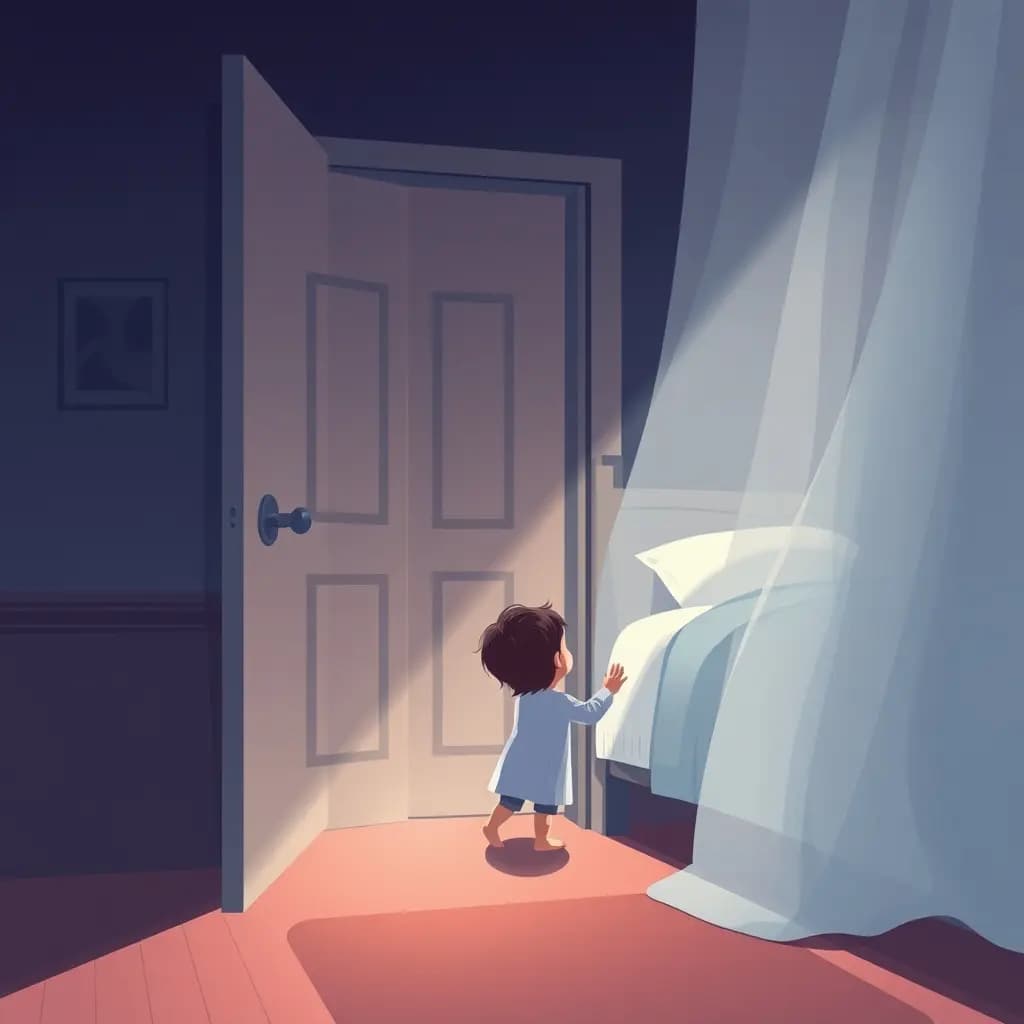
You wake before dawn with a tight feeling in your chest: a small pair of hands gripping your sleeve at the front door, a backpack still half-zipped, dirt on tiny shoes. The child looks at you with steady eyes and will not step outside, and the house hums with the ordinary noise of breakfast and a clock you want to obey. That pressure — getting out the door on time, a looming appointment, or a split-second decision about responsibility — is the real-life strain pressing into this scene.
Specific details people often mention
Reporters of this dream often notice small, concrete images: a hallway light left on, a locked car with damp seats, a lunchbox untouched, the tick of a kitchen timer, a rain-slick coat, the squeak of rubber soles, or the sudden taste of cold metal in the mouth.
Main interpretation
This dream most commonly signals tensions around attachment and boundary-setting: a part of you resists letting go, or worries about someone else refusing to move forward (literally or metaphorically). It can reflect caretaking responsibility, guilt about encouraging independence, or anxiety over a stalled transition — moving, career change, a relationship shift, or a child leaving home. The image of refusal highlights power dynamics: who controls the exit, who stays, and who decides readiness.
How this dream can be interpreted
- Attachment and separation anxiety. The child clinging at the doorway often represents a part of you (or someone you care for) that isn’t ready to separate. This can be about a parent-and-child relationship, but also about leaving a job, ending a habit, or moving cities. The refusal to leave dramatizes the fear that letting go will harm the relationship or that you’re abandoning a dependent responsibility.
- Boundaries and control. The dream can highlight struggles over boundaries: maybe you feel pressured to let someone into your life or to make them move on. The act of refusing to leave becomes a test of your limits — whether you enforce rules, negotiate independence, or allow others to override your schedule. It often appears when control and care conflict.
- Unresolved guilt or delayed transitions. Sometimes the child symbolizes a postponed life change or guilt about not acting. A stalled departure—packed bags, a closed door—can point to procrastination, grief, or anxiety about timing: leaving a relationship too soon, not starting a family, or delaying medical or financial choices. The dream surfaces those unfinished decisions.
What it can reflect emotionally
In many cases, this dream mirrors active stressors: caretaking demands, deadline pressure, or ambivalence about a next step. From a neutral psychological angle it reflects internal conflict between duty and self-interest, fear of loss, or identity shifts when roles change (parent, partner, provider). The imagery is a concise emotion map: clinging = fear; doorway = transition; refusal = stalled resolution. Notice timing: it often lands during busy periods or after a conversation about future plans.
What this dream is not literally saying
This dream is rarely a literal prediction about an actual child running away or permanently refusing to leave. It does not usually foretell a specific future event; instead, it uses vivid domestic scenes to dramatize inner resistance or social pressure. Avoid taking the scenario as a direct warning sign about real-world abandonment.
When this dream deserves attention
This dream deserves attention if it repeats, intensifies, or wakes you with lingering anxiety. Recurring scenarios frequently point to unresolved fear, ongoing caretaking stress, or an imminent life transition you’re avoiding. If the refusal dream clusters around real deadlines, it can indicate burnout or moral conflict about choices you keep postponing. Pay attention to the dream’s persistence: it’s often a prompt to address practical steps (conversation, planning) and inner states (grief, ambivalence).
Frequently asked questions
Is this dream a warning?
Is this dream a warning? No—it's rarely a literal warning about an immediate event. It more often signals emotional stakes or pressure around separation, responsibility, or timing.
Can this dream be positive?
Can this dream be positive? Yes. It can point to deep care, the healthy desire to protect, or the need to pause and prepare thoughtfully before a big change.
Why does this dream repeat?
Why does this dream repeat? Repetition usually shows unresolved tension: persistent guilt, unclear boundaries, or an unmet practical decision that your mind revisits at night.
Is this about relationships?
Is this about relationships? Often it is. The dream commonly reflects relational dynamics—dependency, control, or negotiations around independence—though it can also symbolize internal conflicts or life choices.
Related dream meanings
People who dream about child refuses to leave often end up exploring Grandparent speaks unknown language, Teaching child to walk, and Losing a baby in hospital next, because the same pressure can show up through different symbols. Comparing them usually makes the emotional pattern clearer. You may also want to compare it with Being ten years old again if the same mood or conflict keeps showing up.