Dream About Chess – Meaning
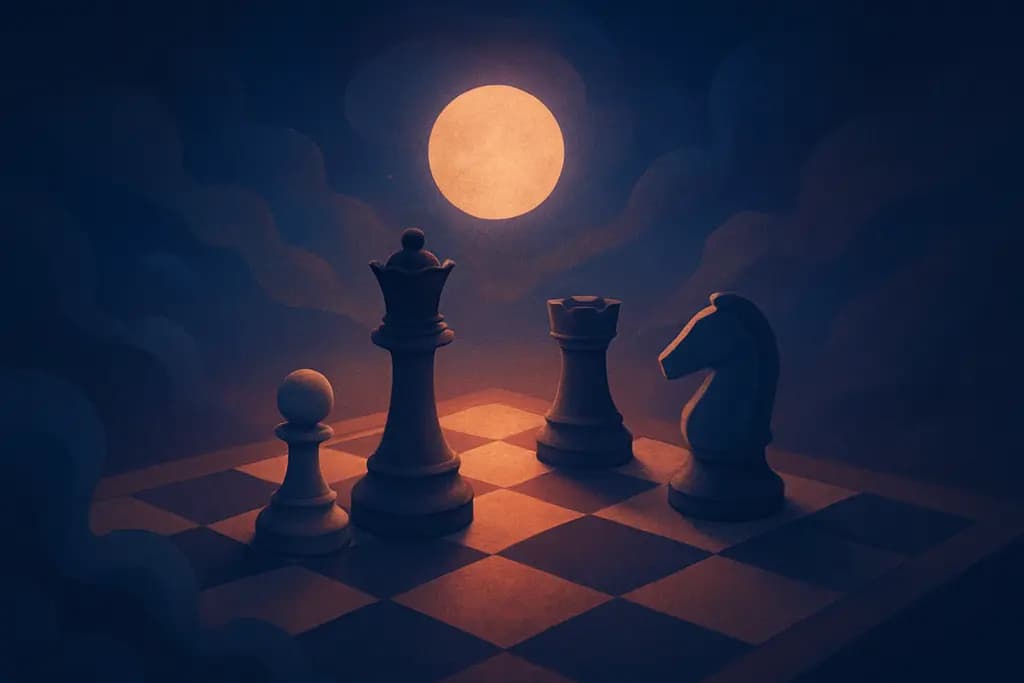
Category: Objects
A typical dream scenario
Under the pressure of an upcoming promotion or a relationship decision, you find yourself at a small table with a chessboard spread beneath a low lamp. The room smells of cold coffee; your hands hover over black and white pieces while a clock ticks loudly. You can feel the tightness in your chest as you deliberate a single move, aware that one choice will change the layout of people and responsibilities around you.
Specific details people often mention
People often report specific imagery: a match played in a train carriage with rain on the windows, the king wearing a mismatched suit, the board set on a hospital tray, or the sound of heavy footsteps outside the door. Physical reactions like trembling fingers or a ringing in your ears are common and can feel startlingly real.
What this dream usually means
This dream commonly signals that you are rehearsing strategy for a real-life choice: who to advance, what to protect, and where to concede. The pieces stand for roles or resources — pawns as small steps, rooks as structural moves like moving house or changing teams, a king or queen as a person of influence. A stalled or chaotic game suggests indecision or competing priorities; clear, confident moves suggest planning and momentum toward a concrete goal such as a job decision, negotiation, or family arrangement.
Key interpretations
Strategy and planning. If you felt calm, methodical, and in control, the dream may highlight deliberate planning. Each move represents a concrete step — preparing a portfolio, delegating tasks, or negotiating terms. Seeing pawns promoted or a rook opening a file often points to practical, incremental actions that will shift your position in work or a complex family arrangement.
Power, sacrifice, and interpersonal conflict. If pieces were captured or you experienced checkmate, the dream may reflect conflict with another person or an inner conflict about values. An opponent who mirrors someone from your life suggests power dynamics — a demanding boss, a competitive friend, or an internal critic. Sacrifice of pieces can indicate choices where you must let go of something to protect a larger goal.
What your mind may be processing
In real life, the brain often uses the chessboard to simulate outcomes and organize options. This is a neutral cognitive rehearsal: you are predicting responses, testing moves, and weighing losses against gains. The dream may amplify current stressors so you can mentally test strategies without real-world consequences. Notice whether the scenarios repeat or shift when you practice different choices while awake.
What this dream usually does not mean
This dream is rarely a literal prediction of an exact event or timing; it does not usually mean someone will literally challenge you to a game or that you will immediately win a promotion. Think of the board as symbolic mapping, not a forecast. Still, the anxiety, relief, or excitement you felt in the dream is emotionally meaningful and worth noticing.
When to take this dream seriously
Take this dream seriously when it recurs, intensifies during a stressful period, or appears around a major transition (job change, move, marriage decision). A recurring chess dream that returns with similar outcomes suggests an unresolved strategy or fear you keep rehearsing. Use it as a signal to list options, identify the smallest actionable step you can take, or talk through trade-offs with a trusted colleague or friend.
Frequently asked questions
Is this about money?
Is this about money? Often it's not directly about money but about resources and priorities; a pawn becoming a queen can symbolize a small financial step that changes your status, while rooks might represent structural financial decisions like moving or changing jobs.
Is this about relationships?
Is this about relationships? It can be. Opponents or partnered moves frequently mirror interpersonal power dynamics — who has influence, where compromises are made, or when sacrifice is required in a friendship, family tie, or romantic partnership.
Is it related to stress?
Is it related to stress? Yes. Chess imagery commonly intensifies during stress because it simulates decision-making and potential loss, magnifying anxiety or urgency so you can rehearse responses without real-world consequences.
What should I do after this dream?
What should I do after this dream? Note the emotions and a single concrete action you can take (one small step toward clarity), write down the positions that bothered you, and consider discussing the situation with someone who knows the context to generate options.
Related dream meanings
If this dream keeps returning, pages about Balloons, Bicycles, and Bikes can reveal the related patterns underneath it. They often overlap around insecurity, transition, or stress in everyday life. You may also want to compare it with black lost objects if the same mood or conflict keeps showing up.