Dream About Chatbot Answering with Your Own Memories – Meaning
Category: Social Media & Online Life
A common version of this dream
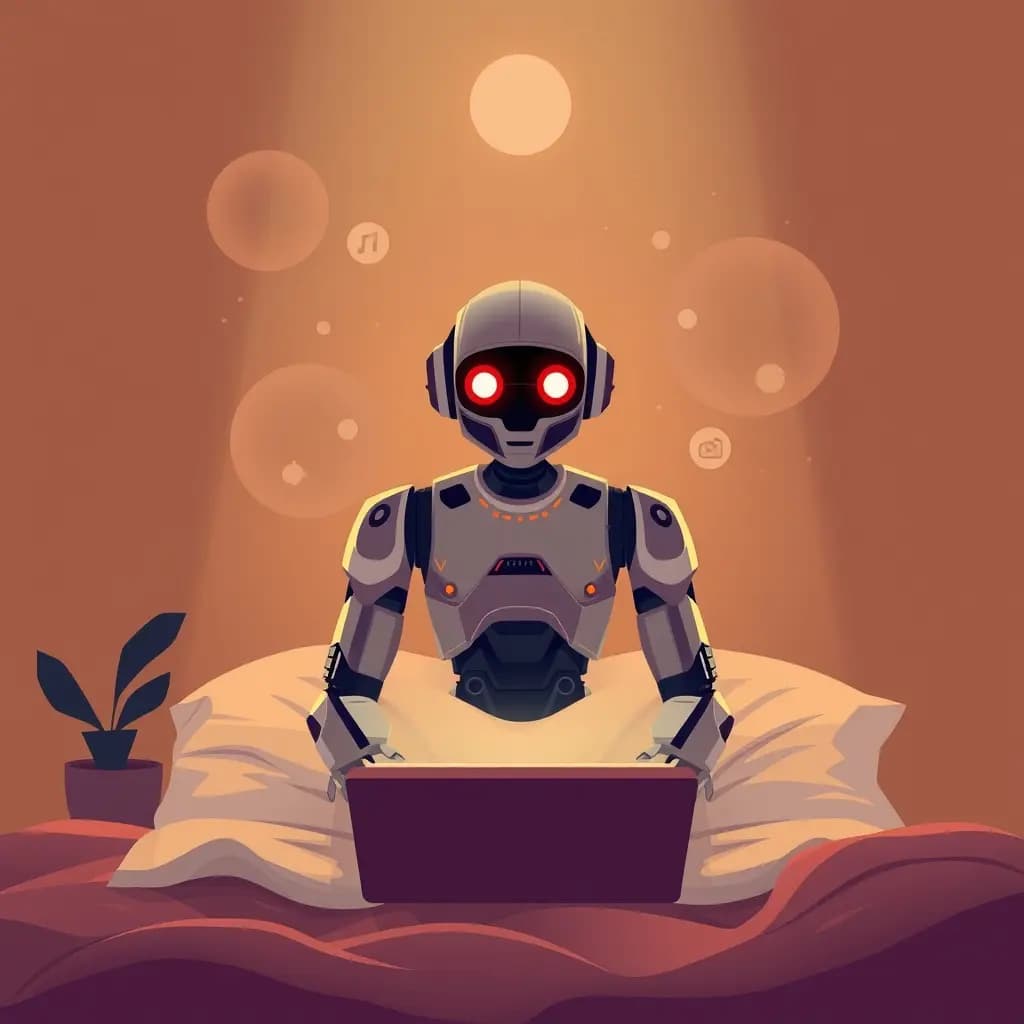
You wake to the glow of a laptop screen and the voice of a chatbot reading a childhood conversation verbatim. You feel exposed — the slick office lights, half-finished coffee, and the quiet hum of notifications underline a pressure you’ve felt at work or online. The chatbot isn’t generic: it recites a name you haven’t said aloud in years. That sensation — surprise, anger, and a cold flush of recognition — ties a digital symbol to a very personal memory.
Unusual details people report
Reportable specifics include a small, cluttered desk, a door left ajar, the smell of burnt toast, a child’s laugh in the background, a dripping faucet, the bot speaking in a familiar family member’s voice, and your chest tightening as if you’d been caught in a crowd.
Main interpretation
This dream commonly points to worries about who controls your story: algorithms, social accounts, or people who have access to your past. It often signals anxiety about privacy, the feeling that private moments could be replayed without your consent, and a need to reassert ownership of memories and boundaries. Practically, it calls attention to current digital exposure and invites steps to protect both emotional and online space.
How this dream can be interpreted
Memory Ownership and Privacy. The chatbot using your memories can represent a fear that your private experiences are no longer yours — that photos, messages, or family stories are being archived, reshared or misinterpreted. If you’ve recently posted old photos, had an argument about a secret, or been copied online, this angle points to a need to set clearer digital and interpersonal boundaries.
Identity and Authenticity. When a machine speaks like you, it raises questions about who you are when your past is visible. This interpretation ties to identity anxiety: are you defined by other people’s versions of your story? The dream may appear during transitions — new job roles, relationship shifts, or public attention — when you’re testing which parts of yourself you’ll keep private.
Control, Agency, and Decision Fatigue. The scene can reflect a loss of agency: decisions made for you by platforms, employers, or family. It may follow periods of overwhelm — too many accounts to manage, parental expectations, or a workplace that monitors communication. The core message is a prompt to reclaim small acts of control: delete, archive, pause, or speak up.
Unprocessed Memory and Emotional Integration. Sometimes the dream is less about technology and more about unresolved memories resurfacing in a modern form. The chatbot is a container your mind uses to 'speak' a memory back to you so you can hear it differently. If the recalled memory still has strong emotions, the dream nudges you to acknowledge and process that material rather than letting it leak out passively.
Psychological perspective
In many cases, dreams like this reflect how your brain is integrating recent digital experiences with older emotional material. Neutral cognitive processes stitch salient content — recent messages, a viral post, or an awkward conversation — to older memories so you can rehearse responses or rehear unresolved feelings. This framing treats the dream as adaptive processing: it’s your mind testing boundaries and anticipating social outcomes rather than diagnosing a condition.
What this dream usually does not mean
This dream is rarely a literal prediction that a specific chatbot will reveal your past. It does not usually foretell an imminent technical breach. Instead, it symbolizes concerns about exposure and trust. Emotionally, it can feel prophetic because memory and fear amplify one another, but the dream itself is more metaphor than forecast.
When to take this dream seriously
Take this dream seriously when it recurs, leaves you unsettled for days, or appears after a real boundary violation (like an account hack, leaked message, or someone disclosing private history). It’s also significant during life transitions — moving, career change, or public exposure — because it can reveal where your sense of self is most vulnerable. Practical next steps include documenting the dream, noting triggers, and taking concrete measures to secure accounts and have honest conversations with people involved.
FAQ
What should I do after this dream?
Write down the dream, note which memory stood out, and check any recent digital exposures (shared posts, old messages). If it disturbed you, limit screen time and tell a trusted friend so the memory isn’t contained in your head alone.
Can this dream be positive?
Yes. It can be positive if it prompts you to reclaim memories, restore relationships, or make practical privacy changes. The surreal image can catalyze clarity and motivate protective action.
Is it related to stress?
Often. This dream commonly appears during periods of anxiety or overload related to social media, job surveillance, or interpersonal stress. Stress makes privacy fears feel more urgent.
Why does this dream repeat?
Repetition usually means the same boundary issue hasn’t been resolved — a continued worry about exposure or a recurring memory that needs attention. Each repeat nudges you toward a different action (talk, secure, forgive).
Related dream meanings
Dreams about chatbot answering with your own memories are often connected to A Live Feed That Won't End, A Video Buffering Forever, and Your Username Spoken Aloud in Public. Looking at those nearby themes can help you compare control, fear, pressure, or change across similar dream scenes. You may also want to compare it with Old Profile Photo Appearing in Real Life if the same mood or conflict keeps showing up.