Dream About Chanting a lunar hymn – Meaning
Category: Moon & Vedic Astrology
What this dream usually means
This dream often means you are tuning into cyclical patterns—emotional, hormonal, or relational—and seeking a ritual to mark that shift. Chanting under the moon is commonly associated with deliberate intention: you are naming a change, inviting steadiness, or rehearsing a transition. The sound of the hymn may be less about religion than about finding a steady pulse for feelings that feel scattered. It can feel both calming and charged, signaling readiness to commit to a small, regular practice that reshapes how you move through recurring life events.
A typical dream scenario
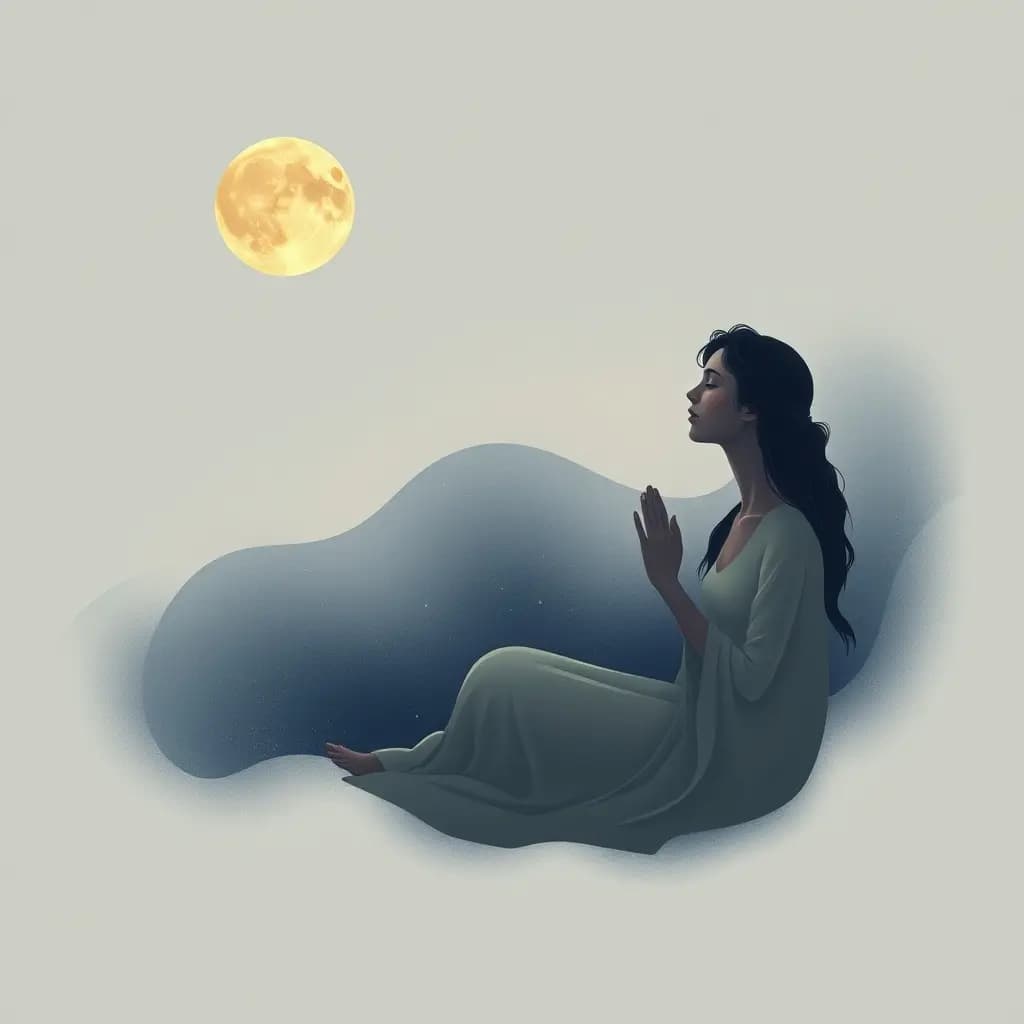
You stand on a low ridge beneath a bright, round moon, wrapped in a plain shawl, lips moving to a steady chant. Nearby there may be a single candle or a circle of stones; sometimes a handful of other people join and sometimes you are alone. The air is cool, your throat tight with effort and resolve; a memory of recent sleepless nights or repeating arguments sits heavy behind the chant. The act itself feels practical—like rehearsing a behavior you want to remember when the next cycle arrives.
Unusual details people report
Dreamers often notice small, specific things: a doorway framed with jasmine, a rusted bicycle leaning against a wall, a sudden gust of wind that silences everyone, or the taste of salt on the lips. Some report the chant reverberating in a classroom, a temple corridor, or a private kitchen; others feel their pulse quicken in time with the rhythm.
Emotional and symbolic meanings
- 1. Emotional regulation and rhythm. Chanting sets a tempo; in the dream this often translates to an effort to regulate mood swings or to bring order to recurring emotional ups and downs. The hymn acts like a metronome that steadies breathing and attention. If you’ve been exhausted by repeating reactions—irritation at the same person, cyclical sadness, or variable motivation—the dream suggests practicing small rituals (breathwork, fixed wake/sleep times) to anchor you through those cycles.
- 2. Ritualizing change and commitment. The act of chanting can represent the formation of a commitment: naming an intention aloud, marking a boundary, or beginning a new habit. This interpretation points to readiness rather than completion—you are at the threshold of doing something regularly (journaling, a creative project, or a relationship boundary) and the dream dramatizes the promise you make to yourself.
- 3. Lunar, feminine, and bodily cycles. Because the moon is prominent, the dream commonly ties to biological and relational cycles—menstrual, sleep, energy rhythms, or even phases of a partnership. It can surface awareness of physical needs that coincide with the lunar metaphor: rest, nourishment, or timing decisions. The hymn may be your mind’s way of attuning to those bodily patterns and asking for adjustments in daily life.
- 4. Connection to tradition, lineage, or meaning-making. Chanting a hymn suggests calling on an inherited form to structure personal experience. Whether you grew up with Vedic chants, church hymns, or folk songs, the dream may draw on that archive to help you find authority and comfort. This angle implies a search for a language or practice that gives meaning—something stable to repeat when doubt or grief threatens to overwhelm you.
What this dream is rarely about
This dream is rarely a literal prophecy about an external event or a guaranteed spiritual calling. It does not usually predict exact outcomes or promise mystical intervention. Instead of serving as a direct forecast, the image more often signals internal orientation—patterning, intention, or an emotional rehearsal. Emotionally, it can feel prophetic even when it merely rehearses the change you are already beginning to make.
Symbolic meaning across traditions
Meanings vary across traditions: in Vedic and Hindu frameworks a lunar chant may recall specific mantras and rites of purification; in folk or indigenous contexts it can connect to community cycle work (harvest, tide, fertility); in Western esoteric thought the moon often symbolizes intuition and the unconscious. Different cultures emphasize different actions—recitation, fasting, dance, or silence—so this dream’s import shifts with your cultural background and personal associations rather than offering a single universal message.
Questions to reflect on
- When in the past month did I feel out of rhythm, and what small practice might have steadied me then?
- What sound, phrase, or short action would I be willing to repeat daily to mark change?
- Who or what from my cultural or family background gives me a rhythm that feels trustworthy?
Frequently asked questions
Why do I feel fear in this dream?
Fear can appear because chanting in a dream makes inner change feel high-stakes; it may surface anxieties about committing to a new habit or exposing private feelings. The fear often signals uncertainty about leaving old patterns.
Is this about money?
No—this dream is rarely about money. It more commonly concerns timing, ritual, emotional cycles, or identity work rather than financial predictiveness.
Is it related to stress?
Yes, it can be related to stress: chanting can be your psyche’s method of creating order under pressure. It often appears when you need a portable calming routine or a way to contain heightened arousal.
Can this dream be positive?
Yes. It can be positive—signaling readiness, newfound discipline, or emotional steadying. The dream often encourages practical, small steps that yield steady benefit over time.
Dream meanings connected to this one
Dreams about chanting a lunar hymn are often connected to Ketu sitting at your feet, Rahu chasing your shadow, and Seeing a Nakshatra constellation close. Looking at those nearby themes can help you compare control, fear, pressure, or change across similar dream scenes. You may also want to compare it with Dream of auspicious muhurta if the same mood or conflict keeps showing up.