Dream About Carrying heavy baggage or backpack (weighed down) – Meaning
Category: Feelings
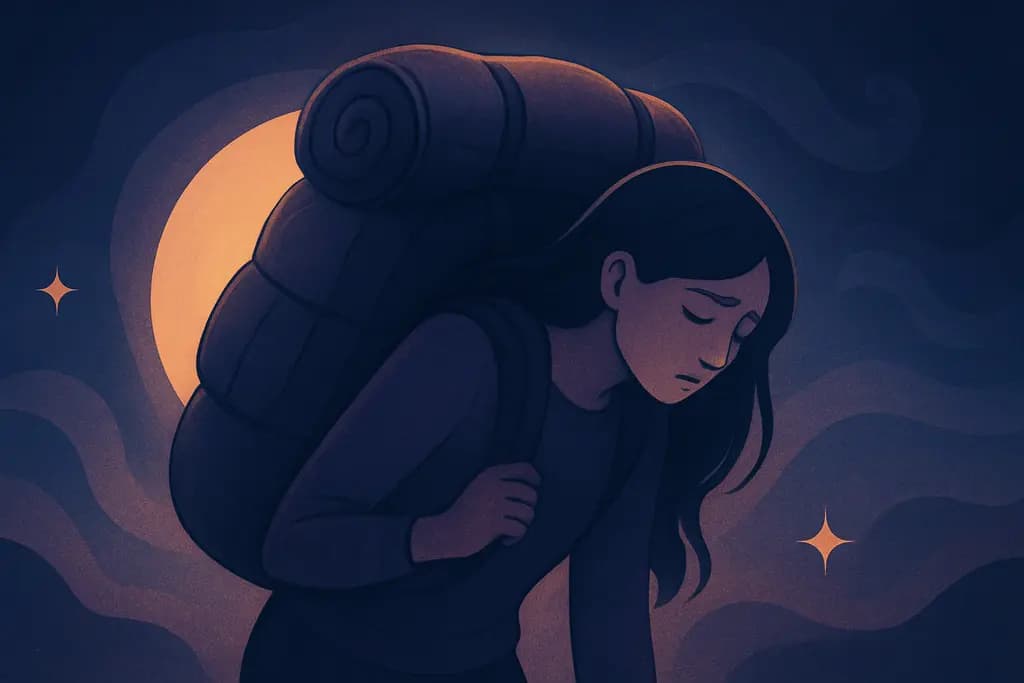
Dreaming that you are carrying heavy baggage or a weighed down backpack often points to feeling overwhelmed in waking life. This image usually represents emotional burdens, responsibilities, or memories that feel difficult to carry. The precise meaning depends on how you felt in the dream and the context around the load.
General meaning of dreaming about Carrying heavy baggage or backpack (weighed down)
At its core, carrying heavy baggage in a dream symbolizes the sense of being weighed down by something — obligations, guilt, grief, or past experiences. The backpack or luggage acts as a visual shorthand for what you carry internally; its size, weight and condition give clues about how intense or manageable these burdens feel.
These dreams frequently occur during times of transition, stress, or decision making, when inner conflicts or responsibilities become highly salient. They can also surface when you are evaluating which parts of your past to keep and which to release.
- Emotional baggage: unresolved feelings, guilt, or sorrow that persist.
- Responsibilities and obligations: work, family duties, financial strain.
- Memories and past wounds: trauma or lingering regrets that influence your choices.
- Readiness for change: sometimes the weight signals that you need to sort priorities before moving forward.
Spiritual meaning of Carrying heavy baggage or backpack (weighed down) in dreams
Spiritually, a heavy pack in a dream can point to energetic blockages or karmic lessons. Many traditions view burdens as lessons to be acknowledged and transformed rather than simply denied or ignored. The weight invites you to examine what parts of your life require purification, forgiveness, or release.
In universal spiritual language this symbol can indicate a need to lighten your frequency by letting go of resentment, practicing compassion, or engaging in rituals of release. In some contemplative traditions, it may be read as an invitation to simplify your life and reclaim inner peace.
Psychological interpretation
Fear, stress or anxiety
This dream commonly appears when anxiety or chronic stress is present. Carrying a heavy backpack can mirror the subjective experience of pressure, worry about the future, or fear of not meeting demands. The dream highlights how those anxieties affect your mental and physical energy.
Relationships and emotional bonds
When the load in your dream is tied to other people, it may reflect codependency, caregiving strain, or feeling responsible for someone else’s wellbeing. A heavy baggage dream can show that relationship dynamics are asking too much of you, or that you are holding onto past hurts from a partner, family member, or friend.
Control, power or vulnerability
A weighed down backpack can also speak to control and agency. If you struggle to move or feel trapped by the weight, the dream may point to feelings of helplessness or loss of autonomy. Conversely, choosing to carry the load willingly can reflect acceptance and inner strength.
Positive meaning
- Resilience: managing a heavy load in the dream can show inner strength and endurance.
- Awareness: recognizing the baggage indicates you are ready to identify what needs change.
- Opportunity for release: the dream can prompt healing and the decision to let go.
- Growth through responsibility: carrying obligations successfully can lead to personal growth and new skills.
- Preparation: a packed backpack may mean you are preparing for a meaningful transition or journey.
Negative meaning and warnings
- May suggest chronic stress or burnout if the weight feels unbearable.
- Can indicate avoidance of confronting past trauma or unresolved emotions.
- May point to unhealthy attachments or codependent relationships that drain you.
- Can indicate a tendency to take on more than you can safely handle, risking exhaustion.
- Might warn that important choices are being postponed because the load feels too heavy to sort through.
Common variations of dreams about Carrying heavy baggage or backpack (weighed down)
- Carrying an impossibly heavy backpack up a hill: Often reflects mounting pressure and the sense that progress requires great effort; may signal a challenging goal or life phase.
- Dropping or setting down the baggage: Suggests relief, a breakthrough, or the possibility of consciously releasing burdens in waking life.
- Someone else carrying the heavy baggage for you: Can indicate reliance on others, support systems stepping in, or feelings of being relieved — or alternately, resentment at not being able to carry your own responsibilities.
- Backpack with broken straps or torn fabric: May point to burnout, fragile coping resources, or the need to repair boundaries and supports.
- Carrying baggage labeled with specific words (guilt, grief, shame): Indicates clarity about what you are holding onto and a chance to address that specific emotion.
- Trying to hide the baggage from others: Suggests shame, secrecy, or fear of judgment about what you carry emotionally.
- Luggage disappearing or being stolen while you carry it: Can signal loss of identity tied to old burdens or fear that letting go will mean losing part of yourself.
What to do after such a dream
- Reflect and journal: note details — weight, contents, your feelings — to identify waking-life parallels.
- Inventory your loads: list responsibilities, relationships, and emotional themes that feel heavy and prioritize which to address.
- Talk it out: share the dream with a trusted friend, mentor, or counselor to gain perspective.
- Take concrete steps to lighten the load: delegate tasks, set boundaries, ask for help, or schedule rest.
- Practice symbolic release: write down what you want to let go of and ritualize the act of setting it down or discarding it.
- Make gradual changes: small consistent actions (saying no, setting limits, therapy) often reduce the weight more sustainably than drastic measures.
- Monitor your wellbeing: if the dream repeats and coincides with persistent overwhelm, treat it as a sign to reassess priorities and self-care routines.