Dream About Books with missing pages – Meaning
Category: Objects
What this dream usually means
This dream most often signals a gap—something you expected to know or remember is absent. Missing pages usually stand for lost details in a relationship, a neglected project, or parts of your past you can’t access. The tone of the dream (frustration, relief, curiosity) narrows the message: frustration often means urgency to recover facts, relief can signal acceptance of uncertainty, and curiosity may mean you’re ready to search for answers.
What this dream often looks like
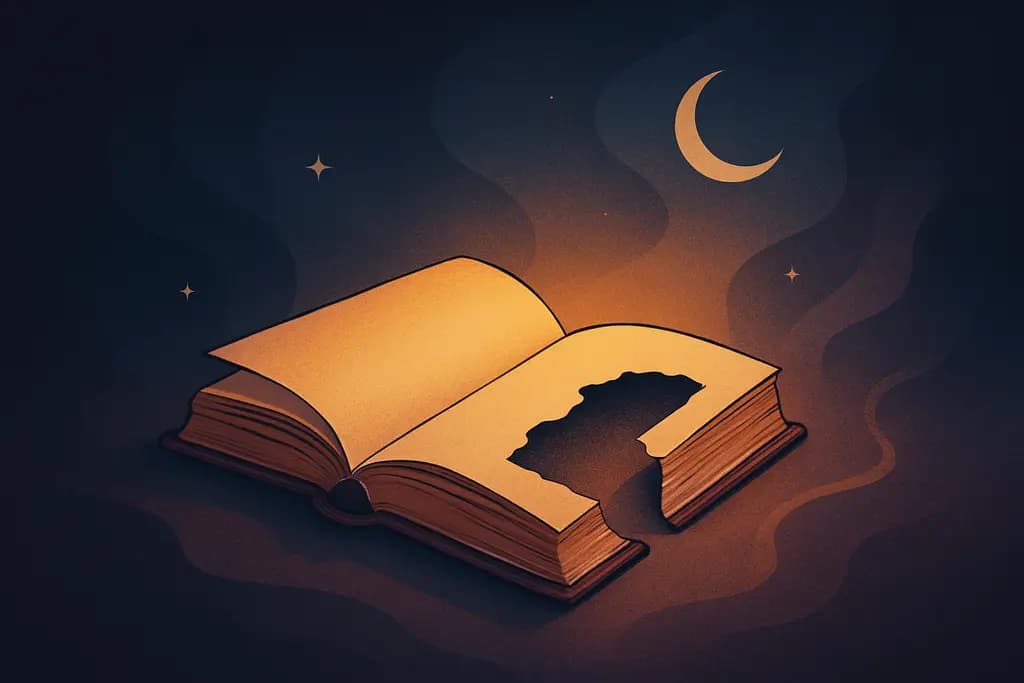
You stand in a dim attic or quiet library, a single lamp casting a warm circle on a table. You slide your finger along the spine, open the book, and discover whole sections torn out: dates, names, or events are gone. Your chest tightens; you flip pages franticly and the missing gaps reveal blank blue paper or jagged tears. In another scene you calmly close the book and put it back, feeling oddly resigned as dust motes float in a shaft of light.
What this dream may be expressing
Memory gap or repressed detail. Missing pages can reflect a memory you can’t retrieve: a childhood incident, a name, or a fact that feels blocked. If you wake with a sense of searching, your mind may be signaling that there’s a memory to examine, perhaps in therapy, journaling, or talking with someone who shared that time.
Unfinished story or stalled project. If the book represents your life or a particular plan, the absent pages point to work left undone—a career move paused, a relationship issue left unresolved, or a creative project you abandoned. The dream nudges you toward closing that chapter or accepting that some parts will remain open for now.
Fear of losing evidence or reputation. Torn or missing pages can symbolize anxiety about missing proof—emails, receipts, or important documents—or fear that others will discover something you want hidden. The emotion in the dream (shame versus anger) clarifies whether it’s a protective worry or a call to organize and secure your records.
Creative interruption or identity gap. For writers, artists, or anyone reconstructing personal identity, the dream may mark creative block or a lost narrative thread: key scenes, lines, or memories you can’t remember. It can also point to an identity puzzle—roles you’ve tried on that feel incomplete or parts of yourself you haven’t integrated.
What this dream usually does not mean
This dream is rarely a literal prophecy about future events. It does not usually mean a real book in your life will lose pages or that someone is actively erasing records. Instead, it commonly represents psychological or narrative gaps—missing facts, forgotten conversations, or chapters you haven’t yet written—rather than direct external predictions.
Unusual details people report
People report finding missing pages where a clock ticks loudly, in a rain-soaked street, or tucked inside a coat pocket; some hear a distant whisper or experience a sudden hitch in their breath. Others see a specific object on the table—a photograph, a ticket stub, or a rusted key—linked to the absent content.
How different traditions interpret it
Meanings differ across cultures. In many Western frameworks, the image maps onto personal memory and biography. In some Indigenous contexts, a torn story might indicate broken lineage or interrupted oral history, prompting communal repair. Eastern philosophies may emphasize impermanence and the acceptance of incomplete knowledge. Religious traditions that value written records might interpret missing pages as loss of testimony, but interpretations are shaped by local beliefs and should be explored with cultural sensitivity.
Questions to reflect on
- What specific names, dates, or events do I try to recall after waking, and who else might remember them?
- Where in my life right now feels incomplete—work, relationships, identity—and what small step could I take to address one gap?
- What emotion (relief, panic, curiosity) dominated the dream, and how does that emotion match my waking response to uncertainty?
Common questions
Is this about relationships?
Is this about relationships? Not usually only about relationships—missing pages can point to gaps in any area (memory, work, identity). If the book in the dream contains people’s names or couple photos, then it likely relates to relationship details you’re worried about or have left unresolved.
Why do I feel fear in this dream?
Why do I feel fear in this dream? Fear often comes from the sense of losing control or missing proof: you may worry about forgetting something important, being exposed, or failing to finish a responsibility. The body’s alarm in the dream signals urgency to recover or secure what matters to you.
Is this about money?
Is this about money? Most often it’s not directly about finances. However, if the missing pages hold bills, contracts, or receipts, the dream can reflect anxiety over financial records, overlooked payments, or uncertainty about economic plans.
Related dream meanings
Dreams about books with missing pages are often connected to Lost or Missing Items, Balloons, and Bicycles. Looking at those nearby themes can help you compare control, fear, pressure, or change across similar dream scenes. You may also want to compare it with Bikes if the same mood or conflict keeps showing up.