Dream About Being locked in a public place – Meaning
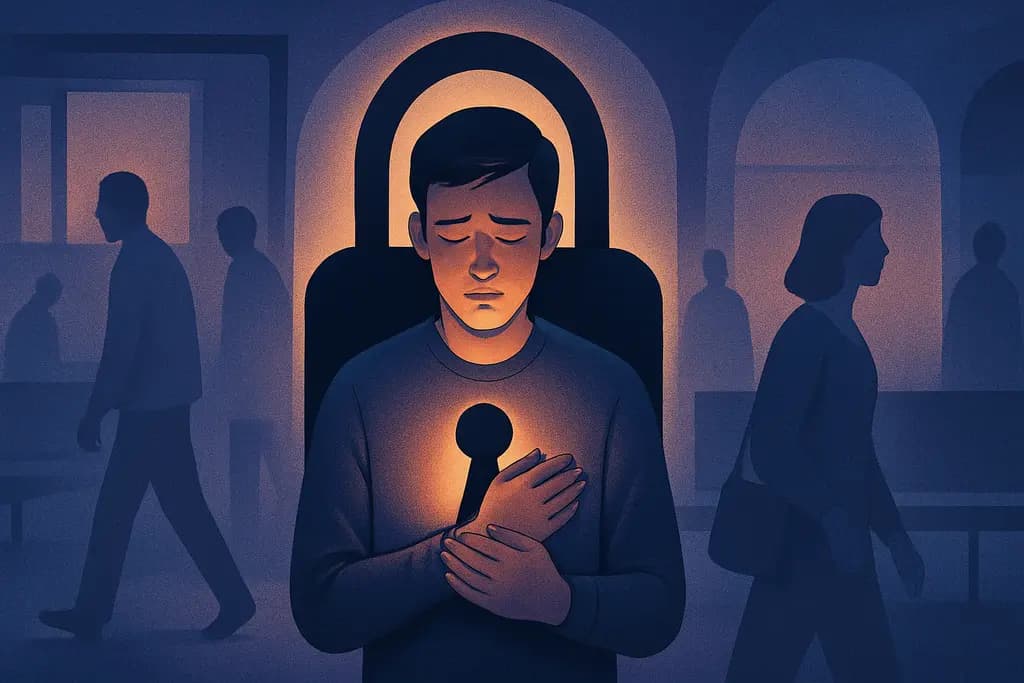
Category: Fears & Nightmares
Dreaming that you are locked in a public place—like a mall, train station, classroom or office—often feels intensely exposing and claustrophobic at once. This image blends a fear of being seen with a sense of confinement: you are surrounded by others yet unable to move freely. The precise meaning shifts based on how you felt in the dream (panic, embarrassment, calm) and the specific setting or people involved.
General meaning of dreaming about Being locked in a public place
At its core, this dream symbol combines two themes: visibility and restriction. Public spaces in dreams represent how you present yourself to others, your social roles, or areas of life that involve community and responsibility. Being locked there suggests a perceived inability to change or escape a social situation, expectation, or role.
Common interpretations point to pressure, social anxiety, or a transitional blockage where you feel judged, watched, or unable to act. The dream often highlights tension between wanting privacy and needing to perform publicly, or between personal freedom and public obligations.
- Feeling exposed: worry about reputation, scrutiny, or social evaluation.
- Lack of control: obstacles preventing you from leaving a role, job, or relationship.
- Stuck in transition: difficulty moving forward during a life change.
- Conflict of roles: responsibilities in public life that clash with private needs.
Spiritual meaning of Being locked in a public place in dreams
Spiritually, being locked in a public place can symbolize an energetic blockage around how you relate to the collective. It may signal that your authentic self is constrained by inherited beliefs, cultural conditioning, or obligations to a group.
Different traditions interpret this as a prompt to reclaim personal sovereignty within community life. For example, mindfulness and contemplative practices encourage examining the internal story that keeps you feeling exposed; shamanic or symbolic frameworks might read it as a call to release collective patterns that no longer serve you. Universally, the image points toward integrating inner freedom with outer participation.
Psychological interpretation
Fear, stress or anxiety
This dream often surfaces when stress or social anxiety is active. Being locked amid strangers or acquaintances can mirror worry about public failure, embarrassment, or not meeting expectations. If the dreamer feels panicked, it may indicate acute anxiety; if resigned, it suggests chronic low-level stress.
Relationships and emotional bonds
When the public place involves people you know, the dream can reflect relational tension: feeling trapped by obligations to family, friends, or colleagues. It may highlight boundaries that are blurred, or a desire to withdraw while being unable to do so without social consequences.
Control, power or vulnerability
The locked setting raises questions about control and agency. Psychologically, it can indicate perceived loss of power—either external (circumstances locking you in) or internal (self-doubt preventing action). It also surfaces vulnerability: the fear that being seen equals being judged or harmed.
Positive meaning
- Catalyst for change: the discomfort can motivate concrete steps to regain freedom or set boundaries.
- Increased self-awareness: recognizing patterns of people-pleasing or performance anxiety.
- Opportunity to practice assertiveness: finding ways to communicate limits in public roles.
- Growth through exposure: learning resilience by confronting social fears in safe, gradual ways.
- Reprioritization: clarification of what public commitments to keep and what to release.
Negative meaning and warnings
- May suggest mounting social anxiety that should be addressed before it affects daily life.
- Can indicate avoidance: you might be ignoring decisions that keep you stuck in an unsatisfying role.
- May point to burnout from public responsibilities or caregiving obligations.
- Could signal vulnerable boundaries, making you susceptible to manipulation or peer pressure.
These outcomes are potential readings—not certainties—and they depend on personal context and feeling tone in the dream.
Common variations of dreams about Being locked in a public place
- Locked in a mall: Often ties to consumer roles, image concerns, or feeling lost among many choices and expectations. It can reflect pressure to conform socially.
- Locked in a classroom or school: May connect to feelings about performance, learning, being judged, or unfinished development and personal expectations.
- Locked in a restroom: Blends embarrassment with urgency; may suggest suppressed needs or shame about a private matter becoming public.
- Locked in a subway/train station: Symbolizes feeling stuck during life transitions or while in transit between roles; anxiety about the next step.
- Locked in an office or workplace: Linked to career stagnation, office politics, or being confined by job duties and professional identity.
- Locked in a theater/cinema: Tied to performance anxiety, the sense of life playing out for an audience, or fear of public exposure of your inner world.
- Locked with strangers versus locked with familiar people: Being with strangers emphasizes anonymity and social fear; being with known people highlights relationship obligations and expectations.
What to do after such a dream
- Reflect on your emotions: note whether you felt panic, shame, helplessness, or calm; that feeling is the clearest clue to the dream's focus.
- Journal specifics: setting, who was present, how you tried to escape—these details point to areas of life under pressure.
- Review current life situations: look at work, public roles, caregiving, and social obligations that may feel confining.
- Check boundaries and commitments: ask which responsibilities you can renegotiate or release to regain freedom.
- Take small, practical steps: try assertive conversations, set time for private reflection, or test a modest boundary change in a low-stakes situation.
- Use calming practices: breathing, grounding, or short mindfulness exercises to reduce social anxiety and clarify next steps.
If recurring dreams intensify your distress, consider talking with a therapist or counselor for deeper exploration and coping strategies.