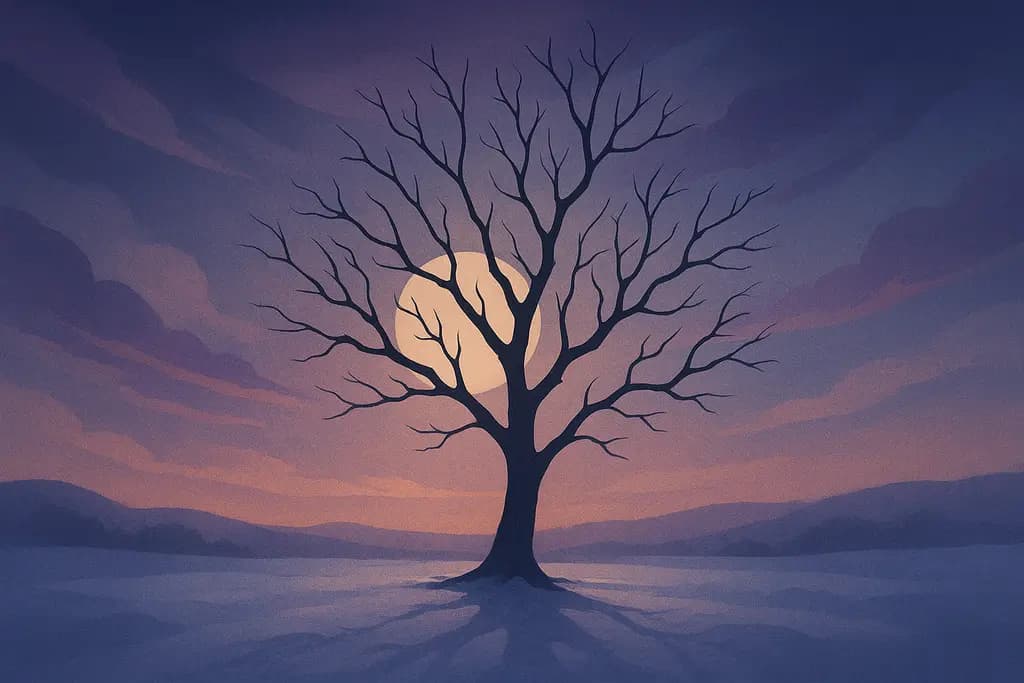
Dream About Barren tree in winter – Meaning
Category: Nature & Elements
Quick interpretation
When you dream of a barren tree in winter, it often reflects a pressured pause in waking life: a time when energy is low, responsibilities feel stripped away, and decisions are in suspension. This image commonly suggests pruning rather than annihilation—what looks like loss may be preparation for clearer priorities. The tone of the dream (lonely, relieved, peaceful) leans the meaning toward grief, acceptance, or stubborn endurance. Notice how the tree’s position and your actions in the dream point to whether you’re conserving strength or mourning what’s ended.
A common version of this dream
You stand on a narrow lane at dusk, breath fogging the air, watching a skeletal tree against a cold sky. The world smells of damp leaves and distant wood smoke. You may have just left a meeting that emptied you, ended a relationship, or postponed a plan; the tree’s branches look fragile beneath frost. In the dream you feel hollow and alert at once—exposed to wind, but strangely steady when you press your palm against the rough bark.
The emotional and symbolic message
- Renewal through rest. The tree represents a deliberate rest phase: resources are conserved and growth is temporarily hidden. If you woke from the dream feeling calm, it may suggest your psyche is signaling a necessary pause so that new priorities can form. This is less about loss and more about making space for clearer shoots when conditions improve.
- Loss and mourning. If the dream felt cold, lonely, or sorrowful, the bare tree can echo real grief—an ending that demands acknowledgment. The branches become a map of what’s been removed from your life: relationships, roles, or routines. The dream gives emotional room to name what you miss and to begin small practical steps toward closure.
- Exposure and vulnerability. A winter tree stripped of leaves can symbolize feeling exposed—your defenses down, personal boundaries tested. This angle shows where you worry others might see your weakness. It can prompt questions about who you trust and where you need to rebuild privacy, not necessarily to hide, but to recover solidity.
- Pruning for focus and resilience. Sometimes the barren tree signals an enforced pruning: distractions and excess are being removed so core strengths can remain. This interpretation emphasizes selective sacrifice—what’s gone was draining attention from what matters. The image can strengthen resolve: the tree survives winter and will put energy into fewer, stronger branches.
What this dream is not literally saying
This dream is rarely a literal forecast of catastrophe. It does not usually predict immediate death, bankruptcy, or a single dramatic event. Instead, it tends to mirror internal shifts—slowed momentum, the need to conserve resources, or grief. Treat it as a symbolic snapshot, not as a precise timeline of external events.
Concrete details that tend to stand out
Dreamers report sharp little specifics: a single red scarf tangled on a branch, the crunch of frost under shoes, a distant train horn, a neighbor’s porch light left on, or the sting of a cold wind that makes the skin on the face prickle. These sensory bits anchor the emotion—sound, cold, and small objects are common standout details.
How different traditions interpret it
Meanings vary across cultures and should not be taken as fixed. Interestingly, in some European folk traditions a leafless tree can represent ancestral presence and necessary winter rest, while in other contexts it symbolizes a test of endurance or a call to harvest inner wisdom. East Asian seasonal metaphors sometimes honor winter as quiet strength. Indigenous readings differ across communities—some see winter trees as signs of respect for natural cycles. Respect local tradition and personal resonance rather than assuming one single explanation.
Personal reflection prompts
- What recent ending or delay in my life feels most like the bareness in the dream?
- When I reached for the tree in the dream (touching it, sheltering beneath it), what did that action make me feel—safe, hollow, or steady?
- What small protective step (rest, saying no, seeking help) can I take this week to conserve my energy?
FAQ
Is this about relationships?
Sometimes. If relationships were present in the dream—someone standing under the tree or leaves falling from a shared branch—it can reflect connection, loss, or boundary changes. Often the dream points to your feelings about closeness and exposure rather than a direct message about another person’s intentions.
Can this dream be positive?
Yes. Many people wake with relief after this dream because it signals time to rest, regroup, and clarify priorities. When the tone felt peaceful or accepting, it commonly indicates productive recovery and the possibility of future growth.
Is this about money?
Rarely as a direct financial prediction. The imagery can mirror resource concerns—feeling stripped, conserving energy, or fear of scarcity—but it typically speaks to emotional or practical reserves rather than precise monetary outcomes.
Related dreams to explore
Dreams about barren tree in winter are often connected to A tree that speaks to you, An unreachable fruit on a tall tree, and Lightning striking a nearby tree. Looking at those nearby themes can help you compare control, fear, pressure, or change across similar dream scenes. You may also want to compare it with Tree Falling if the same mood or conflict keeps showing up.