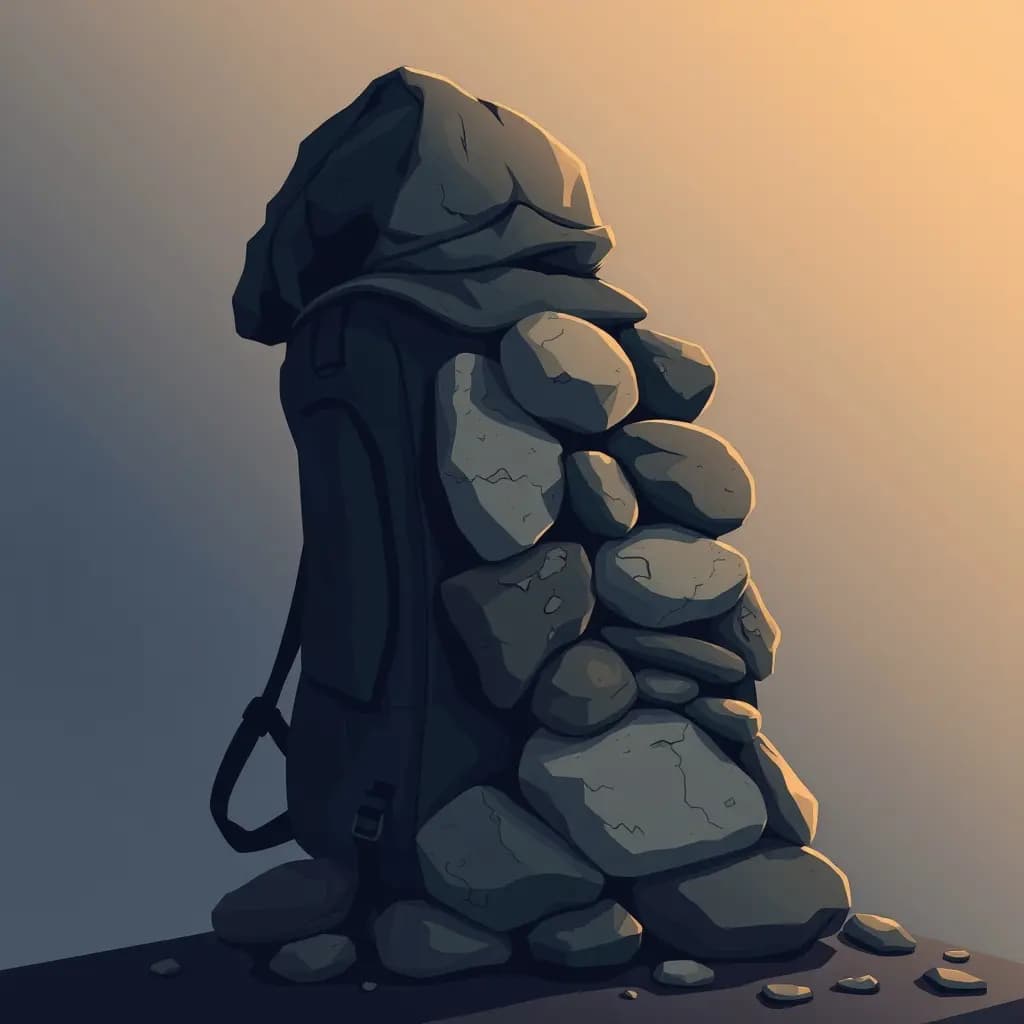
Dream About Backpack weighed down by heavy stones – Meaning
Category: Feelings
Dreaming of a backpack weighed down by heavy stones often points to feelings of burden, responsibility, or emotional weight you are carrying. Such a dream highlights how those pressures affect your movement, decisions, and mood. The exact meaning depends on the feelings you experienced in the dream and the waking-life context surrounding your obligations.
General meaning of dreaming about Backpack weighed down by heavy stones
At its core, a backpack weighed down by heavy stones symbolizes burdens you carry—literal or symbolic—that slow you down. Because a backpack is meant to hold what you need on a journey, heavy stones suggest that some of what you carry may be unnecessary, harmful, or simply too much for one person to bear.
This image frequently appears when someone feels overwhelmed by duties, guilt, unresolved memories, or expectations placed on them by others. It can also reflect the sensible need to carry essentials while learning resilience: the load itself might represent the lessons you must carry through a difficult period.
- Burden of responsibility: chores, work, family duties
- Emotional baggage: grief, guilt, past trauma
- Accumulated stress: small pressures piling up
- Preparedness vs. overload: carrying necessary tools or unnecessary weight
- Limits and boundaries: signaling the need to offload or set limits
Spiritual meaning of Backpack weighed down by heavy stones in dreams
Spiritually, this dream can represent karmic lessons, attachments, or energetic blockages that slow spiritual progress. Heavy stones may symbolize unresolved karmic debts, old patterns, or dense emotions that make it harder to move toward clarity or lightness.
Different traditions speak of release and purification: some Eastern teachings frame the dream as an invitation to loosen attachments; Christian imagery may liken it to carrying a cross or learning to surrender; shamanic and energy practices view it as a call to clear stagnant energy. Universally, the spiritual message tends to encourage discernment about what to keep and what to release.
Psychological interpretation
Fear, stress or anxiety
This dream often mirrors anxiety about being unable to cope. The heaviness reflects perceived limits—fear that you will collapse under expectations or that one more obligation will break you. Repeated occurrences can signal chronic stress or an impending burnout if nothing changes.
Relationships and emotional bonds
In relational terms, the stones can be emotional baggage passed down from family, a partner's demands, or unresolved conflicts you keep carrying for others. The backpack suggests you chose or accepted this load at some point; noticing whose voice or memory each stone represents can reveal where change is possible.
Control, power or vulnerability
A heavy backpack can also point to struggles with control: either feeling controlled by obligations or consciously taking on burdens to feel useful. It may highlight vulnerability—not wanting to ask for help—or a pattern of overresponsibility that undermines personal power. Letting stones be removed can be an act of reclaiming agency.
Positive meaning
- Growing resilience: learning to move despite hardship
- Recognition: identifying what weighs you down is the first step to change
- Intentional shedding: the dream may motivate letting go of what no longer serves
- Strength through challenge: carrying the load fosters practical skills and endurance
- Opportunity for boundary-setting: awareness that prompts healthier limits
Negative meaning and warnings
- May suggest rising risk of burnout if pressures continue without relief
- Can indicate unresolved trauma or persistent guilt that needs attention
- May point to imbalance: taking on others' responsibilities at your expense
- Can indicate avoidance: using busyness to avoid addressing deeper feelings
- May warn of growing resentment or isolation if burdens are not shared
Common variations of dreams about Backpack weighed down by heavy stones
- Backpack too heavy to lift: Often reflects feeling incapable of meeting demands right now; it may invite assessing priorities and limits.
- Someone piling stones into your backpack: Suggests external pressures or people adding obligations; this points to boundary issues and possible manipulation.
- Removing stones from the backpack: Represents release, healing, or conscious work to offload guilt and grief; it can be a hopeful sign of recovery.
- Stones labeled with words (guilt, debt, grief): When stones are named, the dream asks you to identify specific issues rather than treating all weight as the same.
- Stones falling out along the road: Indicates gradual relief or unintended loss of burdens; it can feel like relief or fear of losing parts of your identity.
- Child carrying a heavy backpack: Points to learned patterns or inherited expectations from family; it may highlight how early roles still shape your behavior.
- Backpack that keeps getting heavier: Suggests cumulative stress and unchecked responsibilities building over time, signaling a need to intervene before overwhelm intensifies.
What to do after such a dream
- Reflect on emotions you felt in the dream: shame, exhaustion, anger, relief—these give clues to the load's nature.
- Journal or list the "stones" you can name in waking life: obligations, relationships, memories, or beliefs.
- Check current life context: deadlines, caregiving roles, financial pressures, or pending decisions that match the dream's tone.
- Talk with a trusted friend, mentor, or counselor about the burdens you identified; an outside view can help prioritize and plan.
- Practice small boundary steps: say no to one additional demand, delegate a task, or schedule a break to test how it feels to lighten the load.
- Create a tangible ritual for release: sorting items, symbolic removal of a stone, or a short ceremony to mark letting go.
These steps are practical ways to translate the dream's message into action: acknowledging what you carry, deciding what is essential, and gradually creating room to breathe again.