Dream About Attic full of portraits – Meaning
Category: Home & Buildings
Main interpretation
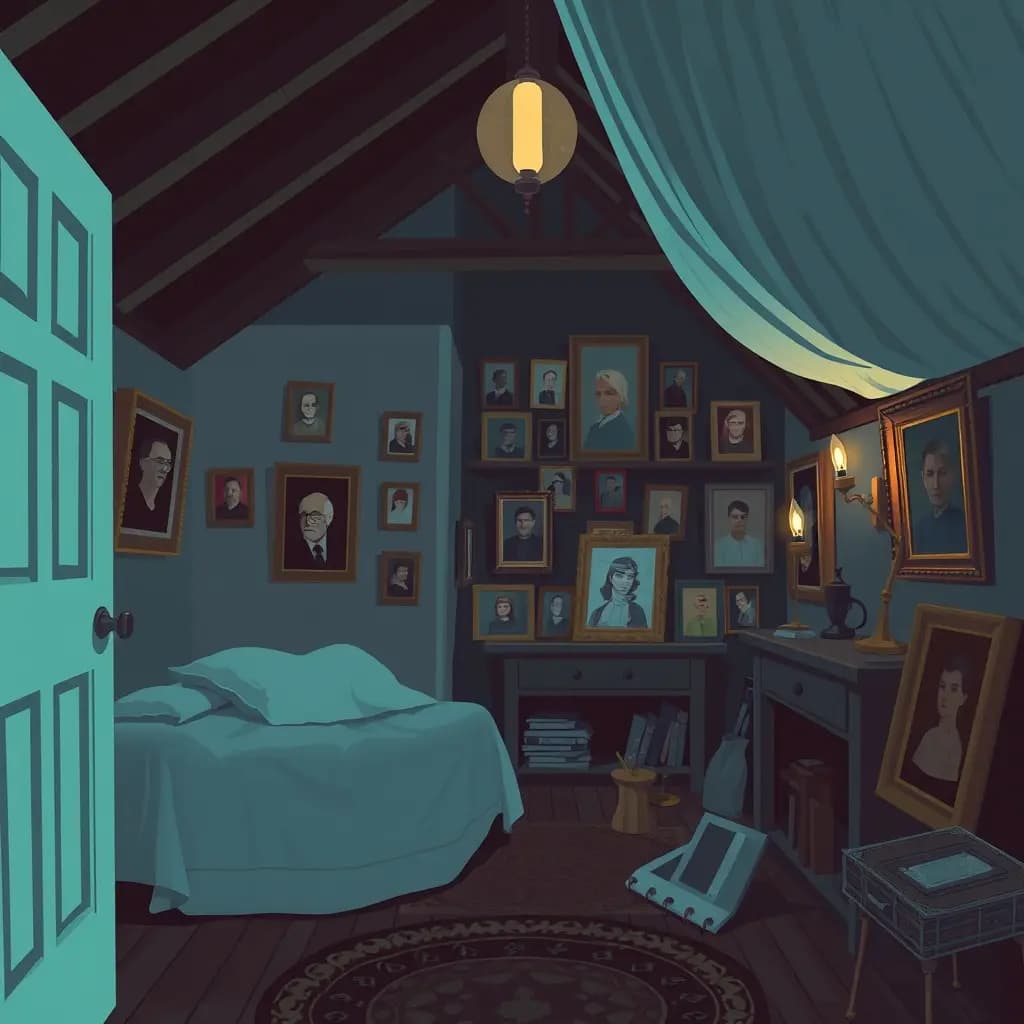
An attic full of portraits commonly points to stored relationships and overlooked parts of your past. The attic symbolizes where you keep what you don’t look at every day—old relationships, responsibilities, or identity pieces—while the portraits represent specific people, roles, or versions of yourself. If you felt overwhelmed, the dream may reflect pressure to sort or respond to family history; if you felt curious, it can indicate a readiness to revisit those memories. In practical terms, the dream often urges attention to unfinished emotional business rather than predicting an external event.
What your mind may be processing
In many cases, this dream reflects memory consolidation and emotional sorting rather than prophecy. Modern psychological framing sees the attic as a mental storage space and portraits as personified memories or roles—specific events like a funeral, estate sorting, or a recent argument can trigger these images. If you’re juggling caregiving, moving house, or facing a career pivot, those concrete pressures are likely to appear as tangible items (frames, stairs, locked boxes) while your emotional reaction in the dream shows whether you feel ready to engage or avoid.
What this dream is not literally saying
This dream is rarely a literal prediction about a specific person dying or an imminent inheritance. It does not usually work as a literal prophecy. Instead, it more commonly signals internal processes—memory, obligation, or identity shifts—so treat the images as symbolic cues rather than direct warnings about the future.
Key interpretations
- 1. Family history and unresolved obligations. The portraits can be family members, ancestors, or people who shaped your expectations. If the attic felt cluttered or you were searching, the dream may point to unresolved tasks: a will to read, a conversation postponed, or guilt over caregiving. The emotion you had—shame, obligation, resentment—helps identify whether the task is practical (sorting papers, contacting relatives) or emotional (apology, boundary-setting).
- 2. Identity fragments and self-examination. When the portraits seem to represent younger versions of you, jobs you once had, or social roles, the dream may be about integrating those parts. Standing among faces might mean you’re deciding which past identities to keep and which to let go. The setting—the dust, light, or which portraits face you—reveals whether this is a gentle reunification or an urgent reckoning.
Concrete details that tend to stand out
People often report a single portrait that’s cracked, a skylight leaking rain onto frames, moth-eaten clothing on a mannequin, muffled voices from below stairs, the smell of cedar and old paper, or a sudden sensation of breath on the back of the neck that makes the chest tighten.
When this dream deserves attention
Pay attention when this dream recurs, appears after a major family event, or leaves you with a lingering physical reaction like a racing heart. Recurrence can signal unresolved grief, a legal or financial task you’ve delayed, or an identity transition—divorce, becoming a parent, moving back into a family home. If the dream intensifies anxiety or starts to affect sleep and daytime function, structured action—journaling specifics, contacting a relative, or scheduling a legal/financial check—can be helpful.
How different traditions interpret it
Meanings vary across traditions and communities. In Western folkways, portraits often imply inheritance, reputation, or family secrets; in East Asian contexts dreams of ancestors may be read as calls to filial duty or respect; in some African and Indigenous systems, faces may signal living relations or protective ancestors. Respect local ritual and interpretive frameworks, and remember that no single cultural reading is definitive for everyone.
Frequently asked questions
Is this dream a warning?
Is this dream a warning? Usually not a literal warning. It may signal relational risks—neglected obligations, secrets, or strained bonds—that deserve attention, but it’s better read as symbolic prompting than as a direct alarm.
Can this dream be positive?
Can this dream be positive? Yes. It can mean reconciliation, readiness to reclaim lost parts of yourself, or a gentle invitation to reconnect. Curiosity and warmth in the dream often point to constructive integration.
Why does this dream repeat?
Why does this dream repeat? Repetition often means your mind hasn’t finished processing a memory or decision—grief, unresolved conflict, or a looming transition can make the brain return to the same imagery until action or acceptance occurs.
What should I do after this dream?
What should I do after this dream? Write down specific images and emotions, identify any concrete errands (call a relative, find documents), and consider a focused conversation or therapy if the dream returns and interferes with daily life.
Related dreams to explore
Dreams about attic full of portraits are often connected to House doubling in size, Door opens to crowd, and Floor becomes glass. Looking at those nearby themes can help you compare control, fear, pressure, or change across similar dream scenes. You may also want to compare it with Stairs leading to nowhere if the same mood or conflict keeps showing up.