Dream About Attending someone else's wedding – Meaning
Category: Relationships
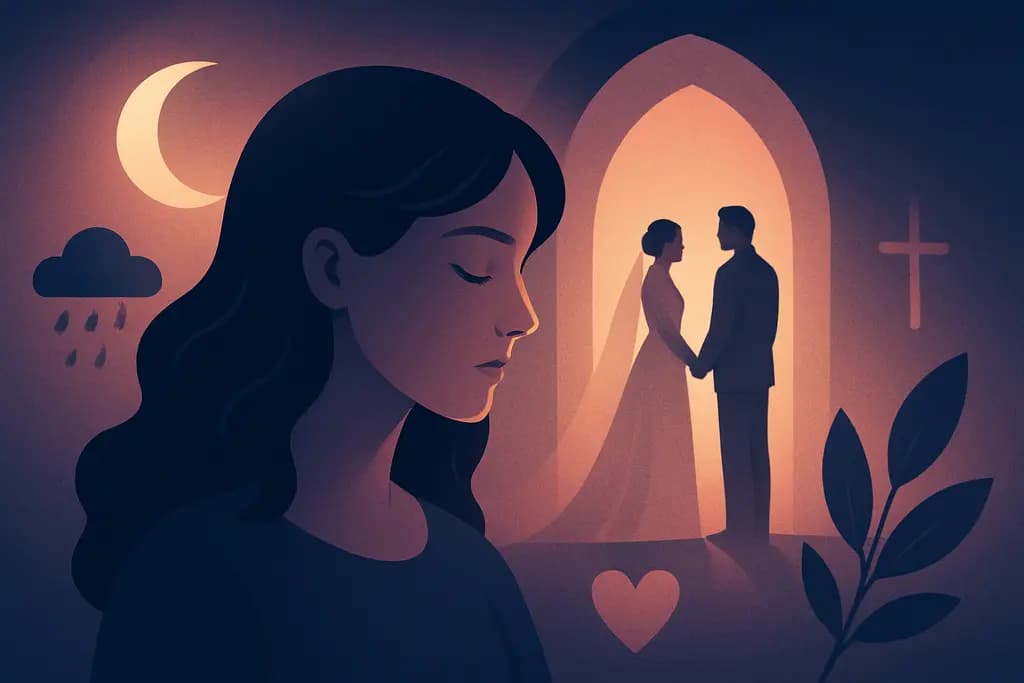
Dreaming about attending someone else's wedding often points to your feelings about relationships, change, and your social role. Such dreams rarely have a single fixed meaning — what you felt during the dream and the people involved shape the interpretation. Pay attention to whether you felt happy, excluded, anxious, or curious; the emotional tone guides the message.
General meaning of dreaming about Attending someone else's wedding
At its core, attending someone else's wedding in a dream symbolizes transition, social connection, and how you relate to commitment—either yours or others'. Weddings in dreams highlight rites of passage and shifts in relational status, while being an attendee places you in the role of observer or supporter rather than the central actor.
Common interpretations include feelings about belonging, comparison, and readiness for change. The dream can reflect your reaction to someone else s life moving forward, or it can mirror inner deliberations about your own commitments, loyalties, and identity within relationships.
- Witnessing a union: processing someone else s big life step
- Feeling like a guest: examining belonging or exclusion in social circles
- Observing emotions: your inner response to change and commitment
Spiritual meaning of Attending someone else's wedding in dreams
Spiritually, weddings often represent the joining of opposites, harmony, and a new phase of energy. Attending someone else's wedding can signify that you are in a period of learning about union, balance, or integration—sometimes on a soul level rather than just a social one.
Different traditions see communal rites as markers of collective karma and personal evolution. In many spiritual frameworks the role of observer suggests reflection: you may be called to witness transformation in others and take lessons from it without becoming entangled. This dream can be an invitation to align your intentions with a deeper sense of purpose around relationships.
Psychological interpretation
Fear, stress or anxiety
If the dream evokes nervousness, it can mirror anxieties about comparison, fear of missing out, or concern that others are making choices you have not. Anxiety in this context may point to pressure you feel about expectations—your own or those imposed by family, friends, or culture.
Relationships and emotional bonds
As a psychological symbol, the wedding reflects attachment patterns and how you navigate closeness. Attending someone else s ceremony may highlight feelings of support, jealousy, relief, or unresolved attachment to the people involved. It can reveal how securely you feel connected or how much you long for a similar bond.
Control, power or vulnerability
Being a guest rather than the central figure can underline issues of control and agency. You may feel powerless about changes in your social group or unsure about where you fit. Alternatively, the dream can expose a desire to step back and let others take the lead, or it can show vulnerability about losing influence or identity within a relationship.
Positive meaning
- Growth: recognizing that you are ready to observe and learn from others transitions
- Healing: processing past relationship wounds while supporting someone else s joy
- New opportunities: networking, social opening, or being positioned for future collaboration
- Acceptance: coming to terms with change and finding peace in others happiness
- Increased empathy: becoming more attuned to others emotional journeys
Negative meaning and warnings
- May suggest unprocessed jealousy or resentment toward someone who is moving forward
- Can indicate feelings of exclusion or diminished self-worth in social or romantic circles
- May point to avoidance of your own commitments by focusing on others
- Can indicate anxiety about comparison, leading to impulsive or defensive choices
Use these possibilities as prompts for reflection rather than fixed predictions.
Common variations of dreams about Attending someone else's wedding
- Attending an ex s wedding: May highlight lingering attachment, unresolved grief, or curiosity about how your former partner has moved on. It can push you to process closure or reassess your boundaries.
- Being a close friend s wedding: Often reflects support, pride, or awareness of changing dynamics in your friend group; it can also raise questions about your own relationship timeline.
- Feeling excluded at the wedding: Suggests feelings of alienation or that you are on the outside of important social or family developments; consider where you feel unseen in waking life.
- Watching a chaotic or ruined wedding: Can indicate anxiety about commitments failing, fear of losing control, or worries about instability in important relationships.
- Attending suddenly and uninvited: May point to fears about overstepping boundaries, guilt, or feeling like an outsider trying to reclaim a place.
- Observing a beautiful, moving ceremony: Generally signals hope, inspiration, or recognition that positive change is possible for you as well.
- Being asked to give a speech or toast: Reflects pressure to perform socially, a new role being offered, or the need to express feelings you have been holding back.
- Attending a stranger s wedding: Might highlight your process of projecting hopes or fears onto unfamiliar relationships, or indicate curiosity about how others build intimacy.
What to do after such a dream
- Reflect on the emotions you felt during the dream and write them down to clarify what the scene mirrors in your waking life.
- Consider the relationship contexts connected to the people in the dream: family, friends, romantic partners, or coworkers.
- Ask yourself whether the dream points to a desire for change, a fear of commitment, or feelings of exclusion—identify one small step you can take to address it.
- Talk with a trusted friend or journal about any recurring patterns the dream highlights, such as jealousy, avoidance, or readiness for growth.
- Use the dream as a guide for relationship decisions: set boundaries, communicate needs, or explore new opportunities, depending on what feels most relevant.
- Keep a dream journal for recurring themes; patterns across several dreams are often more telling than one isolated image.