Dream About Antique Clock – Meaning
Category: Objects
What this dream usually means
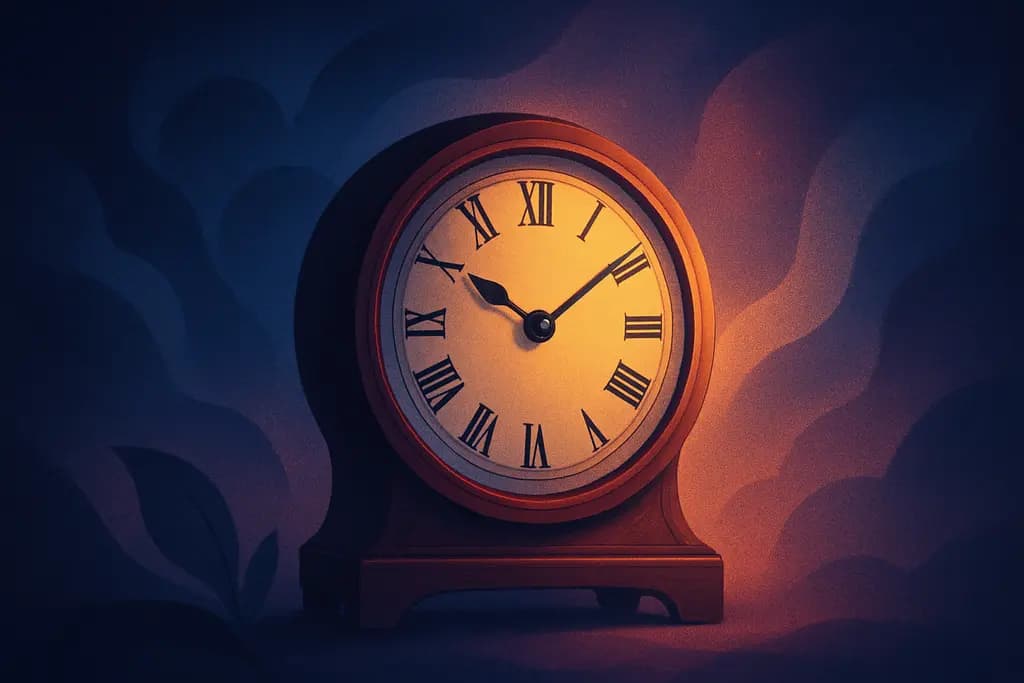
At its core, an Antique Clock commonly represents the passage of time and how past events shape your current rhythm. It can reflect nostalgia for a safer era, pressure from schedules and deadlines, or long-standing family routines that influence your choices. If the clock is worn or broken, it often points to unresolved memories or missed chances; if it strikes perfectly, it may emphasize precise timing or a turning point. It can feel comforting and melancholic, or tense and pressing, depending on the scene.
Psychological perspective
In many cases, the Antique Clock functions as a mental metaphor for temporal concerns: how you estimate future risks, rehearse past mistakes, or coordinate daily life. Psychologically, it maps onto habit loops and narrative memory—what you rehearse becomes your internal timetable. A loud tick suggests rumination; a stopped face points to an unresolved event you avoid. Observing which waking events trigger the clock image—meetings, anniversaries, family dinners—reveals whether the symbol is about planning, guilt, or simply needing rest.
What this dream usually does not mean
This dream rarely serves as a literal prediction of a specific event or exact date. It does not usually work as a timetable for death, fortune, or an unavoidable future. Instead of forecasting, the Antique Clock typically reflects an inner sense of timing, obligation, or memory—so resist reading it as a direct, factual warning about what will happen.
Three common meanings
Nostalgia and unresolved memory. An old clock often points to memories or a relationship you revisit in waking life: an attic box, a parent’s stories, or a childhood home you’re thinking about. The clock’s faded face can indicate unresolved grief or unfinished conversations; sitting with those memories—writing a letter, visiting a place—can help integrate the past instead of letting it dictate daily choices.
Pressure, deadlines, and urgency. If the clock is loud, relentless, or you feel panic, the dream may be about current time pressure: a work review, an academic deadline, or the race to meet milestones like a move or pregnancy. The sound of ticking maps onto cortisol-like urgency; practical steps—breaking tasks into small blocks, shifting priorities—can reduce that sense of running out of time.
Inherited routines and family patterns. An heirloom clock suggests behaviors or expectations passed down through generations: caretaking roles, financial habits, or emotional scripts. The dream can highlight how those rhythms keep repeating. Noticing which family member the clock seems to ‘belong’ to helps identify which pattern you may be maintaining and whether you want to keep, adapt, or let it go.
A chance to reset or change pace. A stopped, slow, or reparable clock can invite you to slow down, repair routines, or intentionally change your pace—switching from reactive to planned time. The dream may be urging you to schedule rest, rethink commitments, or mark a deliberate new beginning: a practical reset such as reorganizing your calendar or setting firm boundaries.
Unusual details people report
People often report specific images: a grandfather clock in a dusted attic, hands spinning backward, a pendulum that freezes mid-swing, distant chiming in a rain-soaked hallway, the smell of oil and old wood, or suddenly finding the clock inside a crowded train station or wedding hall.
When this dream deserves attention
This dream deserves attention when it repeats, provokes strong fear or relief, or arrives during a life transition: job change, bereavement, wedding, or moving house. Recurrence signals an unresolved pattern that your waking mind is trying to process. If the dream coincides with heightened stress—sleeplessness, racing thoughts—or a real decision point, treat it as a prompt to journal, discuss with a trusted friend, or set small practical steps to address the timing issue the dream highlights.
Cultural and symbolic views
Meanings vary across traditions: in some cultures an old clock is associated with lineage and ancestral continuity, while in others timekeeping objects carry superstitions about omens. Different communities emphasize either cyclical time, linear progress, or sacred seasons. Because cultural context shapes interpretation, the same clock can feel ominous in one setting and consoling in another—so local beliefs and family stories matter when you make sense of the image.
Frequently asked questions
Why do I feel fear in this dream?
Fear often arises because clocks link to finality and accountability; the ticking can mimic internal pressure and attention to missed chances or looming obligations, triggering a fight-or-flight feeling.
Is this dream a warning?
Usually it’s not a literal warning. The dream may highlight something you need to address—timing, commitments, or memories—rather than predicting a specific event.
What should I do after this dream?
After this dream, note the clock’s detail in a journal, identify a time-related stressor, and take one practical step: set a small boundary, make an appointment, or contact someone important.
Why does this dream repeat?
Repetition often means the issue is unfinished: recurring tasks, unresolved grief, or a persistent habit. Repeating the dream asks you to name the pattern and try one small change.
Related dream meanings
Dreams about antique clock are often connected to Balloons, Bicycles, and Bikes. Looking at those nearby themes can help you compare control, fear, pressure, or change across similar dream scenes. You may also want to compare it with black lost objects if the same mood or conflict keeps showing up.