Dream About An attic full of childhood toys – Meaning
Category: Places
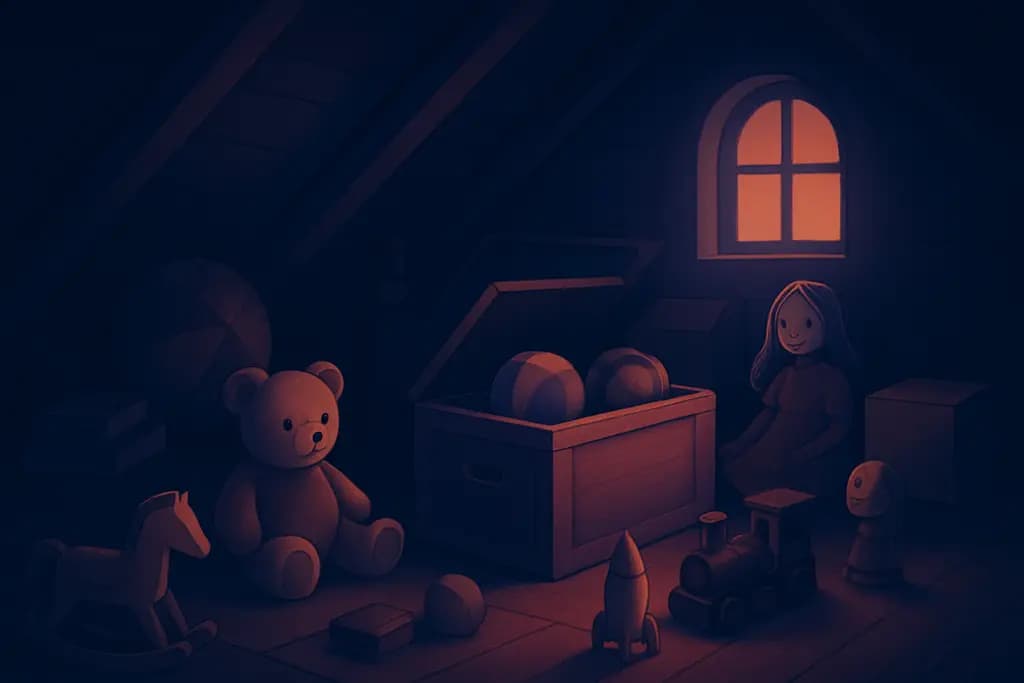
Dreaming of an attic full of childhood toys often points to memories, nostalgia, and aspects of your inner child that have been stored away. These dreams invite a gentle look at the past — but their meaning depends heavily on how the dream made you feel and the surrounding details.
General meaning of dreaming about An attic full of childhood toys
An attic packed with childhood toys typically symbolizes stored memories, forgotten parts of yourself, and emotional items you've put aside. Attics are liminal spaces between past and present, and toys represent play, innocence, and early emotional experiences. Together they suggest the dreamer is encountering remnants of earlier development — joys, wounds, or simply things that shaped who they are.
Common interpretations include a mixture of longing, unresolved issues, and creative potential. The exact tone of the dream — whether warm, eerie, cluttered, or joyful — changes the message. Look at how you interact with the toys in the dream to read its core message.
- Reconnecting with your inner child: a call to play, creativity, or emotional healing.
- Unresolved memories: past events or relationships that need attention.
- Hidden resources: talents, skills, or ideas from childhood that can be reclaimed.
- Neglected feelings: emotions you tucked away rather than processed.
Spiritual meaning of An attic full of childhood toys in dreams
Spiritually, an attic of childhood toys can be a symbol of soul memory and the continuity of the self across time. Many traditions see stored items as energetic imprints; revisiting them in a dream can indicate that spiritual growth requires integrating the past. The image of toys evokes innocence and first impressions of the world, which may hold keys to deeper healing or renewed openness.
In universal spiritual terms, this dream can be an invitation to reclaim joy and wonder, or to cleanse stagnant emotional energy. Practices like mindful reflection, prayer, or simple ritual can help you acknowledge and release what no longer serves you while honoring what should be kept.
Psychological interpretation
Fear, stress or anxiety
If the attic feels claustrophobic, dusty, or filled with broken toys, the dream may reflect anxiety about unresolved issues. Cluttered childhood items can mirror mental overload or fears that old patterns will resurface. Anxiety in this context often points to worry about repeating past mistakes or not being able to manage current responsibilities while old wounds remain unprocessed.
Relationships and emotional bonds
Toys often relate to early attachments — caregivers, siblings, and playmates. Finding specific toys associated with a person can highlight unresolved feelings toward them: fondness, regret, or grief. This dream can signal a need to reevaluate emotional bonds, forgive, set boundaries, or reconnect with someone from your past in a healthier way.
Control, power or vulnerability
An attic can be a place where things you once controlled were stored out of sight. Discovering toys there may reveal feelings of vulnerability or a sense that parts of you have been deliberately hidden. Alternatively, reclaiming toys in the dream can indicate taking back control of your life, reclaiming power lost in childhood, or acknowledging vulnerability as a strength.
Positive meaning
- Reconnection with creativity: rediscovering playful energy and imaginative strengths.
- Healing old wounds: beginning to process and integrate childhood experiences.
- Rediscovered skills: uncovering talents or passions you set aside.
- Renewed relationships: a chance to repair or deepen bonds with family or friends.
- Emotional resilience: transforming past pain into wisdom and strength.
Negative meaning and warnings
- May suggest avoidance: the dream can indicate you are neglecting important emotional work.
- Can point to unresolved trauma: especially if the scene is distressing or dominated by broken or frightening toys.
- May indicate emotional stagnation: holding onto outdated identities that limit your growth.
- Can signal relationship strain: old patterns from family dynamics might be affecting current relationships.
Common variations of dreams about An attic full of childhood toys
- Finding your favorite toy in the attic: Often a comforting sign that a resource or part of your identity is available again; could also trigger nostalgia or regret depending on emotion.
- Attic full of broken or scattered toys: May reflect unresolved emotional damage or a feeling that parts of your past need repair before you can move forward.
- Toys covered in dust: Suggests long-neglected memories or talents; dusting them off in the dream can symbolize active reclamation.
- Cleaning out an attic of childhood toys: Typically indicates intentional emotional sorting — letting go of what no longer serves and keeping what matters.
- Children playing among the toys in the attic: Can point to current joy and reconnection with spontaneity, or to concerns about family dynamics and how childhood influences the present.
- Finding a hidden chest of toys: May symbolize discovering a cluster of memories or talents you didn’t know you had, often a prompt to explore creativity.
- Unable to bring toys down from the attic: Might indicate feeling stuck or unable to access parts of yourself that could help now.
- Selling or throwing away childhood toys in the attic: Can represent a conscious decision to release the past, which may feel freeing or emotionally challenging.
What to do after such a dream
- Reflect on your emotions: note whether the dream felt warm, sad, fearful, or curious — your feelings are the clearest clue.
- Journal specific details: write down which toys, colors, or people appeared and any memories they sparked.
- Look at your current life: consider whether childhood issues, creative desires, or old relationships are influencing present decisions.
- Talk it over: share the dream with a trusted friend or confidant to gain perspective.
- Take small actions: reconnect with a hobby, set boundaries where old patterns repeat, or perform a symbolic ritual (cleaning, sorting, or photographing items) to process feelings.
- Seek support if needed: if the dream triggers strong distress or reawakens trauma, reach out to a trained support person for help processing your experience.