Dream About Abandoned theater – Meaning
Category: Places
A typical dream scenario
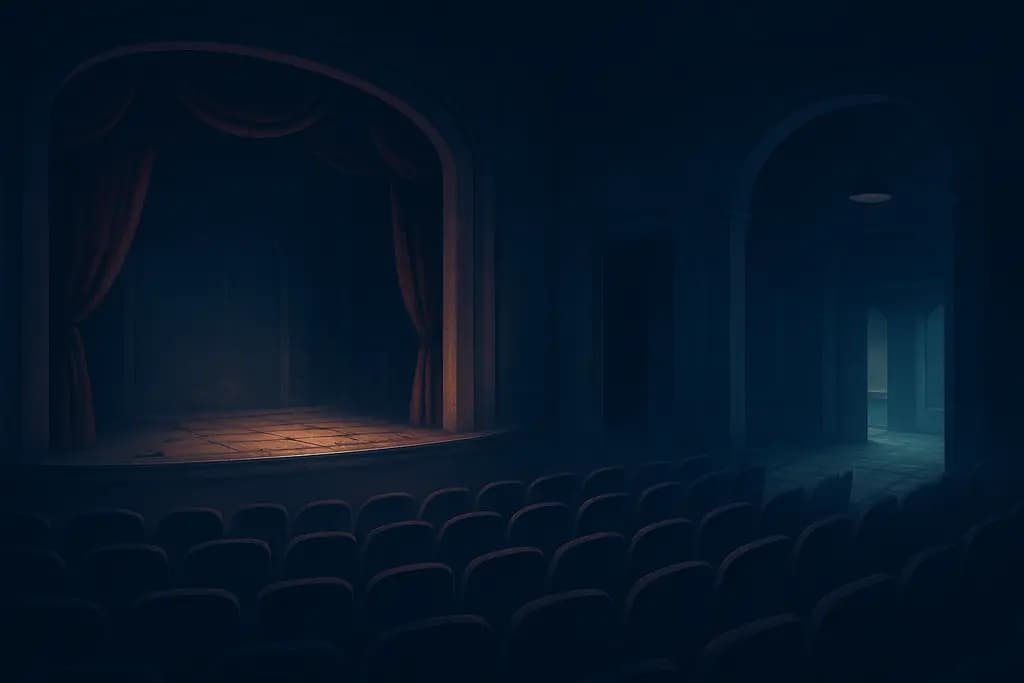
Direct answer: an abandoned theater in a dream often signals a pause in your public role, creative energy, or the parts of yourself you present to others. You walk through a shadowed lobby—cracked tiles underfoot, a cold breeze through the broken marquee—past rows of red velvet seats folded in dust. On stage a curtain hangs half-raised, a single spotlight stutters; your footsteps echo. The scene feels both eerie and oddly calm, a mixture of loss and relief that points to something put aside.
Concrete details that tend to stand out
People often recall specific images: a cracked marquee with a single flickering letter, a ticket booth covered in cobwebs, damp patches on the ceiling, an orchestra pit full of leaves, a lone spotlight that still works, or the sound of distant applause that never arrives. Physical reactions—cold fingers, a lump in the throat, the urge to sit—also stand out.
Main interpretation
Quick answer: this dream commonly represents a role, project, or part of your identity that feels neglected, retired, or temporarily halted. It can reflect mourning for what once brought status or joy, practical burnout, or a conscious decision to step away from performance. The empty theater often signals a moment to inventory what you care about, whether you want to revive the stage, rebuild it differently, or leave it dark and use your energy elsewhere.
How this dream may connect to daily life
- Paused public role. If you’ve been moved out of the spotlight—by a promotion elsewhere, a breakup, retirement, or a company reshuffle—the empty theater can echo that change. It may capture feelings of being sidelined, embarrassed, relieved, or freed. Consider which social functions you miss, which you resent, and whether you want to reclaim a stage or redesign the part you play.
- Stalled creativity or abandoned projects. A theater with props covered in dust often stands in for creative work that’s been postponed: a manuscript on the shelf, a band that stopped rehearsing, or ideas you never launched. The dream can be an invitation to inventory resources—time, collaborators, courage—or to accept that some projects belong to a previous phase and can be folded away without guilt.
- Letting go of performance and seeking authenticity. Sometimes the theater is about performance itself: social masks, habitual pleasing, or exhaustion from always being 'on.' An abandoned stage may reflect a growing desire to be seen more honestly or to withdraw from roles that feel performative. Expect mixed emotions—relief interlaced with grief—as you consider where to stop acting and where to show up as yourself.
What this dream is not literally saying
This dream is rarely a literal forecast of an actual building or immediate job loss. In real life, it does not usually mean a physical place will be abandoned or that external catastrophe is imminent. Instead, it tends to point inward: shifting priorities, emotional distance, and how you allocate time and energy. Treat it as symbolic notice rather than a literal prediction.
Personal reflection prompts
- Which public role, hobby, or project have I quietly stopped showing up for, and why?
- When in the dream did I feel relieved versus sad, and what real-life situation matches those feelings?
- What is one small action—sending a message, opening a file, saying no—that would honor this dream’s message?
Spiritual and symbolic perspective
Symbolically, many spiritual traditions view empty communal spaces as liminal zones—thresholds inviting reorientation. An abandoned theater can be framed non-dogmatically as a call to inner clearing: to sit with silence, to release old roles, or to prepare for a new kind of service. Some people experience it as initiation—an invitation into solitude or authentic expression—without implying a specific doctrine or fate.
Common questions
What should I do after this dream?
Write down the details you remember, note the strongest emotion, and take one concrete next step: contact a teammate, set a 30‑minute creative session, or schedule rest. Use the dream to guide a practical inventory of roles and priorities.
Is it related to stress?
Yes—this dream often relates to stress or burnout. Empty seats and a dark stage can reflect emotional exhaustion, pressure to perform, or a recent downsizing of obligations—signs that you may need to rest or simplify.
Why does this dream repeat?
Repeating dreams usually point to an unresolved issue or recurring emotional pattern. The abandoned theater may reappear until you make a change, grieve a loss, or acknowledge a role you’ve outgrown.
Is this about money?
Usually not directly about money. Financial worries can appear as ticket prices or closed box offices, but more commonly the dream addresses how you spend attention and effort rather than literal finances.
Dream meanings connected to this one
People who dream about abandoned theater often end up exploring Bad Weather, Ballrooms, and black waterfalls next, because the same pressure can show up through different symbols. Comparing them usually makes the emotional pattern clearer. You may also want to compare it with Cave if the same mood or conflict keeps showing up.