Dream About Abandoned Cardroom – Meaning
Category: Casino & Gambling
A typical dream scenario
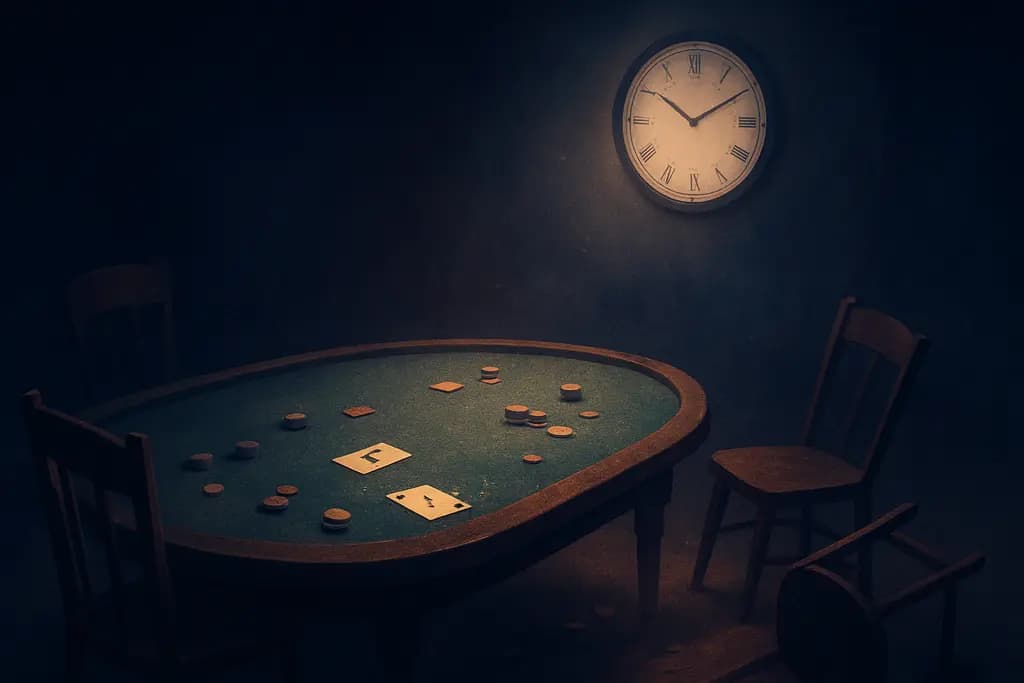
You wake still tasting the metallic tang of adrenaline from a recent choice — a job gamble, a risky conversation, or a financial swerve — and find yourself walking into a shuttered cardroom. Fluorescent bulbs flicker above felt tables; chairs lie on their sides, a lone dealer's apron hangs on a hook, and a grandfather clock has stopped at 2:13. The air smells faintly of cigarettes and stale perfume; your pulse quickens as you step over scattered chips. There’s a quiet regret in the room, and a sharp sense that something expensive was left unfinished.
Specific details people often mention
People often mention a single ace under a chair, rain leaking through a broken skylight, a roulette wheel still spinning slowly, the echo of high heels on tile, or the uncanny sound of a dealer’s voice whispering numbers. Some feel their hands tremble when they pick up a heavy brass chip.
Main interpretation
In many cases, an abandoned cardroom dream points to feelings about risk, lost opportunity, or the aftermath of a high-pressure decision. It commonly suggests you are processing what you risked and what you left behind — not necessarily literal money, but reputation, relationships, time, or identity. This dream is a prompt to reassess your appetite for risk and to notice where avoidance or regret is shaping your choices; it can also be an invitation to reclaim what still matters.
Three common meanings
- Missed Opportunities and Regret. The empty tables and scattered chips often represent doors you closed or chances you didn’t take. Seeing the room abandoned can highlight a sense of regret about a past choice — a job you didn’t accept, a conversation you didn’t have, or a creative project you let slide. The dream nudges you to inventory what feels unfinished and to consider practical steps to retrieve or resolve those losses.
- Fear of Risk and Retreat. An abandoned gambling space can indicate you’re pulling back from risk after a painful lesson. The silence and overturned chairs suggest withdrawal, cautiousness, or a desire for safety. This meaning is common when you’re recovering from a breakup, a failed investment, or a public mistake; the dream may be your mind rehearsing a safer future or warning against numb avoidance that prevents growth.
- Identity, Status, and Hidden Ambition. For some, the cardroom is a stage of identity — where you once performed confidence and skill. Seeing it empty can reflect a feeling that a former role or reputation has been abandoned or stolen. Alternatively, it can reveal private ambition: the scattered chips are untapped resources or talents you’ve stopped using. The dream can push you to reclaim a competence or reassess how much you let status define choices.
What it can reflect emotionally
From a modern psychological angle, an abandoned cardroom commonly reflects cognitive and emotional processes around decision-making: risk assessment, loss aversion, and regret. It can be your brain’s way of simulating outcomes and rehearsing responses after a stressful event. It may also highlight avoidance patterns — retreating to safety after a perceived loss — or point to ambivalence about identity when a public role changes. Consider it a non-medical signal to notice behavioral patterns rather than a diagnosis.
What this dream is not literally saying
This dream is rarely a literal prediction of a financial windfall or impending ruin. It does not usually mean you will win or lose money the next day; instead, it highlights your emotional and behavioral relationship to risk. Resist reading it as a fortune-telling sign — it’s more about your internal ledger than an external forecast. One emotional nuance: feeling relief in the room can mean you’re ready to stop gambling with something important.
When this dream deserves attention
This dream deserves attention when it repeats, arrives during prolonged stress, or follows a significant decision like quitting a job, ending a relationship, or making a large investment. Recurrence suggests an unresolved fear or an unfinished assessment of risk and consequence. Pay attention if waking feelings include persistent guilt, avoidance, or a nagging urge to recover something. Practical next steps include journaling specifics, talking with a trusted friend or mentor, and making a small, concrete plan to address whatever feels unfinished.
FAQ
What should I do after this dream?
Write down the details while they’re fresh, note what element triggered emotion, and choose one small practical step (call, research, jot a plan) that addresses the feeling of unfinished business.
Is this about money?
Not usually. While money imagery appears, the dream more often symbolizes perceived risk, regret, or resource use — which can include time, reputation, or emotional investment rather than literal cash.
Is this about relationships?
Sometimes. If recent relationship decisions felt like a gamble, the dream may reflect trust issues, fear of commitment, or regret about a break. But it is equally likely to concern work or personal identity.
Can this dream be positive?
Yes. It can be positive if you use it as a prompt to reassess risk, to let go of what no longer serves you, or to reclaim an abandoned talent — turning loss into a clear plan for change.
Related dreams to explore
People who dream about abandoned cardroom often end up exploring Spinning Wheel Losing Its Numbers, Golden Token Slipping Through Fingers, and Endless Shuffling Deck next, because the same pressure can show up through different symbols. Comparing them usually makes the emotional pattern clearer. You may also want to compare it with Gambling if the same mood or conflict keeps showing up.