Dream About abandoned amusement park at dusk inside a house – Meaning
Category: Places
Quick interpretation
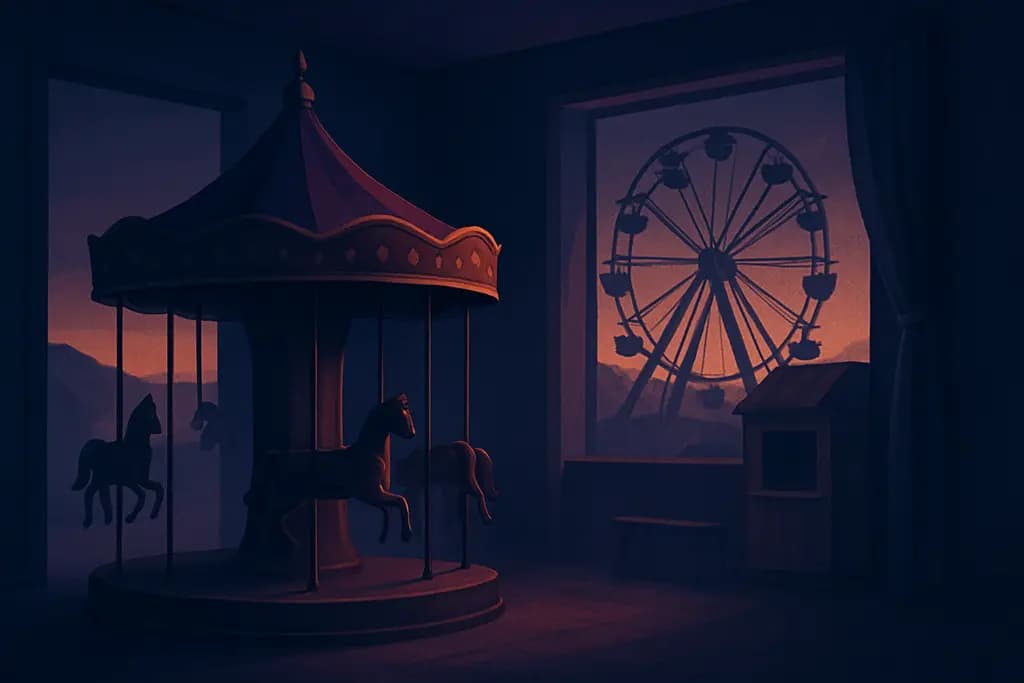
Seeing an abandoned amusement park at dusk inside your house commonly points to parts of your private life where pleasure or play has been neglected. The house represents your inner life; the park represents past pleasures or ambitions; dusk signals a threshold — you're neither fully in the past nor committed to a change. This dream may urge you to notice what used to bring you joy but has been left unattended and whether you're ready to repair, let go, or reinvent those parts of yourself. Interestingly, the half-light often reflects ambivalence about taking the next step.
What it can reflect emotionally
Viewed psychologically and non-medically, the dream stages an internal conflict between reward-seeking and avoidance. The house is the personal, bounded self; amusement rides are neural rewards, habits, or projects once thrilling; dusk is cognitive ambiguity and low arousal. Abandonment points to avoidance, guilt, or depletion. Emotionally, you may be oscillating between longing and caution — excitement undercut by unease. Practical steps include naming one neglected pleasure, tracking when you feel most drained, and experimenting with brief, restorative activities to test whether the park still works for you.
How this dream can be interpreted
Stalled Joy and Neglected Hobbies. A park abandoned inside a familiar room can signal that activities which used to energize you — painting, music, weekend socials — have been sidelined. If you recently moved, changed schedules, or became a caregiver, the dream points to the cost of that shift: pleasure on pause. Try listing three small, low-effort things that used to feel fun and schedule one this week to test whether the joy returns.
Childhood Memory and Unprocessed Loss. A carousel in the attic or doll-sized rides down a hallway often connects to childhood memory or a relationship that shaped your sense of safety. The abandonment and dusk suggest unresolved sadness: a parent, friend, or phase of life that ended without closure. Revisit a specific memory from the scene — a ticket stub or a song — and write a short letter to that past to clarify what you still need to grieve or celebrate.
Transition Anxiety about Change. Dusk and locked gates in a hallway park point to ambivalence around an upcoming transition — a job offer, moving, retirement, or becoming a parent. The dream stages the conflict: desire to stay in familiar amusement versus pressure to move out into an unknown evening. Make a decision journal: note pros and cons, timeline pressures, and one practical step that reduces uncertainty (call a friend, visit the new place, make a plan).
Privacy, Secrets, and Hidden Parts of Self. Finding a whole park behind a closet can highlight aspects of yourself you keep private — pleasures or quirks you only allow in solitude. The abandoned quality suggests shame, fear of judgement, or a belief that those parts are no longer appropriate. Test this by choosing one modest, private pleasure to share with a trusted person and note their reaction; often the fear is larger than the reality.
What this dream is rarely about
This dream is rarely a literal prediction about property, doom, or someone abandoning you in waking life. It does not usually work as a literal forecast of events like foreclosure or physical decay. Instead, it tends to map inner neglect, stalled plans, or emotional clutter — an image of inward truth more than outward prophecy. There can be a bittersweet tone: it’s about feelings you’ve left unattended, not a fixed fate.
Specific details people often mention
People often mention a sticky ticket booth in a back bedroom, a carousel horse with flaking paint, rain streaking the kitchen window while calliope music plays, the distant murmur of a crowd down the hall, and a sudden cold sweat or a fluttering heart when a door slams.
Why recurring versions matter
When this dream recurs it often marks a persistent theme: chronic stress, unresolved fear, or an extended life transition like divorce, caregiving, or career reinvention. Frequency signals that your psyche keeps returning to the same unresolved question — 'What do I do with what used to bring me joy?' Note timing (before sleep, after meetings, during anniversaries) and bodily reactions. If it intensifies, keep a dream log for patterns and try small, concrete changes in waking life to see if the dream’s urgency eases.
Symbolic meaning across traditions
Meanings vary widely across traditions. In Jungian-influenced Western readings the park may stand for the inner child; in some Eastern views the house and its rooms can map to stages of life or ancestral ties; other cultures might see an abandoned public place as a signal to honor communal loss or perform a small ritual of clearing. Avoid treating any single tradition as definitive — people use different metaphors to make sense of the same image, and practices range from storytelling and offerings to simple house-cleansing or communal meals.
Common questions
Why do I feel fear in this dream?
Fear often arises because the dream collapses private safety (your house) with public vulnerability (an abandoned park) at a liminal time (dusk). That mismatch creates alarm—your brain flags potential loss or exposure even while curiosity remains.
Is this about money?
It is rarely a direct message about money. Sometimes the image points to resource choices — time, energy, or how you invest yourself — but it seldom predicts financial events or bank trouble.
Why does this dream repeat?
Repeating dreams tend to reflect unresolved emotions, ongoing stress, or a life transition you haven’t fully processed. They repeat until you change something in waking life, reframe the issue, or integrate the feeling the dream keeps showing.
Dream meanings connected to this one
If this dream keeps returning, pages about Water, Houses, and Bad Weather can reveal the related patterns underneath it. They often overlap around insecurity, transition, or stress in everyday life. You may also want to compare it with Waves if the same mood or conflict keeps showing up.