Dream About A flying kite – Meaning
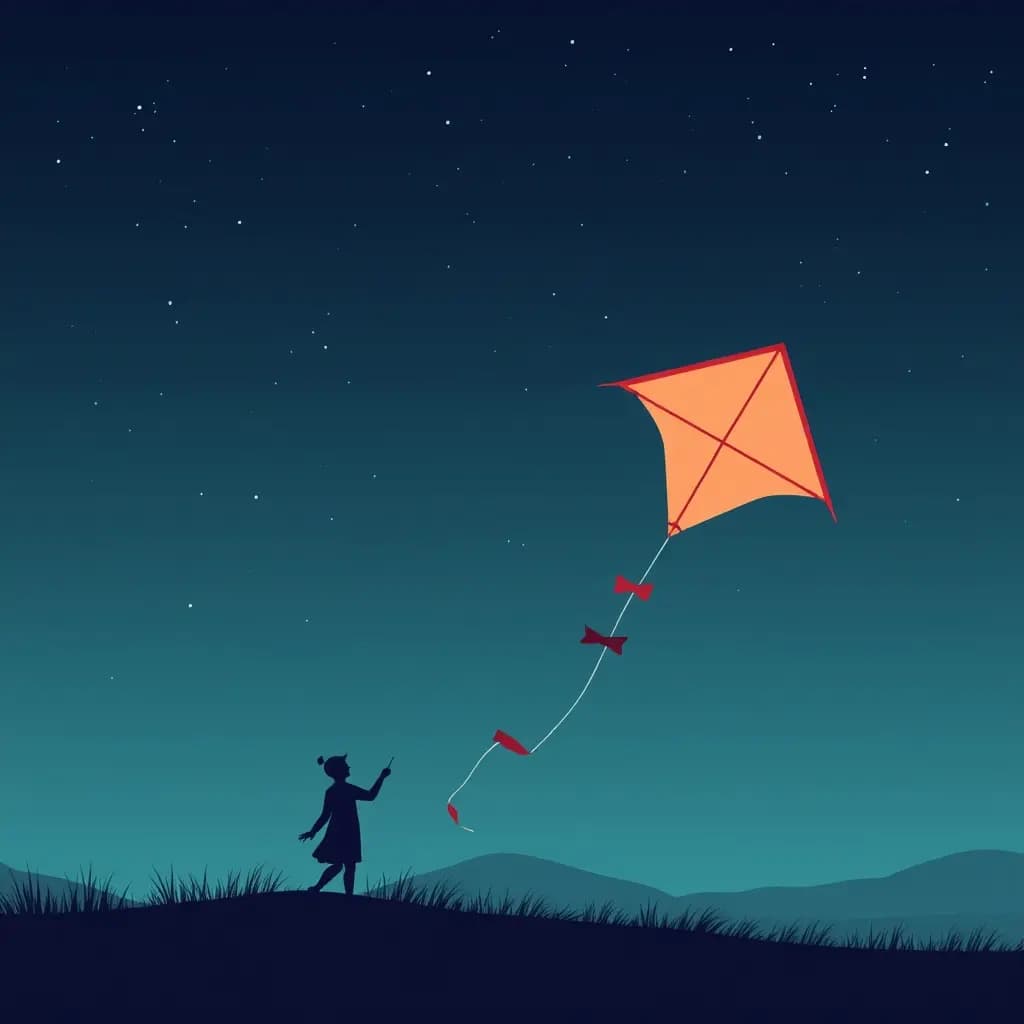
Category: Objects
Dreaming of a flying kite often points to feelings of aspiration, playfulness, or the desire to rise above current challenges. The kite's ability to lift and drift on the wind makes it a naturally hopeful symbol, but its dependence on a string and the conditions of flight mean context and emotions in the dream change the meaning. Pay attention to whether you felt joy, fear, control or loss — those feelings reshape the interpretation.
General meaning of dreaming about A flying kite
A flying kite in a dream generally symbolizes freedom, ambition, and the dynamic between letting go and holding on. It represents something you want to elevate — a project, a relationship, or an aspect of yourself — while also reminding you that success often depends on external conditions and your capacity to manage the connection.
Common interpretations center on balance: the kite rises on the wind (external opportunity) but needs a steady hand on the string (your choices and boundaries). The scene, your control over the kite, and your emotions give clues to whether the dream is optimistic or cautionary.
- Freedom and aspiration: desire to expand, take risks, or reach higher goals.
- Play and creativity: reconnecting with joy, imagination, or childlike spontaneity.
- Control versus release: tension between holding tight and letting things unfold.
- External influences: how outside forces (luck, timing, other people) shape your progress.
Spiritual meaning of A flying kite in dreams
Spiritually, a flying kite can represent the soul’s yearning to connect with higher purpose while remaining attached to earthly life. In many traditions, ascent symbolizes spiritual growth and expanded awareness; the kite’s tether reminds us that growth often happens alongside practical responsibilities.
Some cultures link flight with messages from beyond or an invitation to trust unseen support. Universally, a kite’s movement suggests energy flow: when it soars, energy is aligned; when it falters, a spiritual rebalancing or release may be needed.
Psychological interpretation
Fear, stress or anxiety
If the dream includes fear — of losing the kite or it crashing — it may mirror worries about losing control over something important. Anxiety in the dream often reflects real-life stressors: deadlines, unstable situations, or the pressure of expectations.
Relationships and emotional bonds
A kite held by another person, or one whose string is shared, can symbolize emotional ties and dependency. The strength of the string suggests the health of those bonds: a taut, secure line indicates trust; a frayed or snapping cord may point to fragile or strained relationships.
Control, power or vulnerability
Holding the kite’s string is a metaphor for how much influence you feel over your life. Feeling empowered while maneuvering the kite suggests agency and confidence; feeling helpless as it slips away can point to vulnerability, fear of failure, or the need to delegate and let go.
Positive meaning
- Renewed optimism and hope: the kite’s ascent signals new opportunities or a fresh start.
- Creative breakthroughs: reconnecting with playful, imaginative energy that fuels projects.
- Personal growth: gaining perspective and rising above small worries or limiting beliefs.
- Healthy release: learning to let go of outcomes while maintaining healthy boundaries.
- Strong partnerships: a secure kite string can reflect reliable support from friends or mentors.
Negative meaning and warnings
- May suggest loss of control: if the kite plunges or the string breaks, it can indicate unstable plans or unattended responsibilities.
- Can indicate overconfidence: a kite flown recklessly may point to risk-taking without preparation.
- Might reflect emotional fragility: a damaged kite or one tangled in obstacles can indicate suppressed feelings or strained relationships.
- Could warn of external interference: gusts or sudden storms in the dream may suggest outside forces disrupting your goals.
Common variations of dreams about A flying kite
- A kite soaring high: Often feels uplifting — may indicate ambition paying off or a period of confidence and visibility.
- A kite stuck in a tree: Can suggest stalled plans, obstacles to progress, or a need to recover something neglected.
- A kite with a broken string: May point to a sudden loss of control, a fractured relationship, or an opportunity slipping away.
- Losing the kite while flying it: Can indicate fear of failure, letting go unintentionally, or being unprepared for responsibility.
- A child flying a kite: Often reflects innocence, simple joy, or concerns about nurturing someone else’s growth.
- A kite tangled in power lines: Suggests risky entanglement with dangerous situations or consequences from ignoring warnings.
- A colorful, well-made kite: Typically speaks to creativity, pride in work, and visible success that draws attention.
What to do after such a dream
- Reflect on your emotions: journal what you felt in the dream — joy, fear, relief — and link those feelings to waking life situations.
- Review current goals and ties: consider projects, relationships, or responsibilities that feel like the kite or its string.
- Assess control and boundaries: decide where to tighten your hold, delegate, or intentionally release outcomes.
- Take practical steps: if the dream points to stalled plans, make a small action plan; if it indicates stress, schedule rest or set limits.
- Use the imagery: visualize repairing the kite or steadying the string as a mental exercise to reinforce confidence and intention.