Dream About A Courtroom Where You Are Both Judge and Defendant – Meaning
Category: Events & Situations
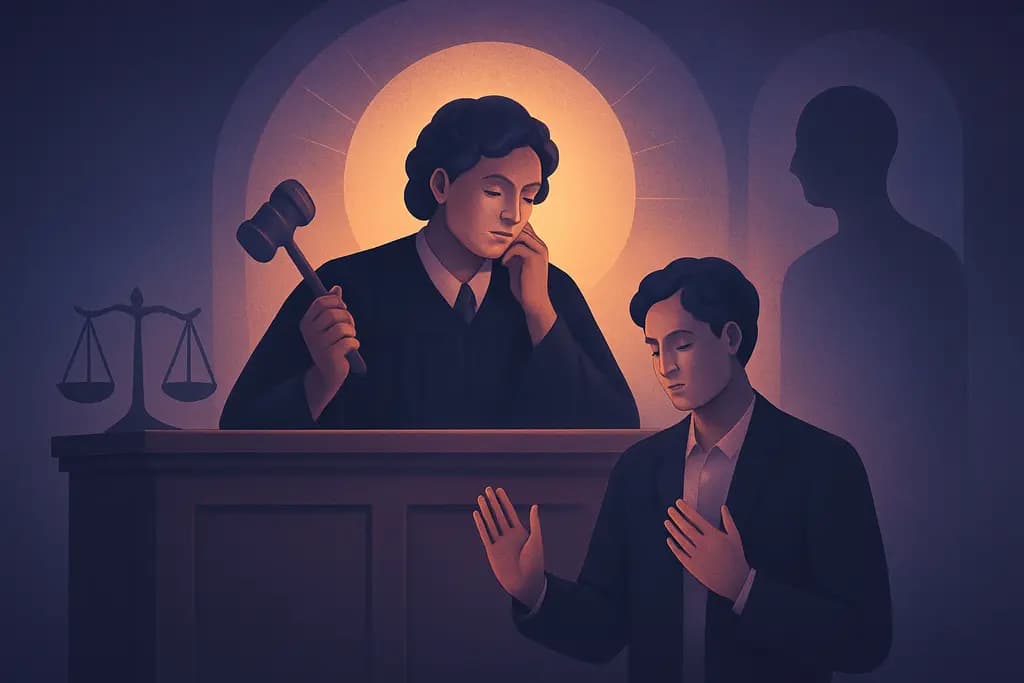
Dreaming that you are both the judge and the defendant places you inside an intense inner courtroom — an image of self-scrutiny where you evaluate and punish yourself at the same time. This dream often signals inner conflict around responsibility, guilt, or decisions you must make. As with all dreams, the meaning hinges on your feelings during the scene and the surrounding context.
General meaning of dreaming about A Courtroom Where You Are Both Judge and Defendant
At its core, a courtroom where you occupy both roles symbolizes internal judgment and the tension between evaluation and self-protection. It suggests you're weighing your actions or identity while simultaneously defending the choices that brought you here. The scenario compresses accountability, conscience, and self-preservation into a single, vivid image.
Typical interpretations emphasize themes of moral reckoning, decision-making, and the relationship you have with your own inner critic. The presence or absence of others, the tone of the proceedings, and the verdict all shape whether the dream feels punitive, clarifying, or liberating.
- Self-judgment and conscience: you may be scrutinizing your choices or moral standing.
- Internal conflict: two conflicting parts of you — one demanding accountability, the other seeking mercy.
- Decision pressure: a sign you face an important choice and are weighing evidence for and against.
- Integration: potential movement toward reconciling contradictory aspects of yourself.
Spiritual meaning of A Courtroom Where You Are Both Judge and Defendant in dreams
Spiritually, this dream can represent a purification or reckoning process — an inner assessment of values, karmic lessons, or soul contracts. Many spiritual traditions view self-judgment scenes as opportunities to bring hidden patterns into the light so they can be healed.
From a universal perspective, being both judge and defendant points to an invitation to balance justice with compassion for yourself. In Jungian terms it may show the ego confronting shadow material; in karmic philosophies it can point to lessons about cause and consequence.
Psychological interpretation
Fear, stress or anxiety
When fear or anxiety is dominant in the dream, the courtroom often mirrors performance pressure or worry about being evaluated. You may feel overwhelmed by expectations — yours or others' — and worry about failing some internal or external test.
This version of the dream can highlight perfectionism and anticipatory stress: you judge yourself harshly for potential mistakes and imagine the consequences in exaggerated terms.
Relationships and emotional bonds
If family members, friends, or a partner appear in the courtroom, the dream can reflect relational judgments or guilt tied to those bonds. You might be replaying past conflicts, wondering how loved ones perceive you, or internally negotiating forgiveness and blame.
The courtroom motif here emphasizes roles, obligations, and the desire to be understood or absolved within your social circle.
Control, power or vulnerability
Occupying both roles throws questions of power and vulnerability into sharp relief: are you trying to control the narrative about yourself, or are you exposing yourself to critical scrutiny? This tension can point to a struggle between asserting authority over your life and feeling exposed to judgment.
It may also reveal a tendency to both punish and protect yourself — a pattern where control is used as a defense against vulnerability.
Positive meaning
- Greater self-awareness: recognizing parts of yourself that need attention or change.
- Accountability and growth: readiness to accept responsibility and take actionable steps.
- Inner integration: moving toward harmony between critical and compassionate parts of the self.
- Decision clarity: the dream can catalyze a clearer sense of values and priorities.
- Healing and release: confronting uncomfortable truths can lead to forgiveness and relief.
Negative meaning and warnings
- May suggest excessive self-criticism that undermines confidence and well-being.
- Can indicate unresolved guilt or shame that needs compassionate exploration.
- May point to paralysis by analysis: overthinking decisions rather than acting.
- Can signal isolation — handling inner conflict alone instead of seeking perspective.
- May indicate avoidance of external accountability by internalizing all blame.
Common variations of dreams about A Courtroom Where You Are Both Judge and Defendant
- You as judge and defendant in a public trial: suggests fear of public scrutiny or reputation concerns; you may feel judged by others while trying to defend your choices.
- A private bench trial with no jury: indicates internal deliberation without outside input — a period of solitary reflection where you rely on your own values.
- Sentencing yourself harshly: points to punitive self-talk and the need to shift toward self-compassion and realistic remediation.
- Being both prosecutor and defendant: highlights internal conflict between the part of you that pushes for change and the part that resists it.
- Family members acting as jury or witnesses: connects the dream to relational guilt, expectations, or the desire for family approval.
- Receiving an unexpected acquittal or pardon: can symbolize self-forgiveness, relief, or a breakthrough in resolving long-held self-blame.
- Repeated retrial scenes or appeals: suggests lingering doubts and an inability to settle on a decision; you may need clearer criteria to move forward.
- A mock trial or rehearsal: indicates preparation for a real-life challenge — practicing how you’ll present yourself or defend a choice.
What to do after such a dream
- Reflect on emotions: note how you felt during the dream — judged, relieved, terrified, or calm — and journal those impressions.
- Review current pressures: consider decisions, deadlines, or conflicts in your life that mirror courtroom themes.
- Examine relationships: identify anyone in waking life who may influence your sense of judgment or require reconciliation.
- Balance compassion with accountability: if the dream points to self-criticism, consciously add kinder, realistic responses alongside any corrective steps.
- Take practical steps: make a list of actions you can take to resolve the issue the dream highlights — small, measurable moves often ease internal trials.
- Seek perspective: talk with a trusted friend, mentor, or counselor to gain an outside view if you feel stuck or overwhelmed.
- Create a small ritual of closure: writing a letter to yourself, setting intentions, or performing a symbolic release can help integrate insights and reduce replaying the scene at night.