Dream About A clockwork (mechanical) animal – Meaning
Category: Objects
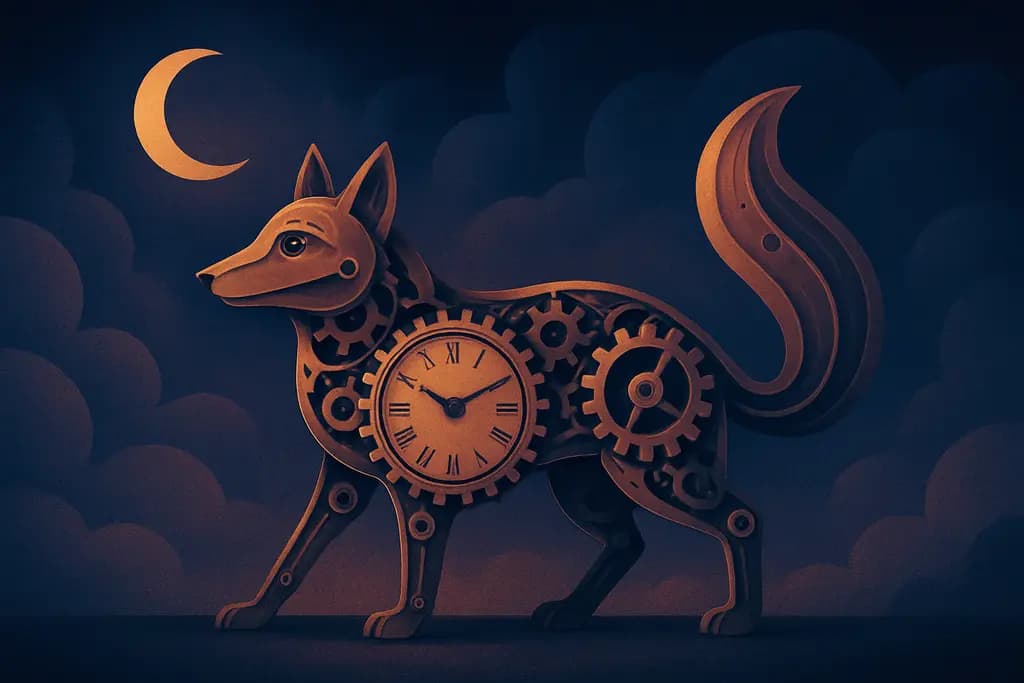
Dreaming of a clockwork (mechanical) animal often feels uncanny — a living form driven by gears and springs instead of instinct and breath. Such dreams point to themes of routine, artificial behavior, or a sense that something in your life is operating on autopilot. The exact meaning depends heavily on how you felt in the dream and the context surrounding the mechanical creature.
General meaning of dreaming about A clockwork (mechanical) animal
At its core, a clockwork animal blends two contrasting symbols: the organic (animal) and the mechanical (clockwork). This combination typically reflects tensions between emotion and routine, instinct and habit, or authenticity and performance. The dream invites you to notice patterns where life feels programmed or where natural response has been replaced by repetition.
Many interpretations also connect the clockwork aspect to time and cycles — gears suggest regularity, predictability, and sometimes inevitability. If the animal behaves perfectly or unnaturally, the dream can point to imitation, conformity, or feeling controlled. If it malfunctions, the image may highlight breakdowns in systems you rely on.
- Routine, habit or autopilot behavior
- Loss of spontaneity or emotional authenticity
- Feeling controlled, manipulated, or overly scheduled
- Time, cycles, and the sense that something is predetermined
- Repair, maintenance, and the need to 'rewind' or reset
Spiritual meaning of A clockwork (mechanical) animal in dreams
Spiritually, a clockwork animal can symbolize the tension between soul and mechanism: the living essence trying to move within structures that are rigid or created by others. In modern spiritual perspectives this image may point to a call to reintegrate your inner life with everyday action — to bring soul into routine rather than allowing routine to suppress the soul.
Different traditions read the symbol through varied lenses: Jungian thought might treat it as an archetype showing a split between instinctual life and socialized behavior; animistic or shamanic views could see a mechanical animal as a totem that has become trapped or tamed, prompting a retrieval or healing journey. Universally, it asks whether your spiritual energy is flowing naturally or being redirected by external systems.
Psychological interpretation
Fear, stress or anxiety
A clockwork animal can surface during times of stress when you feel like responses are coming from habit rather than genuine feeling. Anxiety about deadlines, obligations, or performance can produce imagery of something wound up and ticking — a reminder that pressure can make you move mechanically.
Relationships and emotional bonds
In relationships the symbol may reflect interactions that feel rehearsed, scripted, or one-sided. You might be relating to someone who seems emotionally distant, or you might notice you yourself are acting according to learned patterns instead of responding authentically.
Control, power or vulnerability
The mechanical nature highlights control dynamics: who is winding the animal, who owns the key, whose hands set the gears? This can point to feelings of being controlled, manipulated, or, conversely, the desire to control for safety. A broken or stopped clockwork animal can reveal vulnerabilities — fear that systems you depend on will fail.
Positive meaning
- Greater self-awareness: recognizing when you operate on autopilot is the first step to change.
- Capacity for repair and learning: clockwork imagery implies parts can be fixed — suggesting you can mend routines or habits that no longer serve you.
- Discipline and reliability: the positive side of clockwork is steadiness, structure, and dependable effort.
- Creative problem-solving: combining mechanical and organic elements can signal innovative thinking or the ability to blend logic with intuition.
- Reclaiming agency: winding your own key or dismantling the mechanism can symbolize taking back control of your life.
Negative meaning and warnings
- May suggest emotional numbness or dissociation, where feelings have been dulled by routine.
- Can indicate a relationship or job that reduces you to a role or function rather than a full person.
- Might warn of manipulation: someone or something could be shaping your behavior for their ends.
- Can point to burnout or a looming breakdown if systems are overstressed or unrepaired.
Common variations of dreams about A clockwork (mechanical) animal
- Broken clockwork animal — Often reflects a system in your life that is failing, calling attention to neglected parts of your emotional or practical life.
- Winding a clockwork animal — Suggests you are actively maintaining a pattern or habit; it can mean conscious effort to keep something running or an awareness of your role in perpetuating behavior.
- Clockwork animal that mimics a real animal — May point to imitation or inauthenticity, such as feeling obliged to behave like others rather than following your instincts.
- Building or assembling a clockwork animal — Can indicate creative work, learning new skills, or constructing a persona to meet expectations.
- Clockwork animal that stops suddenly — Often signals anxiety about time running out, fear of failure, or a need to pause and reassess.
- Collecting clockwork animals or seeing many of them — Could reflect fixation on control, perfectionism, or an attempt to systematize feelings and relationships.
- A clockwork animal attacking or malfunctioning — May reveal suppressed anger or the danger of rigid systems turning harmful when they break.
What to do after such a dream
- Reflect on feelings: note whether the dream left you uneasy, curious, or indifferent — emotions guide interpretation.
- Journal specifics: describe the animal, the mechanism, who was winding it, and whether it worked. Details point to personal meaning.
- Check routines and obligations: identify areas where you may be acting automatically and ask whether those patterns still fit your values.
- Examine relationships and boundaries: consider if anyone is controlling your choices or expecting a performance from you.
- Take small, practical steps: repair a neglected task, try a spontaneous activity, or set one boundary to test your agency.
- Use symbolic rituals: if it helps, perform a small act of repair or release (untie a string, remove a key) to reinforce psychological change.
These steps are about gaining awareness and choice; the dream is a prompt to notice where life feels wound up and to decide whether you want to keep winding the key or change the mechanism.