Dream About A Burning Photograph – Meaning
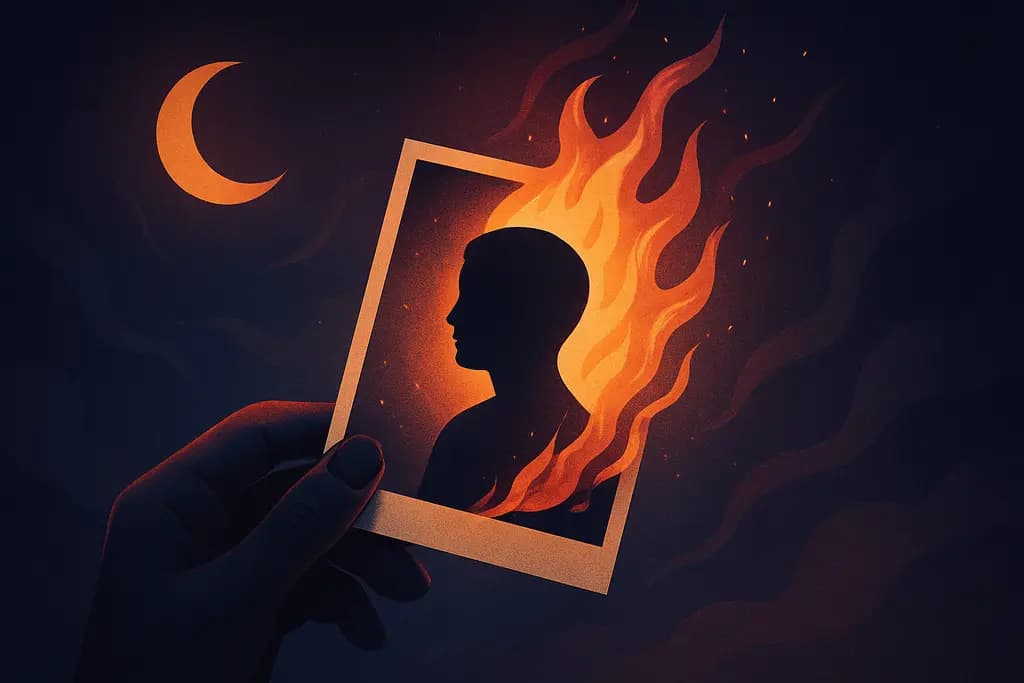
Category: Objects
A typical dream scenario
You stand alone at a small kitchen table under a single bulb, rainy night tapping against the window. In your hands is a photo: maybe an ex-partner, a parent, or a childhood snapshot with a torn corner. You strike a match, feel the immediate heat on your fingers and the image curl into ash. Relief flickers beside a tight knot of guilt in your stomach; the wallpaper smells faintly of smoke and you notice an old clock ticking louder than usual.
Concrete details that tend to stand out
People often report specific, vivid extras: the photograph might be from an attic box, the match sparks in damp weather, a neighbor coughs in the hallway, the paper blackens with a sharp, metallic smell, or your thumb gets smudged with ash as you watch the picture curl.
What this dream usually means
A burning photograph commonly represents an attempt to change how a memory functions in your life. It can reflect intentional letting go, symbolic severing of a tie, or an urgent need to erase painful identity markers. In many cases, whether the dream feels liberating or shameful points to whether you are choosing release or feeling forced into it. The person in the picture, your control over the act, and the mood of the dream are key clues to whether the image stands for closure, shame, or transformation.
Key interpretations
Intentional release and boundary-setting. If you actively light the photograph and feel calm or relieved, the dream often points to a conscious choice to end a pattern or relationship. Burning is the mind's dramatic way of signaling a finalized boundary: you are transforming a stored memory into something that no longer directs behavior. Practical parallels include throwing out keepsakes, changing routines, or publicly ending a relationship; the dream mirrors that decisive, sometimes messy, action.
Erasure, guilt, or an attempt to rewrite identity. When the burning feels desperate, shameful, or like an attempt to hide evidence, the image can signal unresolved guilt or a wish to erase part of yourself. This is common with photographs tied to mistakes, family secrets, or old roles you resent. The dream may urge you to acknowledge the memory honestly instead of annihilating it, because unfinished emotional business often resurfaces until it is integrated rather than burned away.
Psychological perspective
From a modern, neutral viewpoint, the burning photograph acts as a symbolic processing tool: your brain stages dramatic imagery to reorganize how a memory or self-concept is stored. The act of burning represents either cognitive closure or an avoidance strategy; noticing whether you rehearse the act willingly or feel compelled helps distinguish growth from suppression. Consider how waking actions—writing a letter, setting limits, or telling a truth—parallel the dream's urgency without treating the dream as a diagnosis.
What this dream usually does not mean
This dream is rarely a literal prediction about future events; it does not usually mean you will actually destroy a real photograph or that someone will be harmed. People sometimes assume it is a simple sign to 'cut out' a person physically, but the imagery more often reflects inner changes to memory, identity, or emotional boundaries. The emotional tone—relieved versus panicked—matters more than the literal destruction.
When to take this dream seriously
Take this dream seriously when it repeats, comes after a major life change (divorce, death, moving cities), or leaves you physically shaken on waking. Recurrence suggests persistent emotional work: either unresolved grief, ongoing guilt, or a stuck transition. If the photo in the dream is a childhood image or a family heirloom, it may point to deeper identity questions. Use the dream as a prompt: a one-off image can pass, but persistence signals a theme worth addressing in waking life.
Common questions
Why does this dream repeat?
Why does this dream repeat? Repetition often means your mind is returning to an unresolved emotional issue—grief, guilt, or a stalled decision. The dream keeps replaying to process the feeling until you make a meaningful change or come to terms with the memory.
Why do I feel fear in this dream?
Why do I feel fear in this dream? Fear usually comes from the perceived permanence of destruction: burning a photo can feel like erasing part of yourself or violating a bond. It may also tap into worry about consequences—guilt, loss, or shame—rather than the fire itself.
What should I do after this dream?
What should I do after this dream? Pause and reflect: identify who the photo represents, journal the emotions, and consider a concrete waking-step like talking to someone involved, keeping a memory box, or performing a small, intentional ritual to mark change.
Can this dream be positive?
Can this dream be positive? Yes. When the dream leaves you feeling lighter or resolved, it can signal healthy closure and a new capacity to move forward. The same image can be empowering if the act feels chosen rather than forced.
Related dreams to explore
Dreams about a burning photograph are often connected to Balloons, Bicycles, and Bikes. Looking at those nearby themes can help you compare control, fear, pressure, or change across similar dream scenes. You may also want to compare it with black lost objects if the same mood or conflict keeps showing up.